


Flying with a toddler sounds exciting when you book the ticket. Then reality hits while packing. Parents suddenly worry about everything – Will the airline allow the car seat? Will it fit in the row? Will people get annoyed if the child cries? But the biggest fear usually stays unspoken: turbulence. Holding a toddler feels safe on the ground, yet during sudden drops many parents realize their arms may not be enough. Most families search this topic just days before flying because they don’t want to make a mistake at the airport or risk their child’s safety.
After helping many families prepare for flights, I noticed the same confusion every time “allowed” and “safe” are not the same thing. Airlines may permit lap toddlers, but safety experts strongly recommend using an approved car seat. The process becomes much less stressful once you know what actually happens at boarding, during takeoff, and mid-flight. This guide explains real, practical steps so you can walk onto the plane confident, prepared, and focused on your child instead of worrying about rules.
Do Toddlers Need a Car Seat on a Plane?
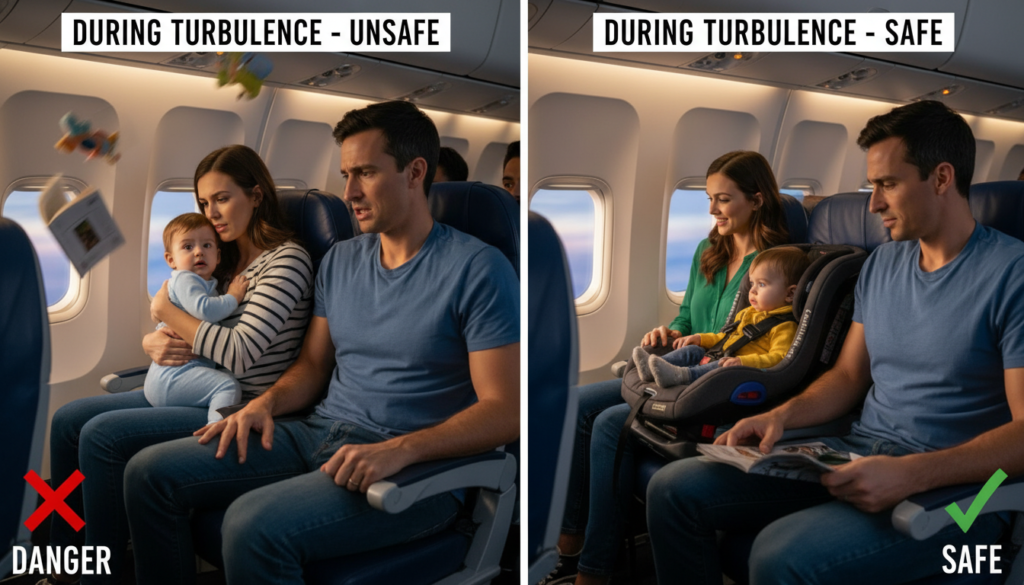
- during takeoff
- during landing
- during sudden drops
- during hard braking on runway
The difference is simple:
Allowed by airline ≠ safest choice
FAA Rules You Must Know
Your car seat must have a label that says:
“This restraint is certified for use in motor vehicles and aircraft.”
If the label is missing, the flight attendant can refuse it.
Important rules:
- Install in window seat (not aisle)
- Child must have paid seat
- Booster seats are NOT allowed
Rear or forward facing both allowed if approved
Will the Car Seat Fit?
Parents worry about this more than anything else.
Most airplane seats are smaller than car seats.
Tip: Narrow travel car seats work best.
How to Install the Car Seat on the Plane
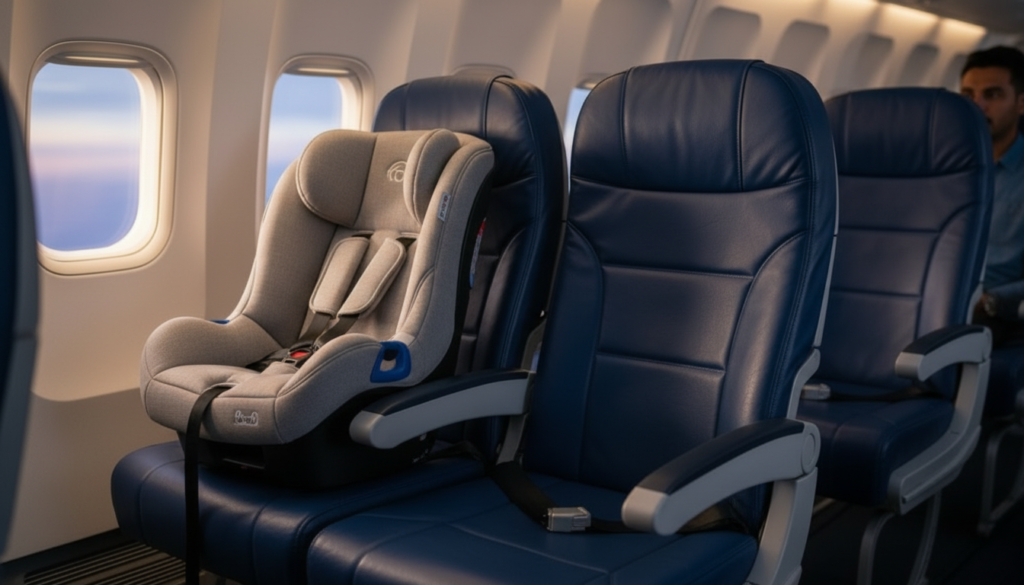
- Place seat in window position
- Thread airplane belt through belt path
- Pull tight — very tight
- Lock belt flat (no twists)
- Check movement (less than 1 inch)
Do not use:
- top tether
- LATCH anchors
Planes only use lap belt installation.
Boarding Strategy (This Reduces Stress Most)
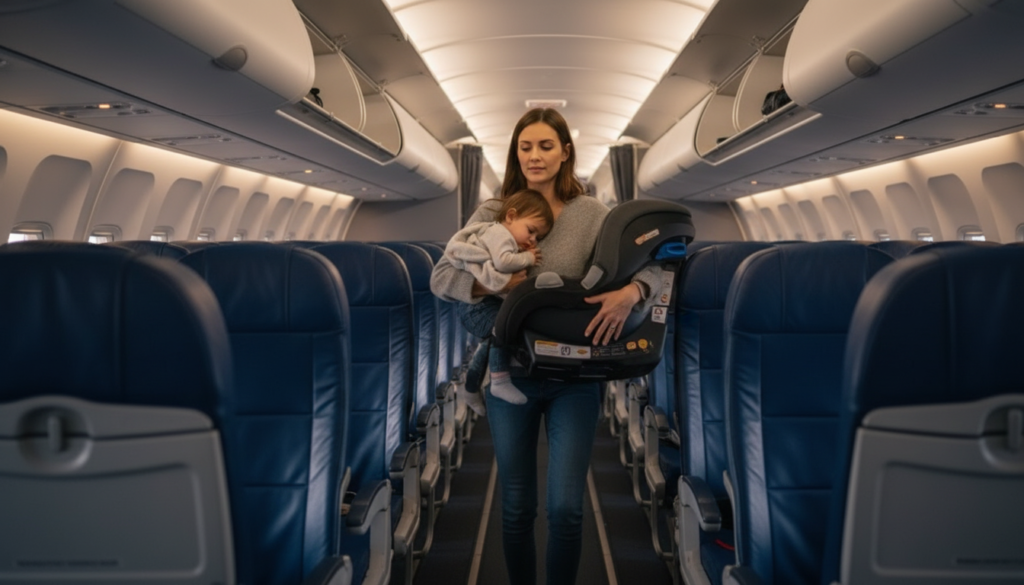
Parents who install early avoid pressure and crowds.
Common Mistakes Parents Make
Checked car seats often get damaged internally. Damage may not be visible.
When You Can Skip the Car Seat
But for children under 2, a seat is still the safest option.
Best Type of Car Seat for Airplanes
Look for:
- Lightweight
- Narrow width
- Simple belt path
- FAA approval label
Avoid large convertible seats if traveling alone.
Conclusion
Parents often expect the hardest part of flying with a toddler to be keeping them entertained, but in reality safety decisions cause the most stress. Once families use a properly approved car seat, the entire trip usually feels calmer — toddlers stay seated longer, sleep better, and parents are not exhausted from holding them through every bump. From both safety guidance and real travel experience, the most reliable approach is simple: bring an approved seat, install it correctly at the window position, and prepare early. When you understand the process ahead of time, the flight stops feeling unpredictable and starts feeling manageable, which is exactly what traveling with children should be.
