


Flying with a baby or toddler sounds exciting until parents start researching airline safety rules. Many families feel overwhelmed when they discover strict regulations about child car seats. I have seen parents carefully pack their child’s car seat, carry it through crowded airports, and then face panic at the boarding gate when airline staff tell them the seat is not approved for airplane use. That moment creates stress, delays, and safety concerns, especially when traveling with tired or restless children. First-time parents often feel confused because airline policies and safety recommendations are not always easy to understand.
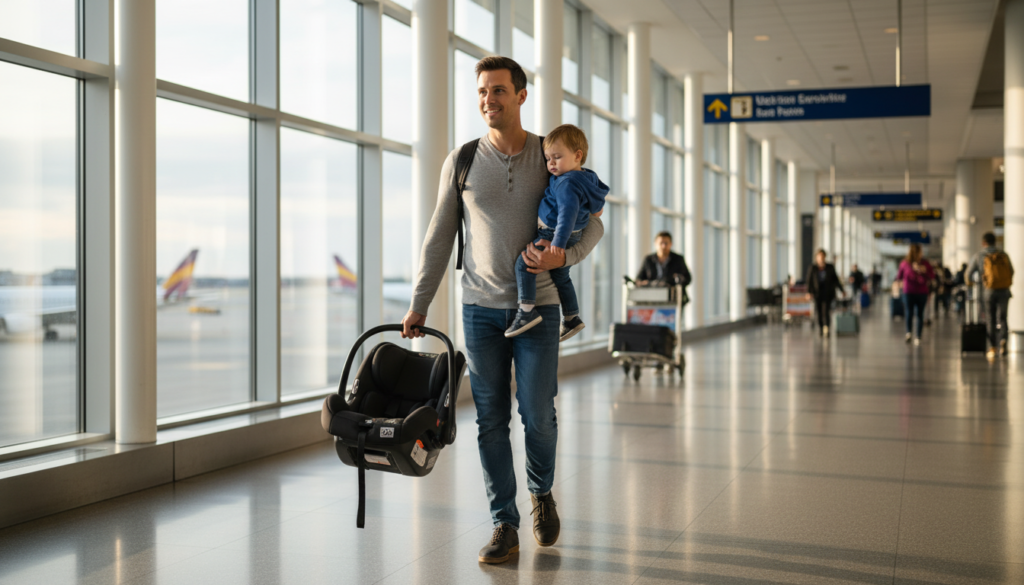
From years of analyzing airline travel safety guidance and reviewing real parent travel experiences, one concern appears repeatedly parents want to protect their child but struggle to confirm what is actually safe and allowed. Many families do not realize turbulence injuries involving lap children are a serious risk until they research child aviation safety. Choosing FAA-approved car seats for airplane travel helps remove that uncertainty. These seats are tested for flight safety, help children stay secure during turbulence, and reduce travel stress. This guide explains how parents can confirm approval, choose the right seat, and travel with confidence.
What Car Seats Are FAA-Approved?
FAA-approved car seats meet federal aviation safety standards. These seats are tested to protect children during flights. Airlines allow them because they help reduce injuries during turbulence or emergency landings.
Many parents assume all car seats are allowed on airplanes. However, this is not true. Parents must confirm FAA approval before flying.
FAA Approval Label Requirement
Every approved car seat must include this statement:
“This restraint is certified for use in motor vehicles and aircraft.”
The label is usually located on the side or bottom of the seat.
What If the Label Is Missing or Hard to Read?
Flight attendants may inspect your seat before departure. If the label is faded or damaged:
- Bring your car seat manual
- Carry manufacturer certification documents
- Save a screenshot of approval information from the brand website
Parents who prepare this proof usually experience smoother boarding.
FAA-Approved Car Seats
Different types of FAA-approved car seats are available. The best choice depends on your child’s age, weight, travel frequency, and comfort needs.
Best FAA-Approved Rear-Facing Car Seats
Rear-facing seats provide excellent protection for newborns and infants. Safety experts strongly recommend rear-facing travel as long as possible because it supports a child’s neck and spine during sudden movement.
FAA-Approved Infant Car Seats
Popular travel-friendly infant seats include:
- Doona Infant Car Seat & Stroller
- Evenflo Shyft DualRide
- Nuna PIPA urbn
- Clek Liingo
These seats are usually lightweight and easy to install using airplane lap belts. Parents traveling with newborns often prefer these models because they simplify airport movement.
Best FAA-Approved Rear and Forward-Facing Car Seats
Convertible seats grow with your child. Parents can switch them from rear-facing to forward-facing as the child grows. Families who travel frequently often choose convertible seats because they offer long-term value.
FAA-Approved Convertible Car Seats
Common travel choices include:
- Cosco Scenera Extend
- Maxi-Cosi Romi
- Safety 1st Ellaris
Convertible seats may weigh slightly more. However, they provide safety protection for multiple years, which helps reduce long-term travel costs.
FAA-Approved Lightweight Travel Car Seats
Parents who travel often usually prefer lightweight options because carrying heavy gear through airports can be exhausting. Lightweight seats also make connecting flights easier.
Popular lightweight travel seats include:
- Cosco Scenera Next Convertible Car Seat
- Cosco Finale 2-in-1 Combination Booster Car Seat
- Safety 1st Crosstown Slim
- Safety 1st Ellaris
- Wayb Pico Travel Car Seat
- Graco SlimFit 3-in-1 Convertible Car Seat
- Graco Contender Slim
- Evenflo Sonus 65 Convertible Car Seat
- Evenflo Tribute LX Convertible Car Seat
- Century Drive On 3-in-1 Car Seat
- Baby Trend Trooper 3-in-1 Car Seat
These models balance portability, comfort, and long-term use.
Rear-Facing vs Forward-Facing Car Seats on Airplanes
Both rear-facing and forward-facing seats are allowed if they are FAA approved.
Rear-Facing Rules
Rear-facing seats:
- Offer stronger protection for babies
- Reduce pressure on a child’s neck
- May require extra space for recline
Parents flying with infants often choose rear-facing seats for maximum safety.
Forward-Facing Rules
Forward-facing seats:
- Work well for older toddlers
- Fit easier in airplane seats
- Must follow manufacturer weight limits
Always follow your car seat manual to ensure safe positioning.
Are There FAA-Approved Booster Seats?
No. Booster seats are not FAA approved for airplane travel.
Boosters require shoulder belts, but airplanes only provide lap belts. Because of this, booster seats cannot safely protect children during flights.
Parents can still bring boosters onboard, but they must store them during the flight.
Are RideSafer Travel Vests FAA-Approved?
RideSafer travel vests are not approved for in-flight use. Although they work in vehicles, airlines do not allow them during flights.
Parents should always confirm approval labels before traveling to avoid boarding issues.
What Car Seats Are Not FAA-Approved?
These restraint systems cannot be used during flights:
- Booster seats
- Backless boosters
- Belt-positioning seats
- Travel vests without FAA certification
- Expired or damaged car seats
FAA-Approved Alternative: CARES Harness
The CARES harness is an FAA-approved alternative for children who outgrow infant seats but are not ready for adult seat belts.
The harness:
- Works for children weighing 22–44 pounds
- Is lightweight and easy to pack
- Installs quickly using airplane seats
Many parents choose this option for convenience during family vacations.
How Flight Attendants Verify FAA Approval
Flight attendants may inspect child seats before departure. They usually check:
- FAA certification label
- Seat installation
- Passenger seating location
Parents who carry manuals or approval documents usually experience faster boarding.
How to Install FAA-Approved Car Seats on Airplanes
Installing a car seat on a plane is different from installing one in a car because airplane seats only use lap belts.
Basic Installation Steps
- Place the seat in the airplane seat
- Thread the lap belt through the correct belt path
- Buckle the lap belt securely
- Tighten the belt firmly
The seat should not move more than one inch side-to-side.
Practicing installation at home helps parents feel more confident during travel.
Where Can You Place a Car Seat on an Airplane?
Car seats must not block emergency exit paths.
General seating rules include:
- Window seats are usually required
- Exit rows are not allowed
- Seats must not block other passengers
Airlines may allow different placement depending on aircraft layout.
Will Your Car Seat Fit on the Plane?
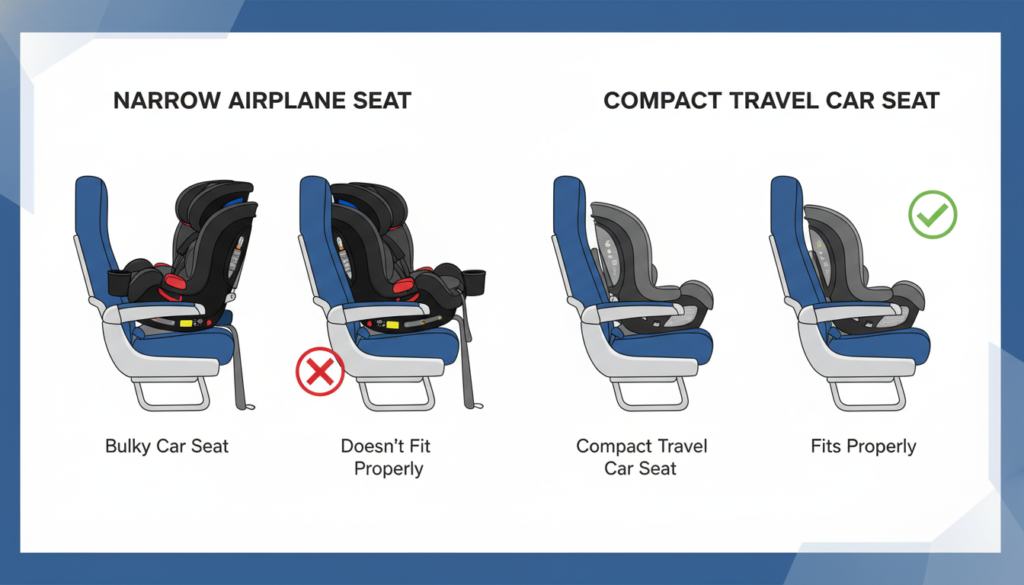
Airplane seats are smaller than vehicle seats. Many travel experts recommend seats 16 inches wide or smaller because they fit most aircraft seats. However, this is not an official FAA rule.
Parents should check airline seat width when possible to avoid installation problems.
Airline Policy Differences Parents Should Know
Most U.S. airlines allow FAA-approved car seats. However, policies may vary between airlines and aircraft types.
Some airlines may:
- Restrict car seats in certain rows
- Limit seat sizes
- Allow early boarding for installation
Checking airline child travel policies before flying helps prevent last-minute stress.
Gate Checking vs Using a Car Seat Onboard
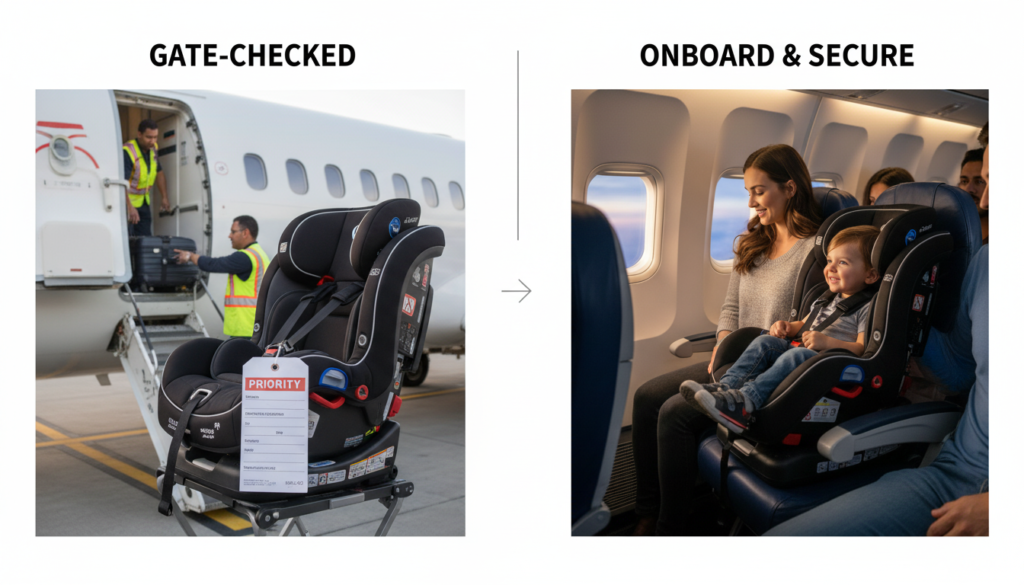
Parents often debate whether to gate-check their car seat or use it onboard.
Using the Seat Onboard
- Provides better safety protection
- Helps children stay comfortable
- Reduces injury risk during turbulence
Gate Checking
- Makes airport movement easier
- Increases risk of seat damage
- Does not provide in-flight protection
Safety experts usually recommend using the car seat onboard whenever possible.
Special Needs and Medical Travel Considerations
Some children require specialized restraint systems. The FAA allows certain accommodations with medical approval.
Parents should:
- Contact airlines before traveling
- Carry medical documentation
- Request seating assistance if needed
Tips for Traveling with FAA-Approved Car Seats
Preparation makes travel easier and less stressful.
Helpful tips include:
- Arrive early at the airport
- Practice installation before travel
- Use travel bags or car seat carts
- Bring instruction manuals
- Confirm airline policies before flying
Parents who prepare ahead often experience smoother travel.
Frequently Asked Questions
Check for the certification label stating the seat is approved for aircraft use.
Airlines allow lap children under age two. However, safety experts recommend using restraint systems whenever possible.
Some premium seats may not allow car seats due to seat design.
Yes. Flight attendants can refuse seats without FAA approval labels.
Most airlines allow installation without using the base.
Conclusion
After reviewing aviation safety recommendations and studying real parent travel experiences, one pattern becomes very clear — parents who prepare early almost always have smoother and safer flights. Families who check FAA approval labels, understand airline seating rules, and practice car seat installation before traveling report fewer boarding problems and greater peace of mind during flights. Based on safety research and parent travel feedback, using FAA-approved restraint systems significantly improves child protection and comfort during turbulence and long flights. Traveling with young children will always require extra planning, but selecting the correct FAA-approved car seat allows parents to focus less on travel stress and more on enjoying safe and meaningful family travel experiences.
