

Flying solo with a baby or toddler is one of the most stressful ways to travel. You are managing bags, documents, and a small child at the same time, with no backup. Many parents worry about TSA lines, crying on the plane, missed naps, and being judged by others. The pressure starts days before the flight, and the fear of something going wrong can feel overwhelming.
I have traveled alone with young children, and I know how quickly plans can change in an airport. You learn fast that you only have two hands and very little time. Through trial, mistakes, and real flights, I learned what actually helps and what only adds stress. This guide is based on real solo travel experience and practical knowledge, not perfect scenarios. The goal is to help you feel prepared, calm, and capable before you step into the airport.
When Booking – Does Baby Get Their Own Seat?
This decision causes a lot of stress.
Babies under two can fly as lap infants. This saves money, but it can be tiring when you are alone. Holding a baby for an entire flight limits your movement.
Buying a seat gives you more space and control. Many solo parents prefer this option, especially for long flights. Toddlers usually do better with their own seat because they need space and structure.
Before booking, think about:
- Flight length
- Time of day
- Connections
- Your child’s energy level
Choose what reduces stress, not just cost.
Pack Light.
When you travel solo, less is more.
Every extra item slows you down. Use one carry-on and one diaper bag. Both should be easy to open and organized.
Pack only what you need during the flight:
- Diapers or pull-ups
- Wipes
- One change of clothes
- Snacks
- Milk or formula
- One comfort item
Anything else can go in checked luggage.
Get in Travel Mindset
Things may not go as planned.
Flights get delayed. Kids cry. Schedules break.
The goal is not perfection. The goal is to arrive safely. Staying flexible helps both you and your child.
Pack Snacks
Snacks solve many problems.
Bring more than you think you need. Choose snacks that do not melt and take time to eat.
Feeding babies during takeoff and landing can help with ear pressure. For toddlers, frequent snacks prevent meltdowns.
Bring a Stroller or Carrier
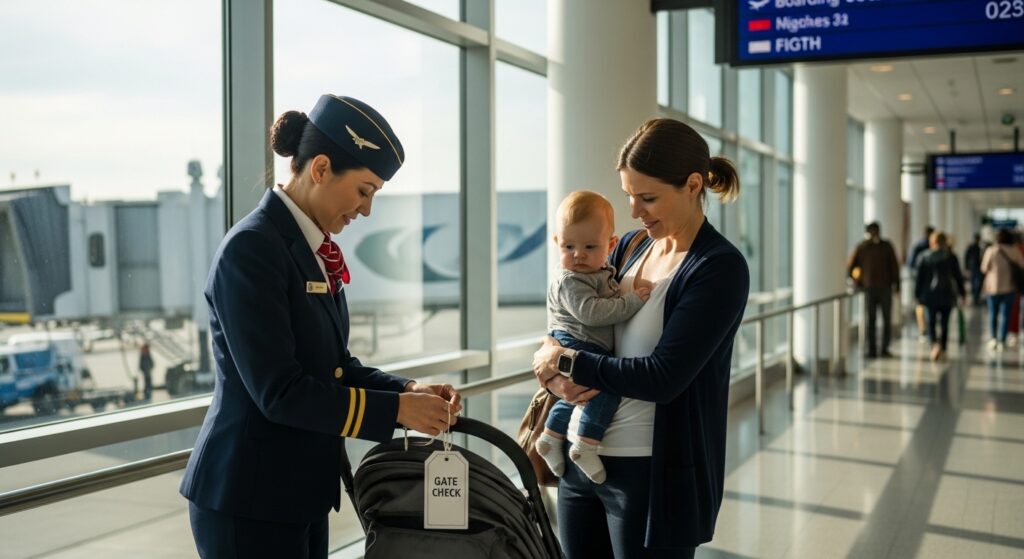
Choose what helps you move faster.
A lightweight stroller gives your child a safe place to sit. A carrier keeps your hands free.
Many solo parents use both. Make sure the stroller folds with one hand.
Have All of Your Documents Accessible and in Order.
Keep all documents in one pouch:
- Your ID or passport
- Your child’s documents
- Boarding passes
You should be able to reach them without setting your child down.
Diaper Bag Must-Haves for Air Travel
Your diaper bag should help, not slow you down.
Include:
- Diapers or pull-ups
- Wipes
- Changing pad
- Extra clothes
- Plastic bags
- Comfort item
How to Survive TSA Screening
Arrive early. Rushing increases stress.
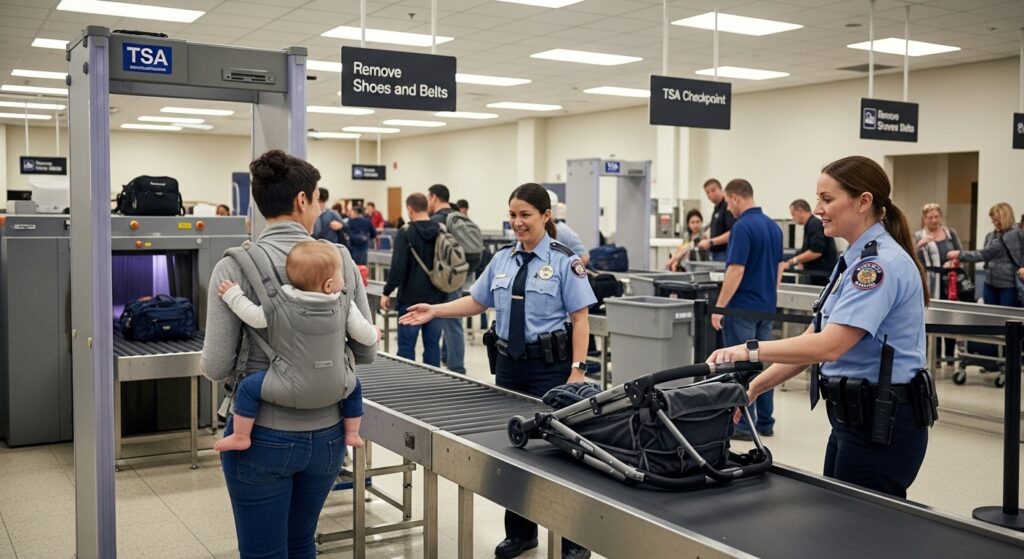
At security:
- Remove your child if asked
- Separate baby liquids
- Tell the officer you are traveling with a child
You may be asked to take your baby out of the carrier. This is normal.
Flying Alone with Children – TSA Rules
Baby formula, breast milk, toddler drinks, and baby food are allowed over 3.4 ounces.
You must declare them before screening.
Avoid Bringing a Gigantic Bulky Stroller Through the Terminal.
Large strollers are hard to manage alone.
Choose a compact stroller that folds easily and can be gate-checked.
Pick Your Seats in Advance
Seat choice matters.
Many parents prefer window seats for toddlers and seats closer to the front.
Avoid tight connections when possible.
Board Last
Boarding last keeps toddlers active longer.
Some parents prefer preboarding, especially with car seats. Choose what gives you control.
Let Go of Schedules
Travel days break routines.
Focus on comfort instead of timing.
How to Carry Everything Yourself
Use backpacks. Keep hands free.
Plan every step assuming you only have two hands. If something needs both hands, rethink it.
Bring a Stroller that Fits in the Overhead Bin
Some travel strollers fit overhead.
Always check airline size limits.
Manage the Layover
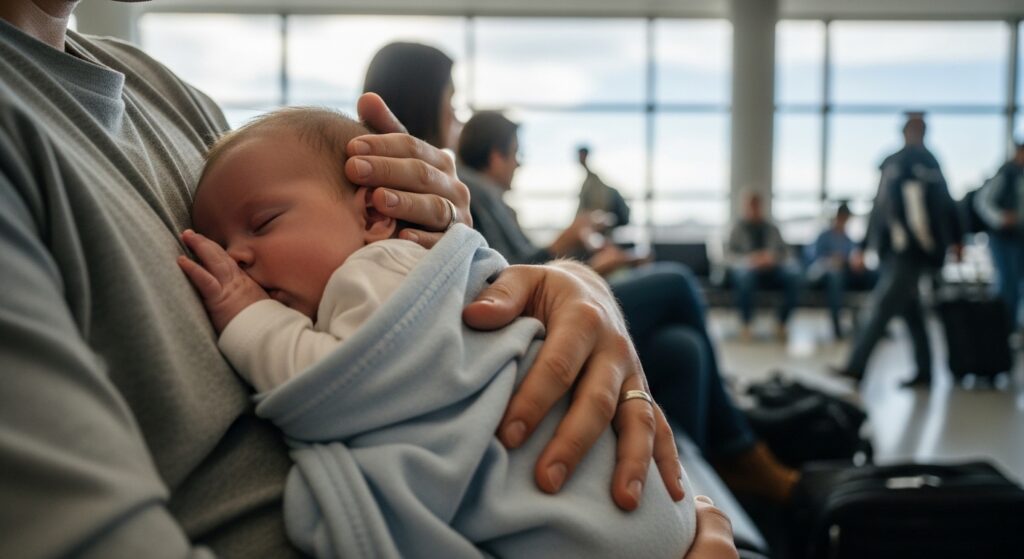
Layovers are harder than flights.
Look for space to move and family restrooms.
Restrain Them
Safety matters.
Use seat belts, harnesses, or car seats as allowed.
Snacks on Snacks and More Snacks
Yes, again.
Snacks help with hunger and emotions.
Keep Them Entertained
Bring small toys, books, or downloaded videos.
New items work best.
Surviving Potty Breaks + Diaper Changes
Bathrooms are small.
Use a changing pad. Ask flight attendants for help if needed.
Relax
Children sense stress.
Calm parents help calm kids.
How to Pee, Eat, and Other Basic Human Needs
Bring your child with you if needed.
Eat and drink when you can.
You matter too.
Paperwork Requirements
Domestic travel is simple.
International travel rules vary. Check official sources before flying.
Conclusion
Flying solo with a baby or toddler is not easy, especially at first. It takes planning, patience, and flexibility. Real experience teaches you to simplify, stay calm, and focus on safety and comfort instead of routines or opinions. Every solo flight builds confidence and shows you what truly matters.
With preparation and realistic expectations, solo travel with your child becomes manageable. You do not need to do everything perfectly. Trust your judgment and use what works for your family. Even on hard travel days, you are capable and doing your best.
