


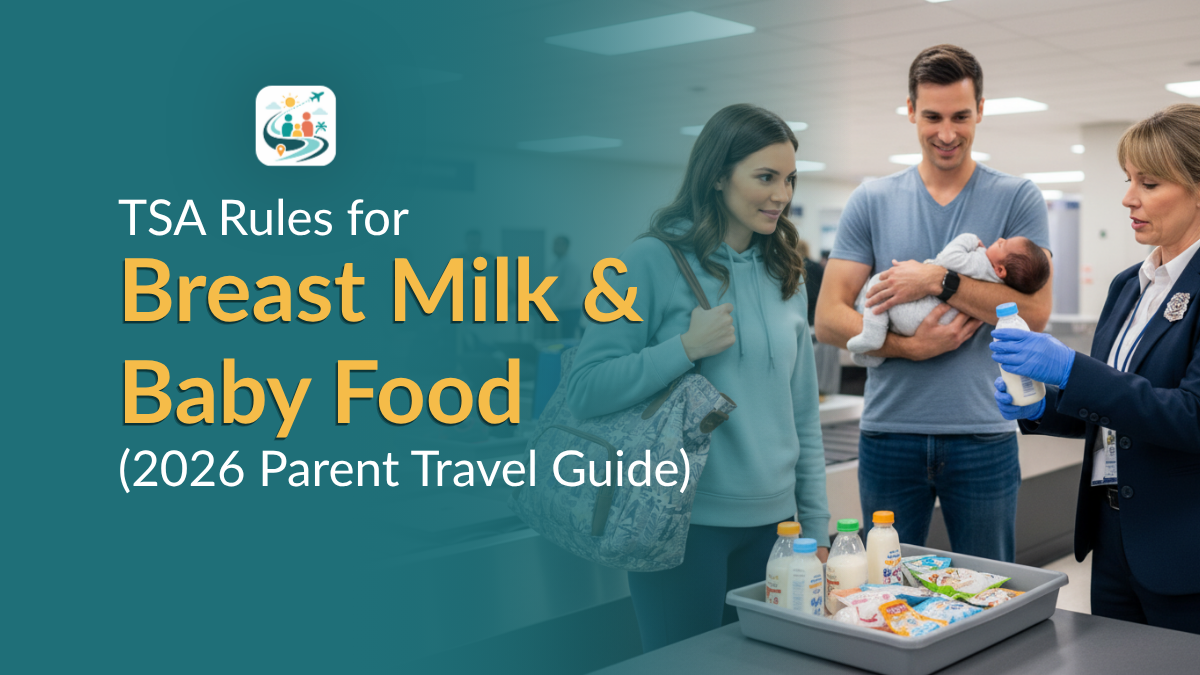
TSA allows breast milk, formula, and baby food through security. These items don’t follow the standard 3-1-1 liquid rule. Once you know what to declare and how screening works, the checkpoint stops being the scary part of the trip.
This guide covers the rules, the screening process, and the mistakes that slow parents down.
Quick answer: TSA rules for breast milk & baby food
TSA treats breast milk, formula, toddler drinks, and baby food as medically necessary liquids. They’re exempt from the standard liquid limits.
Here’s what to remember:
- Items can be larger than 3.4 ounces
- They don’t need to fit inside a quart-size bag
- You must declare them during screening
- You can carry reasonable travel quantities
- Your baby doesn’t need to travel with you
- Ice packs and cooling accessories are allowed
TSA quick rules for breast milk & baby food
TSA policy & rules for breast milk and baby food
TSA treats feeding supplies as essential for infants. Parents and caregivers can travel with these items without hitting the standard liquid cap.
Medically necessary liquid exemption
Breast milk, baby formula, toddler drinks, and baby food are exempt from the normal 3.4-ounce liquid limit. TSA doesn’t set a strict volume cap. Carry what you reasonably need for the length of the trip.
These items don’t need to go inside a quart-size bag.
Do you need your baby present?
No. TSA allows you to travel with breast milk even if your child isn’t traveling with you. This covers pumping parents flying without their baby.
Declare items at security
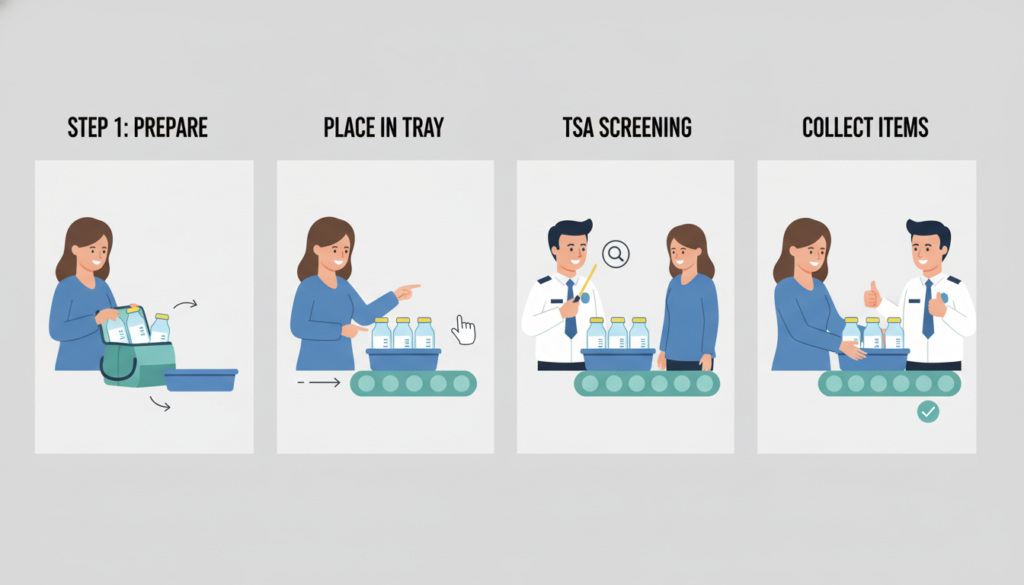
Tell the TSA officer about your feeding supplies at the start of screening. Take them out of your carry-on and place them in a separate bin.
Screening and testing procedures
TSA may inspect feeding supplies using X-ray, a visual check, or a swab test. The swab test checks the outside of the container for explosive residue. It doesn’t involve opening or tasting the liquid.
TSA’s published guidance states that X-ray screening doesn’t affect the safety of breast milk. If you’d rather skip the X-ray, you can ask for a visual inspection instead.
Ice packs, coolers, and gel packs
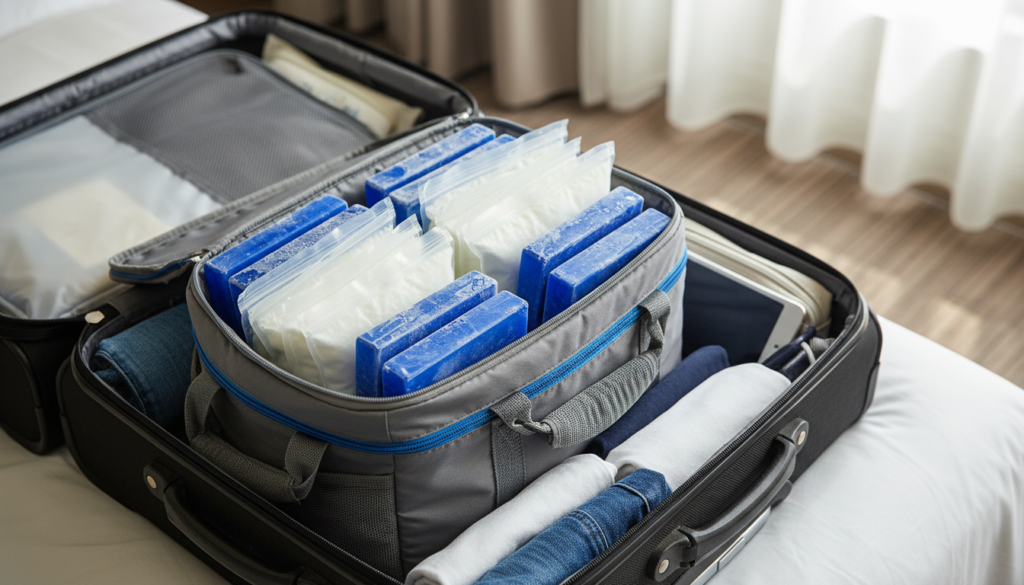
Ice packs, gel packs, and insulated coolers are allowed. TSA guidance notes that frozen packs are easier to clear than partially melted ones, since a slushy pack can look more like a liquid on the X-ray and prompt a second look.
TSA breast milk rules: the basics

TSA allows fresh, frozen, and thawed breast milk. Officers usually inspect containers without opening them, which keeps the milk untouched. You can request a different screening method if you prefer.
Baby food and toddler drink rules
Puree pouches, baby food jars, yogurt, toddler drinks, and liquid snacks for infants are all allowed in reasonable travel quantities.
Formula feeding rules at TSA
Liquid formula. Ready-to-feed and liquid concentrate formulas are allowed and may get separate screening.
Powdered formula. Powdered formula is allowed in carry-on bags and may be inspected on its own. Keep it in the original packaging so screening moves faster.
Water for mixing formula. TSA allows you to carry water for mixing formula. This water may also be screened.
Step-by-step TSA checkpoint walkthrough
Before security. Pack feeding supplies near the top of your carry-on.
At the declaration. Tell the TSA officer you’re carrying infant feeding supplies.
During inspection. The officer may check containers with X-ray or a swab test.
After screening. Repack your supplies and head to your gate.
TSA screening flow
- Arrive at security
- Declare feeding supplies
- Remove items from your bag
- TSA inspection and testing
- Repack supplies
- Proceed to gate
Packing tips for TSA screening
Place feeding items near the top of your bag. Use sealed containers. Freeze ice packs ahead of time. Save a screenshot of TSA’s rules on your phone in case an officer needs to see them.
Common TSA mistakes parents make
- Packing milk deep inside the carry-on bag
- Forgetting to declare feeding supplies
- Using weak containers that leak
- Skipping the ice pack freeze
- Not allowing extra time for screening
Bonus: what to pack for travel pumping
Pack a breast pump, storage bags, sanitizing wipes, spare parts, and an insulated cooler. This keeps your pumping schedule on track during travel.
What to do if TSA challenges your items
You can explain TSA’s feeding supply rules, ask for a supervisor, or contact TSA Cares before your trip if you expect a complicated screening. TSA Cares can also flag your request to airport staff ahead of time.
Shipping vs. carrying breast milk
Some parents ship milk home instead of carrying it through security.
Carrying milk onboard. You keep the milk with you and control storage the whole trip.
Shipping milk. You skip carrying it through security and through layovers, at the cost of shipping fees and depending on a carrier.
Frequently asked questions
You can carry breast milk, baby food, powdered formula, and cooling accessories through TSA in reasonable travel quantities. X-ray screening doesn’t harm breast milk, and you can request alternative screening if you’d rather not use it.
Parent TSA travel checklist
- Pack feeding supplies in your carry-on
- Keep items easy to reach
- Freeze ice packs
- Declare items before screening starts
- Allow extra time at security
- Save TSA’s rules on your phone


