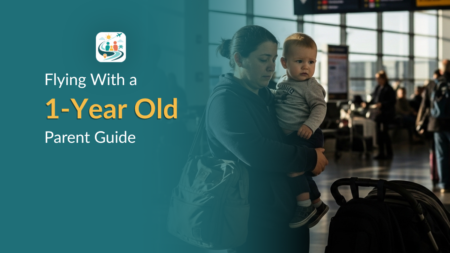





I still remember sitting on the floor of our departure gate at 5:30 in the morning, holding a half-asleep toddler in one arm and a coffee I hadn’t had time to drink in the other, wondering if I had made a terrible mistake booking the earliest flight possible. She was cranky. I was exhausted. And we hadn’t even boarded yet.
If you’ve ever lain awake the night before a flight asking yourself whether you picked the wrong time, you’re not alone. That question haunts almost every parent who has flown with a toddler. And honestly? It’s worth asking — because the time of day you fly genuinely affects how your entire travel day goes.
After flying with a toddler on early mornings, late afternoons, and red-eye flights, I can tell you that some trips felt surprisingly smooth and others were completely draining. The difference wasn’t always the destination or the airline. A lot of it came down to timing. Here’s what actually works — and what to avoid.
Choosing the right departure window is one of the most impactful decisions you’ll make when flying with a toddler — and most parents only figure this out after getting it wrong once.
Key takeaways: best time to fly with a toddler
- Mid-morning flights between 9 AM and 12 PM work best for most toddlers on a stable morning schedule
- Early morning flights reduce delays but can mean an overtired, cranky child
- Late afternoon flights are consistently the hardest time slot for toddler travel
- Nap-time flights sound smart but are unpredictable in practice
- Meeting your toddler’s basic needs matters more than chasing a perfect flight time
The best time of day to fly with a toddler
For most families, mid-morning flights are the sweet spot — typically anything departing between 9:00 AM and 12:00 PM.
By that time of day, your toddler has woken up naturally, had breakfast, and settled into their morning mood. You’ve had time to pack, load the car, and get to the airport without the frantic rush that comes with a 5 AM departure. Everyone boards the plane a little more ready, and that makes a real difference.
Mid-morning flights work well because:
- Toddlers are awake, fed, and in their best daily mood window
- Morning routines are finished before travel stress begins
- Kids haven’t yet hit the afternoon tiredness wall
- Parents feel more organized and less reactive
If you have any flexibility when booking, protect this window first.
One caveat worth naming: mid-morning is the sweet spot for toddlers on a stable one-nap schedule who lean toward morning energy. If your child rises late, runs on a two-nap schedule, or is currently transitioning off naps, the math shifts. The window that works is the one that matches your child’s actual daily pattern — not the average.
Early morning flights: reliable, but you’ll pay for it later
Early morning flights — anything departing between 5:00 AM and 8:00 AM — have a real advantage: they’re the least likely to be delayed. Airlines run on time more consistently in the early hours before the day’s disruptions stack up. If you’re extremely anxious about delays and missed connections, this slot has genuine appeal.
The catch is what it costs your toddler.
Pros:
- Fewer delays and shorter security lines
- Better rebooking options if something goes wrong
- Arrive at your destination earlier in the day
Cons:
- 3:00 or 4:00 AM wake-ups to make it work
- Broken sleep leaving toddlers irritable before you even board
- A cranky, overtired child is harder to manage in a confined space
There’s a secondary cost most parents don’t fully price in: what the rest of the travel day looks like after a 3:30 AM wake-up. Your toddler’s nap timing shifts. Their hunger timing shifts. By mid-afternoon at the destination, they’re often running on fumes at exactly the moment you want to be checking in, exploring, or eating dinner. The disruption doesn’t end at landing.
Early morning works best for parents who prioritize reliability and are confident their toddler can power through tiredness without completely falling apart. If your child is sensitive to missed sleep, this slot will cost you — and it’ll cost you for a day or two at the destination, not just on the flight.
Midday flights and the nap gamble
Midday flights departing between 12:00 PM and 3:00 PM are tempting because they seem to align with nap time. The logic makes sense — book a flight during nap time, toddler sleeps on the plane, everyone arrives refreshed. In practice, it rarely goes that cleanly.
Airports are stimulating environments. The noise, movement, and general excitement often prevent toddlers from settling, even when they’re genuinely tired. If you’re counting on in-flight sleep, our guide to getting a toddler to sleep on a plane covers what actually improves the odds. And a toddler who needed a nap but didn’t get one is significantly harder to manage than one who simply skipped it — though how much harder depends on your child’s age and stage. A 14-month-old on two naps who misses both is a different situation than a 3-year-old who is beginning to phase out naps altogether.
Flying after a nap is almost always easier than flying during one. If you can time your flight to depart shortly after your toddler wakes from their midday sleep, you get the best version of your child — rested, curious, and ready for a new experience.
One exception: if your toddler wakes groggy from a longer nap and takes 20–30 minutes to come fully online, don’t board at that exact moment. Give them time to clear the grogginess before you’re strapping them into a seat.
Late afternoon flights: avoid these if you can
Late afternoon departures between 3:00 PM and 6:00 PM are consistently the most difficult time slot for toddler travel, and the reason is straightforward.
By mid-afternoon, toddlers are running on empty. They’re hungry, tired, overstimulated, and completely out of emotional reserves — which is exactly when you’re asking them to sit still in a pressurized metal tube.
By this point in the day, toddlers are typically:
- Hitting their natural energy crash
- Overdue for food or a snack
- Emotionally overwhelmed after a full day of activity
- Running out of patience for anything
If you have one time slot to actively avoid when booking with a toddler, this is it.
Late afternoon flights between 3:00 PM and 6:00 PM cause the most meltdowns. Tiredness, hunger, and overstimulation hit their daily peak at exactly the wrong moment.
When one happens anyway, here’s how to handle toddler tantrums on a plane without making it worse There are situations where this slot is unavoidable. When it is, the preparation shifts. Push your toddler’s lunch later than usual. Attempt a short nap in the car on the way to the airport. Pack more snacks than you think you need, and keep the most novel ones — the ones you’ve been saving — for the flight itself.
Evening and red-eye flights: high risk, occasional reward
Evening flights departing after 6:00 PM and red-eyes leaving after 9:00 PM work for a narrow group of families — specifically those with toddlers who fall asleep easily anywhere and stay asleep through noise and movement.
For most families, the reality looks different. Toddlers kept up past their bedtime often become overtired and wired rather than sleepy. Sleep quality on planes is poor. And arriving at your destination with a sleep-deprived toddler means your first full day is already compromised before it starts.
Red-eye flights make more sense when:
- The flight is long enough — roughly 5+ hours — to allow enough sleep for the disruption to be worthwhile
- Time zone adjustment is a priority and you want to land at a local morning
- Your specific toddler has a proven track record of sleeping well outside their bed
The 5-hour threshold matters for a specific reason. A toddler who takes 45 minutes to settle and wakes 30 minutes before landing on a 4-hour red-eye gets, at best, 2.5–3 hours of broken sleep. For many children, that’s worse than no sleep at all.
For shorter flights or toddlers who are light sleepers, an evening departure usually creates more problems than it solves. We’ve broken down the full calculation in our guide to red-eye flights with toddlers, including when the tradeoff is actually worth it.
Short flights vs. long flights: does timing matter as much?
Short flights under 3 hours: Morning or mid-morning is your best window. The flight is brief enough that nap timing matters less — just make sure your toddler is fed and well-rested before you board, and the short duration becomes very manageable.
Long flights over 3 hours: Sleep overlap becomes worth considering. A flight that spans part of your toddler’s natural sleep window gives you the best chance of some in-flight rest. Pack activities, snacks, and plan regular movement breaks down the aisle. For anything over about six hours, see our dedicated guide to long-haul flights with toddlers.
One thing both flight lengths share: the airport experience matters independently of the flight. A mid-morning departure through a peak check-in rush — with a 45-minute security line and no floor space at the gate — can unravel a toddler before they ever board. Security lines at major airports are longest between 7–9 AM as business travelers check in. A genuinely smooth mid-morning flight sometimes means arriving earlier than you’d normally bother to, just to clear security during the quieter window before the rush hits. Our timing breakdown covers how early families should arrive at the airport by flight type and child age.
What your toddler’s current schedule should tell you
Every piece of time-of-day advice in this article assumes a reasonably stable, established schedule. Two situations break that assumption.
Nap transitions. If your toddler is moving from two naps to one (roughly 12–18 months) or from one nap to none (roughly 2.5–3.5 years), there’s no reliable nap window to plan around. During these phases, your child’s best mood window shifts week by week. Stop optimizing for sleep overlap entirely and shift to an entertainment-first approach: book the flight with the shortest total travel day, regardless of time, and pack accordingly.
Late risers. Mid-morning is a clock time, not a biological one. A toddler whose natural wake window is 8:30–9:00 AM isn’t at their best by 9 AM — they’re barely warmed up. For late risers, a 10:30–11:30 AM departure often works better than the 9 AM slot that generic advice points to.
Five to seven days of noting your child’s actual energy and mood by hour is enough to build a usable picture. You’re looking for when they’re alert without being manic, and cooperative without being clingy. That’s your window.
When your ideal flight time isn’t available
This is the scenario most guides skip: no good option exists.
The mid-morning direct is sold out. The only alternative is a 4:30 PM departure with a connection. Here’s how to rank the remaining options and limit the damage.
If you can choose between a late afternoon direct vs. a mid-morning connection: Take the connection. A shorter flight in a good mood window is usually better than a longer direct flight in the wrong one, provided the connection time is at least 90 minutes and preferably 2+ hours. A sprint connection with a stroller adds its own stress that compounds the mood problem. If the stroller is coming with you, knowing how to gate-check a stroller removes one variable from that sprint
If the late afternoon flight is unavoidable:
- Shift your toddler’s nap 30–45 minutes later in the 2–3 days before departure
- Time lunch later than usual so hunger doesn’t peak mid-flight
- Keep your single most engaging new toy for the flight — don’t let them see it beforehand
- Accept that this flight will be harder and prepare for it rather than hoping it won’t be
On connection times with toddlers: Most airlines suggest a 1-hour minimum connection. With a toddler, the realistic minimum is 90 minutes. Two hours is comfortable. Anything under 90 minutes means running through a terminal with a stroller and a stressed child — and that stress carries onto the second flight. Our guide to airport layovers with kids covers how to use a longer connection rather than dread it.
Common mistakes parents make when booking flights with toddlers
Even well-prepared parents fall into a few predictable patterns:
- Expecting the nap to happen on the plane — stimulation usually wins over sleep
- Booking flights too close to bedtime and hoping toddlers will just drift off
- Skipping meals before boarding — a hungry toddler is an unpredictable toddler
- Underestimating airport time — rushing through check-in and security with a toddler is its own kind of chaos
- Timing is one category among several — see the 10 most common flying mistakes parents make for the rest.
The simplest rule: make sure your toddler is fed, reasonably rested, and calm before you even step into the terminal. Everything gets easier from that starting point.
How to choose the right flight time
What to do if your flight is delayed
Even the best-timed flights get delayed. Preparation is what keeps things manageable.
- Pack more snacks than you think you’ll need — airports are expensive and toddlers are unpredictable
- The full carry-on packing list for toddlers covers what else earns its space in the bag
- Bring one small new toy kept specifically for travel emergencies
- Stay flexible with nap expectations — a delay throws everything off and that’s okay
- Find open floor space in the gate area where your toddler can move freely
The variable that matters most during a delay isn’t just snacks — it’s having physical space for your toddler to move, a rough sense of the timeline, and your own patience intact. All three help.
Frequently asked questions
Morning is almost always better. Toddlers are naturally in their best mood window after a full night of sleep and a proper breakfast. By afternoon, energy and patience are both running low. The exception: if your child is a late riser or currently in nap transition, the specific hour matters more than morning vs. afternoon as a category.
Only if your toddler sleeps well anywhere and the flight is long enough — 5+ hours — to justify the disruption. A toddler who takes 45 minutes to settle and wakes early on a 4-hour red-eye may end up with less sleep than they’d get at home, with none of the benefit.
Usually not. Flying after a nap works better than flying during one. Airports are too stimulating for most toddlers to sleep through, and a toddler who needed sleep but didn’t get it is harder to manage than one who simply skipped it.
Late afternoon, between 3:00 PM and 6:00 PM. Energy, patience, and emotional reserves are all at their lowest for toddlers — and often for parents too.
Final thoughts
After many trips with a toddler, one lesson stands out: there’s no perfect flight time, but there are smarter choices. Mid-morning flights consistently worked best because my toddler was fed, rested, and calm. Early flights reduced delays but disrupted sleep in ways that rippled into the first day at the destination. Late afternoon flights were the hardest, without exception.
The real variable in all of it wasn’t the time slot on the clock — it was whether my daughter’s basic needs were met before we ever got to the gate. Timing helps you set that up. It doesn’t guarantee it.
Pick the window that gives your specific child the best starting conditions. Then prepare for everything else.