


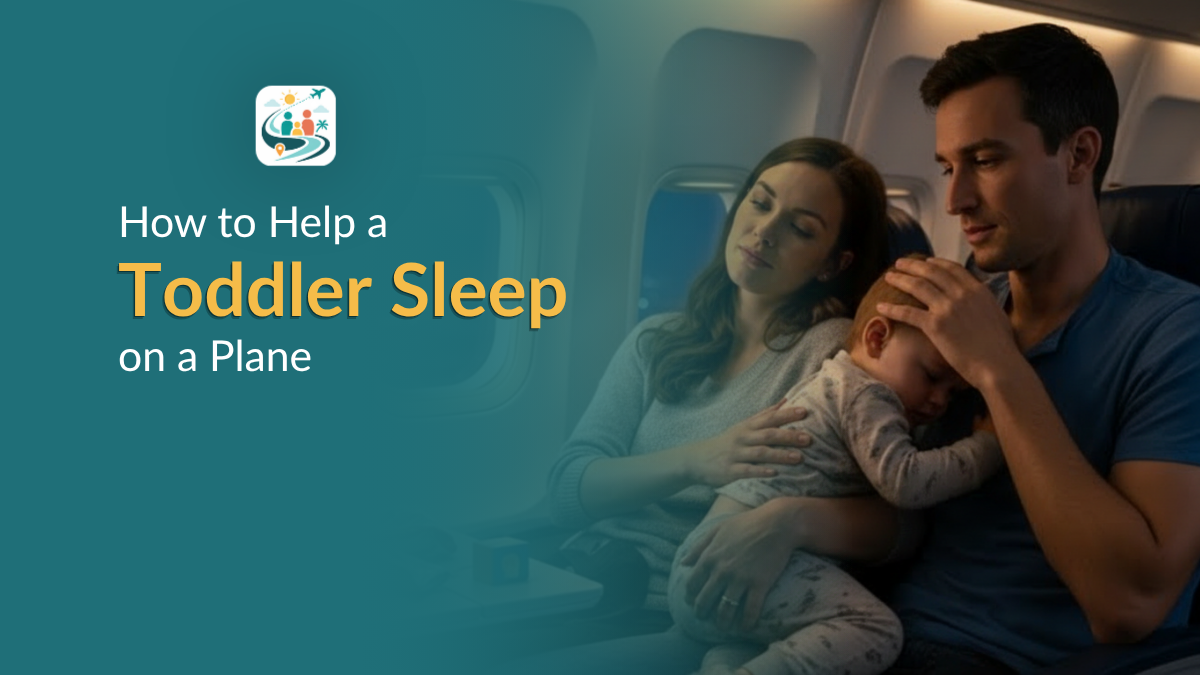
Anyone flying with a toddler knows the feeling — you board already tired and anxious, worried your toddler will not sleep and the whole flight will fall apart. You worry your toddler will not sleep. You worry about crying, stares from other passengers, and a long flight that feels out of control. When a toddler misses sleep, everything becomes harder. The noise, the lights, and the small seat make it worse.
I have been there. I have flown with a toddler who would not sleep, no matter how prepared I felt. I packed everything. Still, the routine broke, and the stress rose fast. What I learned is this: plane sleep is different, but it is not impossible. With the right expectations and a few simple steps, you can help your toddler rest and make the flight calmer for everyone.
When missed sleep tips into a meltdown, see managing toddler tantrums on a plane.
Why Toddlers Struggle to Sleep on a Plane
Toddlers depend on routine and familiar surroundings to sleep. Airplanes remove both.
Common reasons toddlers stay awake include:
- Loud engine noise
- Bright cabin lights
- Tight seating
- New smells and sounds
- Excitement or overtiredness
When you expect these challenges, they feel easier to handle.
Choose the Best Flight Time for Your Toddler
Flight timing matters more than most parents realize.
Some toddlers sleep better on evening or red-eye flights with toddlers — we have a full guide on that if you’re considering one.
- Evening or red-eye flights
- Flights that match their normal nap time
Other toddlers sleep better during the day. There is no perfect choice. The best flight is the one that fits your child’s routine — see our full breakdown on the best time of day to fly with a toddler if you’re still deciding.
Let Your Toddler Move Before Boarding

Movement helps toddlers sleep.
Before boarding:
- Let your toddler walk and explore
- Use airport play areas if available
- Avoid long waits sitting at the gate
A toddler who moves more before the flight often settles faster once seated.
That’s a balance — arrive early enough to avoid rushing, but not so early your toddler burns out at the gate. See how early families should arrive at the airport.
Stick to Your Normal Sleep Routine
Routine tells your toddler it is time to rest.
Try to repeat what you do at home:
- Change into pajamas
- Read a short book
- Sing a familiar song
- Use the same sleep words
Even part of a routine helps your toddler feel safe.
Do the Nap or Bedtime Routine on the Plane

Once you are seated, slow everything down.
Helpful steps:
- Bathroom or diaper change
- Small snack and water
- Calm voice and gentle movements
- Lower screen brightness or turn screens off
This signals sleep, even in an unfamiliar place.
Use a Car Seat If Possible
See how to install a car seat on an airplane so you’re not working it out during boarding.

A car seat often helps toddlers sleep better.
Benefits include:
- Familiar sleeping position
- Better head and neck support
- Less movement during turbulence
Many toddlers who refuse to sleep upright will sleep in a car seat. If you’re deciding whether to bring one, start with our guide to car seats on airplanes.
Safety Comes First When Toddlers Sleep on Planes
Sudden turbulence can happen at any time.
Important safety points:
- Toddlers should be properly restrained when sleeping
- Approved car seats provide better protection
- Follow all airline and crew instructions
Good sleep matters, but safety always comes first.
Not every car seat qualifies — check our guide to FAA-approved car seats for airplanes before you pack one.
Make the Seat Area Dark and Cozy
Light can keep toddlers awake.
You can:
- Close the window shade
- Use a light blanket
- Block bright light gently with your body
A darker space helps your toddler relax.
Bring Familiar Comfort Items
Familiar items provide emotional comfort.
Pack:
- A favorite blanket or stuffed toy
- A pacifier or comfort item
- Familiar sleep clothes
These items help toddlers calm themselves faster.
Use an Inflatable Foot Pillow Only If Allowed
Some parents use foot pillows to help toddlers lie flat.
They can:
- Support legs
- Reduce sliding
- Improve comfort
Always check airline rules first. Some airlines do not allow seat extenders or foot hammocks.
Babywearing Can Help Some Toddlers Sleep
If your toddler likes being carried, babywearing may help.
Benefits include:
- Fewer distractions
- Closeness and warmth
- Gentle movement
This works best for smaller toddlers who already enjoy being worn.
For larger toddlers who won’t sit still but can’t use a car seat, the CARES harness is a lighter alternative.
Choose Seats That Reduce Disruptions
Seat choice affects sleep quality.
Helpful tips:
- Window seats reduce aisle traffic
- Avoid seats near bathrooms
- Avoid galley areas when possible
Fewer people passing by means fewer wake-ups.
Feed Your Toddler Before Sleep Time
Hunger can block sleep.
Offer:
- A balanced snack
- Protein and carbs
- Water or milk if part of the routine
Avoid sugary snacks before sleep. Drinking during ascent and descent also helps with toddler ear pressure on flights, which is a common reason sleep breaks mid-flight.
Do What Helps Your Toddler Sleep — Without Guilt
This is not the time to worry about perfect habits.
You can:
- Offer extra cuddles
- Rock or sway gently
- Allow calm screen time briefly
The goal is rest. Not perfection.
A Clear Word About Sleep Medicine
Many parents wonder about sleep aids.
Important to know:
- Sleep medicine is not recommended without medical advice
- Some medicines can cause opposite reactions
- Always talk to a pediatrician first
Comfort and routine are safer options.
Keep Your Expectations Realistic
Plane sleep is different from home sleep.
Your toddler may:
- Sleep less than usual
- Wake often
- Nap in short stretches
That is normal. Any rest helps.
If Your Toddler Does Not Sleep at All
This is especially common on long-haul flights with toddlers — our dedicated guide covers how to manage the full journey when sleep doesn’t happen.
If your toddler skips sleep:
- Stay calm
- Offer quiet activities
- Move bedtime earlier after landing
One missed nap will not ruin your trip.
Traveling Across Time Zones
Time changes can disrupt sleep.
Helpful tips:
- Adjust bedtime slowly
- Get daylight after landing
- Stay flexible for a few days
Toddlers adapt with patience.
Quick Checklist for Toddler Sleep on a Plane
✔ Comfortable clothes or pajamas
✔ Favorite blanket or toy
✔ Snacks and water
✔ Car seat or approved restraint
✔ Light blanket
✔ Calm activities
✔ Flexible mindset
Final Thoughts
After helping many parents and learning through real flights with toddlers, one thing is clear. There is no perfect trick that works every time. What matters most is comfort, safety, and flexibility. Toddlers sense stress, so staying calm helps more than any gadget. Focus on routine, create a cozy space, and keep expectations realistic. Even short naps help. From experience and proven guidance, I can say this with confidence: when you plan with patience and safety in mind, flying with a toddler becomes manageable and often much easier than you expect.