


Most parents do not search for road trip advice because they are excited. They search because they are worried. A toddler who cries as soon as the car starts moving can turn even a short drive into a stressful one. Many parents pack extra toys, more snacks, and downloaded cartoons, hoping this time will be different. Yet after a few minutes, the same problems begin — whining, throwing toys, and asking to get out.
After many long drives with toddlers, a pattern becomes obvious: the issue is not bad behavior. Toddlers struggle in cars because their basic needs are harder to meet. They need movement, control, and predictability, and the car removes all three. This guide is based on practical experience and consistent behavior patterns that help families manage long drives calmly. The goal is not a silent trip. The goal is a manageable one.
Why Road Trips Are Hard for Toddlers
They cannot move
Toddlers regulate emotions by moving. The car seat removes their calming tool.
They do not understand time
To a toddler, waiting has no end point.
They lose control
They cannot choose when to stop, eat, or get out.
Too much stimulation
Noise, motion, heat, and hunger build stress quickly.
Before the Trip: Set Up Success
Adjust expectations — travel will take longer than GPS says.
Best departure: early morning or nap time.
Give 20–30 minutes of active play before leaving.
Car Environment Setup
Keep the car slightly cool.
Use window shades.
Only 2–3 toys reachable.
Start quiet.
Car Seat Comfort
Check straps, diaper pressure, legs, clothing bulk, and shoes.
The Smart Packing System
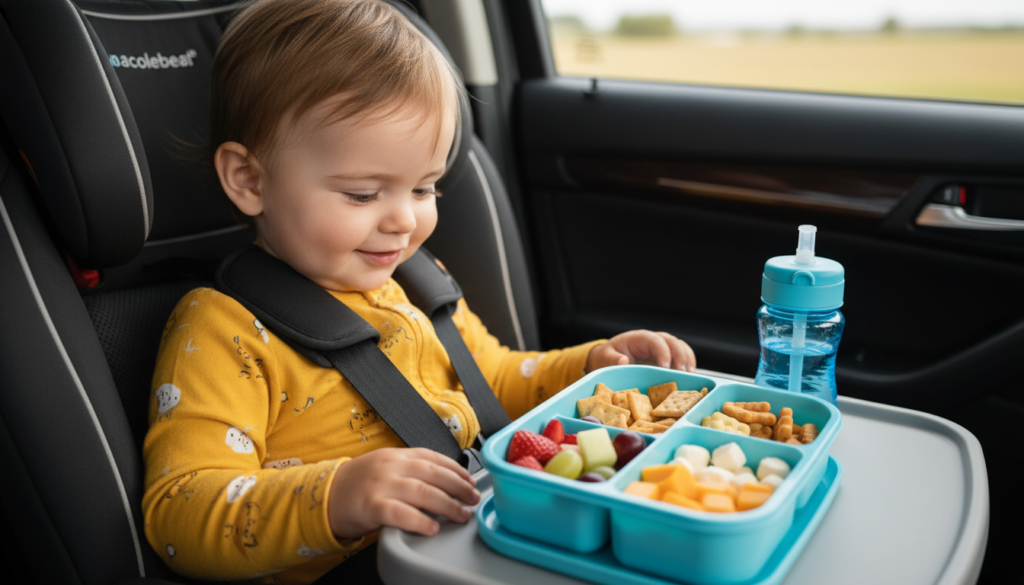
Small snacks regularly.
Rotate toys hourly.
Keep emergency bag within reach.
Packing for Parents
Bring water, snacks, spare shirt, wipes, caffeine.
Age-Based Travel Strategies
12–18 months → comfort
18–24 months → movement
2–3 years → control
3–4 years → engagement
Realistic Drive Time Expectations
| Age | Comfortable Drive Time |
|---|---|
| 1 year | 1–2 hours |
| 2 years | 2–3 hours |
| 3–4 years | 3–5 hours |
Entertainment That Actually Works
Order: Look → Talk → Toys → Games → Snacks → Screen
Motion Sickness Prevention
Fresh air, light snack, forward view, regular breaks.
The 3-Minute Meltdown Reset Method

Pause stimulation → offer choice → adjust → stop → hydrate.
Stop Planning Rule

Best stops: parks or open spaces.
Parent Survival Strategy
Lower expectations = calmer reactions.
Safety Reminders
Never loosen straps while driving.
Avoid hard foods.
Never leave child alone in car.
First 30 Minutes After Arrival
Movement → water → familiar toy → calm → unpack later
Safety Reminders
Never loosen straps while driving.
Avoid hard foods.
Never leave child alone in car.
Conclusion
Over time, parents notice that most car struggles follow a pattern. Hunger looks like whining, discomfort looks like stubbornness, and overtiredness looks like defiance. When you respond to the need instead of the reaction, the entire trip changes. Long drives with toddlers rarely become perfect, but they do become predictable and calmer. With simple preparation and realistic expectations, families can focus less on surviving the drive and more on arriving in a good mood together.
