


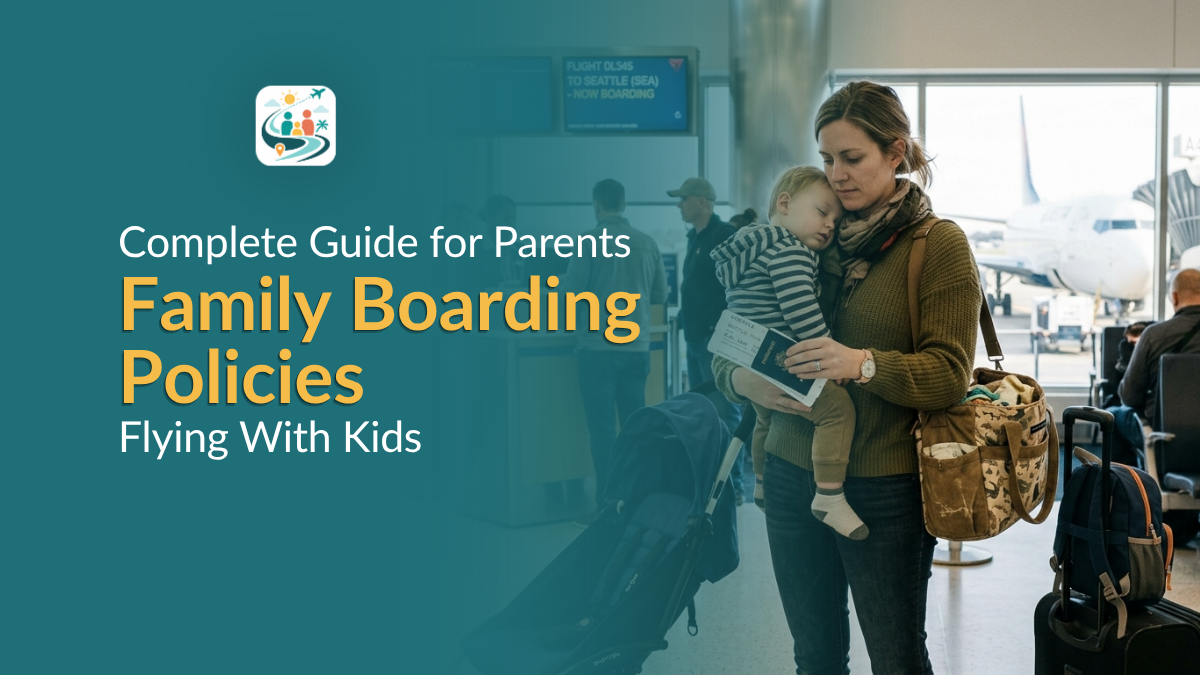
I still remember standing at the gate with my toddler on my hip, a stroller in one hand, a diaper bag sliding off my shoulder, and absolutely no idea when we were supposed to board. Every announcement sounded the same, the gate area was packed, and I was genuinely terrified we’d miss our window, end up in middle seats on opposite sides of the plane, and spend the flight apologizing to strangers. That moment of gate-area panic was entirely avoidable — I just hadn’t looked up the airline’s family boarding policy before we left home.
Family boarding policies are designed to make travel easier for parents, but every airline uses different rules, different names, and different age cutoffs. Some offer early boarding, some call it preboarding, and some have courtesy boarding that only applies if you have a car seat or stroller. Without understanding these differences, families end up confused, rushed, and stressed before they’ve even found their seats. This guide breaks down every major airline’s boarding policy in plain language so you know exactly when to line up, what to ask, and how to get your family settled before the cabin turns into chaos.
Boarding Strategy for Families

Choosing the right boarding strategy makes a bigger difference than most parents expect. Early boarding gives you time to install a car seat properly, find overhead bin space for your carry-on, and get your child settled before the aisle fills with other passengers and their luggage.
For families with babies or toddlers, early boarding almost always reduces stress — you’re not rushing, you’re not blocking people, and your child isn’t already melting down before you’ve even found your row. That said, families with older kids sometimes make the opposite call and board later on purpose, because sitting in a plane seat for an extra 20 minutes waiting for pushback is a reliable recipe for a restless four-year-old.
Your best boarding strategy really depends on a few key factors:
- Age of your child
- Travel gear like strollers or car seats
- Whether your seats are pre-assigned
- Length of your flight
- The specific airline’s boarding policy
Thinking through these before you get to the gate — not while you’re standing in the boarding area — makes the whole process significantly calmer.
Family Boarding Policies by Major U.S. Airlines

Airlines use different names for family boarding. Some call it preboarding, others call it early access or courtesy boarding, and a few make it entirely situational. The breakdown below helps you quickly understand what each airline actually offers so there are no surprises at the gate.
American Airlines Family Boarding Policy
American Airlines allows family boarding for families traveling with children under two years old. Families typically board after passengers who need special assistance but before the regular numbered boarding groups begin — which means you get into the cabin early without having to qualify for preboarding.
American also tries to seat families together, but whether that actually happens depends on your ticket type and what seats are still available when you book. Basic economy tickets limit seat selection, so if sitting next to your child matters to you — and of course it does — booking early and selecting seats during the booking process is the safest move.
United Airlines Family Boarding Policy
United Airlines allows preboarding for families traveling with children age two or younger, giving parents that crucial extra window of time before standard boarding groups are called. It's one of the more generous policies among major carriers for families with very young children.
United also strongly recommends traveling with an approved child restraint system — meaning a proper car seat rather than holding your baby as a lap infant. A car seat provides significantly better protection during turbulence and helps young children stay secure and comfortable for the duration of the flight, which is worth the added effort of lugging it through the airport.
Delta Air Lines Family Boarding Policy
Delta offers Early Access boarding for families traveling with strollers or car seats, which gives you time to store equipment safely and get your child settled before the cabin gets crowded and the aisle turns into a gridlock of rolling suitcases. It's a practical policy that acknowledges how much physical gear families actually travel with.
If you need extra time or run into any issues during boarding, Delta gate agents are generally responsive — don't hesitate to walk up and ask for help rather than waiting to see what happens. I've found that a quick conversation with the gate agent before boarding starts almost always goes better than trying to sort something out mid-boarding.
Southwest Airlines Family Boarding Policy

Southwest operates differently from every other major airline because it uses an open seating system on most flights — meaning there are no assigned seats, and passengers choose where to sit when they board. For families, this makes boarding position everything.
Southwest offers Boarding between boarding groups A and B, which gives up to two adults traveling with a child age six or younger a strong shot at sitting together without fighting over whatever's left. That middle-of-the-pack boarding window is specifically designed so families aren't stuck with scattered seats at the back of the plane.
One important note: Southwest announced plans to introduce assigned seating starting January 27, 2026. If you're flying Southwest, check their current boarding policy before your trip, because the procedure may be different depending on when your flight operates.
Frontier Airlines Family Boarding Policy
Frontier Airlines allows preboarding for families traveling with children under two years old, with families boarding before general zone boarding begins. It's a straightforward policy, but there's a catch worth knowing: boarding eligibility can depend on your ticket type, so it's worth reviewing that detail during check-in rather than assuming you qualify automatically.
If you're flying Frontier with a baby and you're unsure whether your ticket includes preboarding access, ask at the gate before the boarding process starts — not after the zones have already been called.
JetBlue Airways Family Boarding Policy
JetBlue provides Courtesy Boarding for families traveling with children who are using car seats or strollers. This early boarding window gives families time to get equipment stowed safely and children settled without the pressure of a full cabin boarding around them.
If you're traveling with multiple children, JetBlue gate agents can also assist with boarding — it's worth asking when you arrive at the gate, especially on fuller flights where every extra minute of setup time makes a real difference.
Family Boarding vs Preboarding: Understanding the Difference

A lot of parents use these two terms interchangeably, but they're actually different boarding windows — and confusing them can mean missing your actual boarding call.
Preboarding happens before all other passengers and is typically designed for travelers who need extra time or assistance. This can include families with infants or passengers traveling with safety equipment like car seats, but it varies by airline.
Family boarding happens after preboarding and is designed specifically for families with young children. It usually kicks in based on child age, not equipment, and places you ahead of the regular boarding groups.
Knowing which one your airline offers — and listening carefully for which announcement applies to you — is the difference between boarding calmly and realizing you missed your window while chasing a toddler toward the water fountain.
How Families Can Sit Together on Flights
Sitting separately from your child is one of the most stressful things that can happen at the start of a trip, and it's also one of the most preventable with a bit of planning. Airlines generally try to seat children next to accompanying adults, but that effort only goes so far when tickets are booked late or seat selection is restricted.
The steps that actually improve your odds of sitting together are:
- Booking flights early and selecting seats at the time of booking
- Avoiding basic economy tickets whenever possible — they typically restrict or eliminate seat selection
- Linking reservations for all family members traveling on the same booking reference
- Speaking with a gate agent before boarding begins if your seating isn't sorted
These aren't guarantees, but they dramatically reduce the chances of ending up in a situation where you're asking strangers to swap seats before takeoff.
U.S. Government Support for Family Seating
The U.S. Department of Transportation has taken an active interest in family seating, and it's worth knowing what protections exist before you fly. The DOT has created an Airline Family Seating Dashboard that allows parents to compare individual airline seating policies side by side before booking — a genuinely useful tool if you're deciding between carriers.
The DOT has also proposed rules that would require airlines to seat children age 13 and younger next to accompanying adults without charging extra fees in most situations. These proposed rules are part of a broader push to make family air travel safer and less financially punishing for parents who simply want to sit next to their kids.
Child Safety Seat and Lap Child Guidance
Traveling with your baby as a lap infant saves money, and plenty of families do it — but aviation safety experts consistently recommend using an approved child restraint system, which means a proper FAA-approved car seat installed in a purchased seat. Car seats provide meaningfully better protection during turbulence and unexpected movement, and they also give young children a secure, familiar space that helps them stay comfortable on longer flights.
If you plan to bring a car seat on board, confirm it's airline-approved before your travel day — not at the gate. The FAA approval label should be visible on the seat itself, and most major airlines publish lists of accepted restraint systems on their websites. Installing a car seat mid-boarding with a line of passengers waiting behind you is stressful for everyone; knowing it's approved before you leave home removes that variable entirely.
What to Expect at the Boarding Gate
Boarding gates with young children can feel overwhelming, but most of the stress comes from not knowing what to expect — and that's entirely fixable. Gate agents typically announce family boarding before general boarding groups are called, so arrive at the gate early enough to hear the announcement clearly and position yourself near the boarding door without rushing.
Keep your travel documents easy to reach, not buried in a bag you'll have to unpack at the scanner. Have snacks, comfort toys, and anything your child might need in the first 20 minutes of the flight accessible from the outside pocket of your carry-on. When your boarding group is called, move calmly — rushing rarely saves time and it definitely raises everyone's stress level, including your child's.
Common Family Boarding Challenges
Even well-prepared families run into unexpected issues at the gate. Here's what comes up most often and how to handle each situation quickly:
Separate Reservations If family members booked tickets separately, your seats may not be linked and you could end up scattered across the plane. Contact the airline before your travel day to ask them to link the reservations — most carriers can do this, but it's much easier to sort out over the phone than at a crowded gate.
Basic Economy Ticket Restrictions Budget fare classes often restrict or eliminate the ability to select seats in advance. If you're traveling on a basic economy ticket and seat selection matters to you, call the airline or check your booking carefully — you may need to upgrade your fare or pay a seat selection fee to guarantee you're next to your child.
Aircraft Changes Airlines occasionally swap aircraft types due to maintenance or scheduling, which can shift seating assignments. If this happens to your flight, go directly to the gate agent when you arrive — they typically have more flexibility to help families readjust seating when an equipment change has caused a disruption.
Tips for Stress-Free Family Boarding
The families who board most smoothly are almost always the ones who did a few small things before they got to the airport. Here's what consistently makes the biggest difference:
- Arrive at the airport early — family boarding windows can be short, and missing them means boarding with the general crowd
- Talk to the gate agent when you arrive at the gate, not when boarding starts, and ask directly when family boarding will be called
- Keep baby supplies, snacks, and comfort items in the outermost pocket of your bag so they're reachable in seconds
- Use an FAA-approved car seat when possible, and know how to install it before you board
- Choose seats closer to the front of the aircraft if your airline allows it — shorter walk, easier exit, less time in the aisle
Frequently Asked Questions About Family Boarding Policies
Not always — and this surprises a lot of parents. Passengers who need special assistance or have medical needs typically preboard before anyone else, including families. Family boarding usually comes right after that group, which still puts you ahead of the general boarding crowd. The key is listening for the right announcement at the gate, since "preboarding" and "family boarding" are two different calls.
Yes, in most cases — but the age cutoff varies by airline. Some carriers limit family boarding to children under two, while others extend it to children age six and under. Check your specific airline's policy before you fly so you know exactly where your child falls and whether you qualify for the early boarding window.
Yes, many airlines allow early or courtesy boarding specifically for passengers traveling with strollers or car seats, because getting that equipment stowed safely takes more time than overhead bin luggage. If your airline's policy isn't clear on this, ask the gate agent directly when you arrive — most will accommodate families with gear without any fuss.
Go straight to the gate agent before boarding begins — not after you've already boarded and realized the problem. Gate agents have the most flexibility to fix seating issues before the boarding process is underway. Once passengers are seated and boarding is complete, options become much more limited. Being polite, calm, and specific about your situation ("I have a two-year-old and we're in different rows") gets results faster than a general complaint.
Family Boarding Step-by-Step Checklist
Fast tip: If your family ends up split across seats, talk to the gate agent before boarding starts — that's when they have the most ability to help.
Final Thoughts
After years of flying with my own kids and learning every airline's boarding quirks the hard way, the one thing that has made the biggest consistent difference is simply knowing the rules before arriving at the gate. When you know your airline allows family boarding, when it starts, what age your child needs to be, and what to ask for if something goes wrong — the gate stops being a stressful guessing game and becomes just another step in the journey.
Airlines are genuinely improving boarding support, and government pressure on seating policies is moving in parents' favor. But the families who have the smoothest flights are still the ones who show up prepared. Know your boarding window, talk to your gate agent early, have your gear and your child ready to move, and give yourself more time than you think you need. A calm boarding is the best possible start to a trip with kids — and it's completely within reach with a little preparation.
