


Flying with a baby or toddler can feel overwhelming, especially when you are also carrying a car seat. Many parents worry about whether the seat will fit, if they are installing it correctly, or if a flight attendant might stop them mid-boarding. I have seen parents freeze in the airplane aisle, trying to tighten a seat belt while holding a restless child and feeling rushed by passengers behind them. That moment alone is enough to make air travel feel stressful before the flight even begins.
From researching child travel safety rules and listening to real parent experiences, one thing is clear: most anxiety comes from not knowing what to expect. When parents understand the rules and practice installation ahead of time, everything changes. This guide follows official aviation safety recommendations and real-world travel experiences to help you feel prepared. The goal is simple — to help you install your child’s car seat with confidence and make flying safer and calmer for your family.
- Always check for FAA approval label
- Install car seats in a window seat only
- Airplanes use seat belts, not LATCH anchors
- Car seat must not move more than one inch
- Booster seats cannot be used during flights
- Practice installation before your trip
- Ask airline staff for help if needed
Why Using a Car Seat on an Airplane Is the Safest Choice
Using a car seat during a flight helps protect your child during unexpected turbulence. Sudden turbulence can happen even during calm flights. Holding a child in your lap does not provide the same protection as a secured car seat.
Car seats also provide comfort. Children feel familiar and secure in their own seat. Many parents notice their children sleep better and stay calmer during flights when using their car seat.
How to Choose the Right Car Seat for Airplane Travel
Not every car seat is travel-friendly. Choosing the right seat makes installation easier and safer.
Look for Aircraft Approval Label
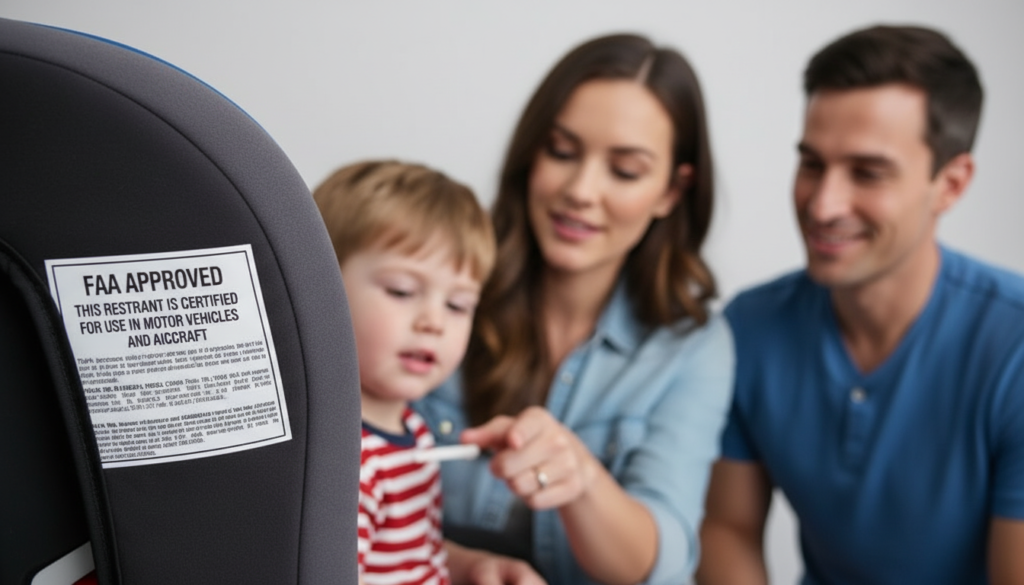
Your car seat must include a label confirming it is approved for aircraft use. This label is usually located on the side or bottom of the seat.
Check Seat Width
Most airplane seats are narrow. Car seats around 16 inches wide usually fit best.
Choose Lightweight Travel Seats
Heavy seats are harder to carry through airports. Lightweight seats reduce stress during travel.
Airplane Car Seat Type Comparison
| Feature | Infant Car Seat | Convertible Car Seat |
|---|---|---|
| Best For | Newborns & babies | Babies & toddlers |
| Ease of Installation | Easier | Moderate |
| Weight | Lightweight | Heavier |
| Travel Convenience | High | Medium |
| Use Without Base | Yes | Yes |
| Long-Term Use | Shorter lifespan | Longer lifespan |
Installing a Car Seat on an Airplane
Installing a car seat on a plane is different from installing it in a vehicle. Airplanes do not have LATCH anchors or tether systems.
Step 1: Choose the Correct Airplane Seat
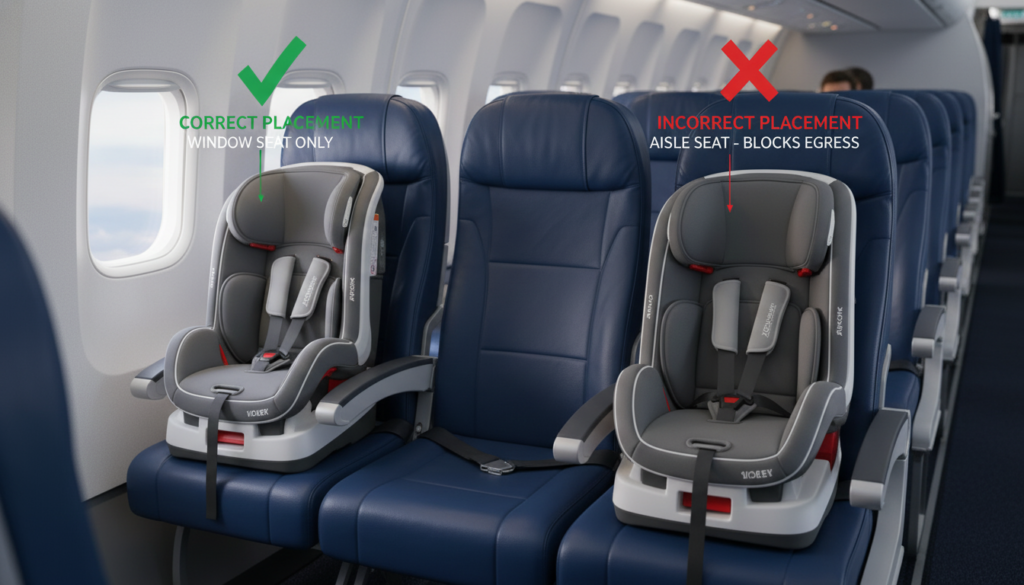
Always place the car seat in a window seat. This prevents blocking passengers from exiting. Avoid exit rows and aisle seats.
Some premium and bulkhead seats may also restrict car seat use because of tray tables or seat structure.
Step 2: Raise Armrests If Possible
Lift armrests before installing the seat. Some armrests cannot be moved, so check early during boarding.
Step 3: Position the Car Seat Correctly
Place the seat flat against the airplane seat. Rear-facing seats are allowed if they fit and follow manufacturer instructions.
Step 4: Route the Seat Belt Through the Belt Path
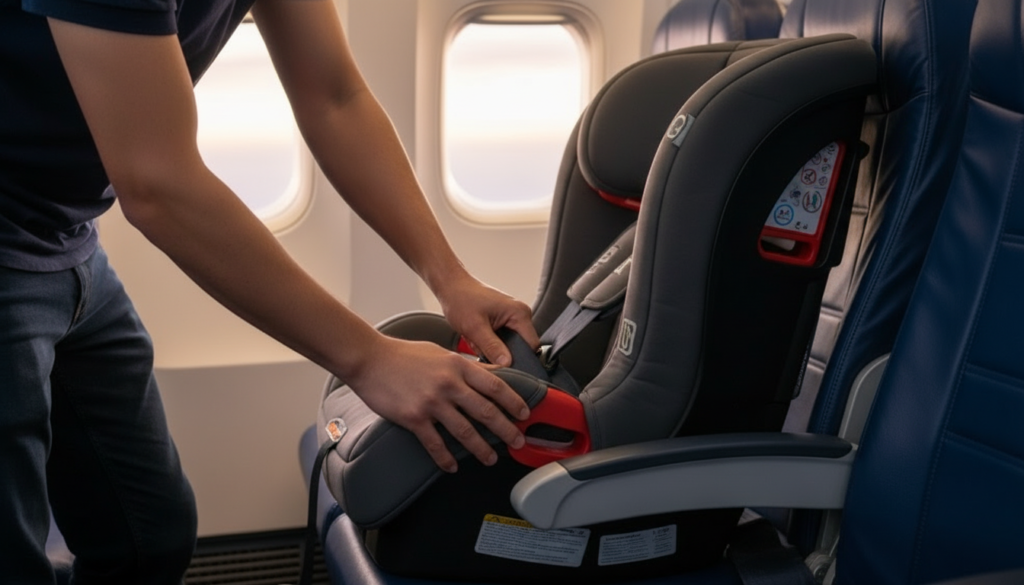
Thread the airplane seat belt through the correct belt path according to your car seat manual. Press down while tightening the belt. The seat should not move more than one inch.
Step 5: Test Stability
Gently push the seat to confirm it is secure before seating your child.
Airplane Car Seat Installation Checklist
Before Boarding
- Confirm aircraft approval label
- Check airline child seat rules
- Practice installation at home
- Reserve window seat if possible
During Boarding
- Raise armrests
- Position car seat correctly
- Route seat belt through belt path
- Tighten seat securely
Before Takeoff
- Test seat movement (less than one inch)
- Buckle child safely
- Check comfort and stability
Five Practical Installation Tips Every Parent Should Know
Clear the Way
Make sure your seat does not block passenger exits.
Use Airplane Seat Belt Only
Airplanes do not have LATCH anchors.
Raise Armrests
This provides more installation space.
Ask About Seat Belt Extensions
Some airlines allow them while others do not. Always ask flight staff first.
Know When Installation Is Not Safe
If the seat cannot be secured tightly, do not use it.
Common Installation Problems & Solutions
| Problem | Possible Solution |
|---|---|
| Seat will not fit between armrests | Ask airline to move you if seats are available |
| Seat belt feels too short | Ask flight crew about extension rules |
| Seat moves too much | Press down while tightening belt |
| Armrests will not lift | Try adjusting seat angle if allowed by manual |
| Staff questions installation | Show aircraft approval label |
What to Do If Your Car Seat Does Not Fit
Sometimes car seats do not fit airplane seats. If this happens:
- Ask to move seats if available
- Install seat without base if allowed
- Ask flight attendants for help
When You Should NOT Use a Car Seat on an Airplane
| Situation | Reason |
|---|---|
| Booster seat use | Airplanes do not have shoulder belts |
| Exit row seating | Blocks emergency evacuation |
| Aisle seat placement | Blocks passenger exit |
| Loose installation | Unsafe during turbulence |
| Some premium or bulkhead seats | Seat design restrictions |
Frequently Asked Questions
Yes. Rear-facing seats are allowed if they fit properly and follow manufacturer instructions.
Yes. Children must have their own ticket to use a car seat.
No. Booster seats cannot be used during taxi, takeoff, or landing.
Parent Travel Confidence Tips
- Practice installation at home before traveling
- Use early boarding to reduce stress
- Stay calm — flight crews help families daily
- Children feel calmer when parents feel confident
- Preparation reduces travel anxiety
Conclusion
Installing a car seat on an airplane may feel intimidating at first, but preparation makes a huge difference. Parents who practice installation and understand airline rules often say their flights are smoother and less stressful. From both safety research and real parent feedback, children who sit in a properly installed car seat tend to stay calmer and more comfortable during turbulence. Safe travel with children is not about perfection — it is about preparation, confidence, and making informed choices that protect your child. When parents feel ready, flying becomes safer, easier, and far more enjoyable for the entire family.
