


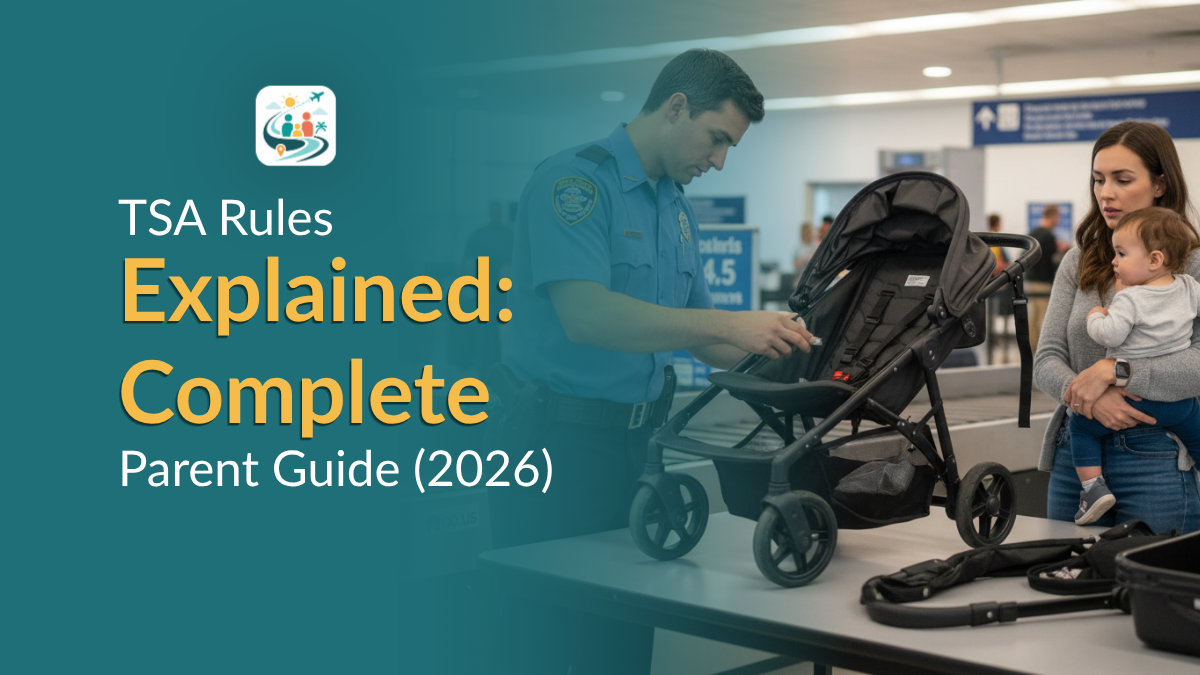
Traveling with a baby or toddler is exciting, but airport security often causes stress for parents. Many families worry about what TSA will do with their stroller. Parents often ask questions like, “Will I need to fold my stroller?”, “Can my baby stay inside?”, or “Will security damage my stroller?” These fears are completely normal, especially for first-time flying parents.
I still remember my first flight with a stroller. My baby was tired. The stroller basket was packed. The TSA line was long. I kept thinking, “What if I hold everyone up?” I did not know if TSA would make me remove everything fast while holding my child. That fear of doing something wrong is real. The good news is that TSA stroller screening is usually simple when you know the steps. In this guide, I will explain what TSA expects, what parents often forget, and how to prepare so you feel calm and confident.
What Are TSA Stroller Rules?
TSA allows parents to bring strollers through airport security checkpoints. Every stroller must be screened before entering the gate area.
Here are the main TSA stroller rules:
- Your child must come out of the stroller during screening.
- The stroller must go through an X-ray machine or manual inspection.
- TSA officers may swab or inspect the stroller.
- All items inside the stroller must be removed and screened separately.
Most strollers are allowed. However, larger strollers or stroller wagons often require manual inspection.
Understanding these rules before you arrive helps prevent delays and reduces travel stress.
TSA vs Airline Stroller Rules (Important Difference)
Many parents confuse TSA rules with airline stroller policies. These rules control different parts of your travel journey.
TSA Rules
TSA controls airport security screening. They decide how your stroller is checked before you reach your gate.
Airline Rules
Airlines control what happens after security. They decide:
- If your stroller can go to the gate
- Size and weight limits
- Whether a stroller can fit inside overhead bins
- Gate-check and baggage handling procedures
Knowing the difference helps parents avoid surprises during travel.
Step-By-Step: Going Through TSA With a Stroller
Knowing the exact screening process helps parents stay calm and prepared.
Step 1: Prepare Before Security
Remove all loose items from your stroller, including:
- Toys
- Blankets
- Bottles
- Snacks
- Diaper bags
- Clip-on fans or accessories
Keep important baby items easy to reach. Organized packing helps you move faster through security.
Step 2: Remove Your Child
You must carry your child through the metal detector. TSA does not allow children to remain in strollers during screening. Many parents find it helpful to use a baby carrier so their hands stay free.
Step 3: Fold the Stroller
Most strollers must be folded before screening. If the stroller fits inside the X-ray belt, it will be scanned like carry-on luggage.
Practicing how to fold your stroller at home can make this step much easier during busy airport screening.
Step 4: Stroller Screening
TSA officers may:
- X-ray the stroller
- Perform manual inspection
- Swab the stroller for security testing
This process is routine and helps keep passengers safe.
Step 5: Reassemble After Screening
Move away from the security belt before opening your stroller again. This prevents blocking the security line and reduces stress for parents and travelers behind you.
What Happens If Your Stroller Does Not Fit in the X-Ray Machine?
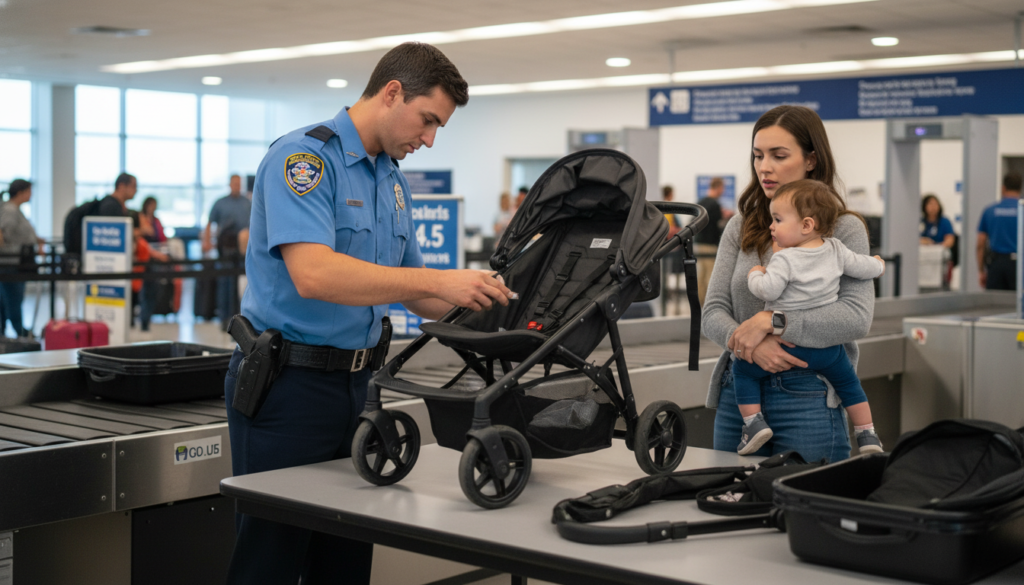
Large or double strollers often do not fit inside standard screening machines. When this happens, TSA performs manual screening.
Manual screening may include:
- Physical inspection
- Security swabbing
- Visual checks of storage areas
Manual inspection takes extra time. Families should plan extra airport arrival time when traveling with large strollers.
TSA Rules by Stroller Type
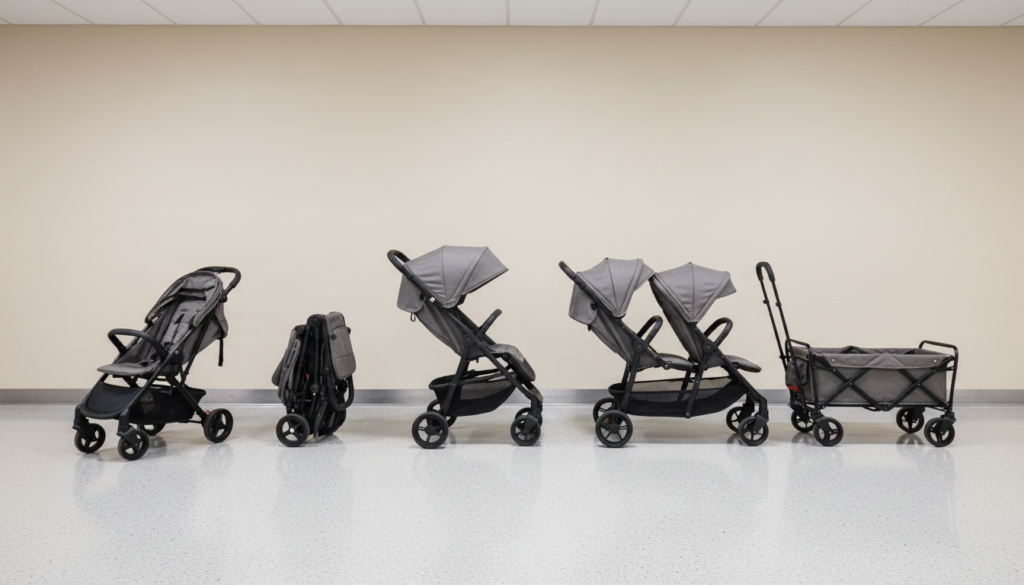
Different stroller types may have different screening experiences.
Umbrella Strollers
Umbrella strollers fold easily and usually fit inside X-ray machines. They are often the fastest option at security.
Full-Size Strollers
Full-size strollers require folding and unloading. Some models require manual inspection.
Double Strollers
Double strollers often need manual screening because of their size.
Stroller Wagons
Stroller wagons are becoming popular for families. However, they are usually large and often require manual inspection.
Traveling With Baby Food, Milk, and Liquids
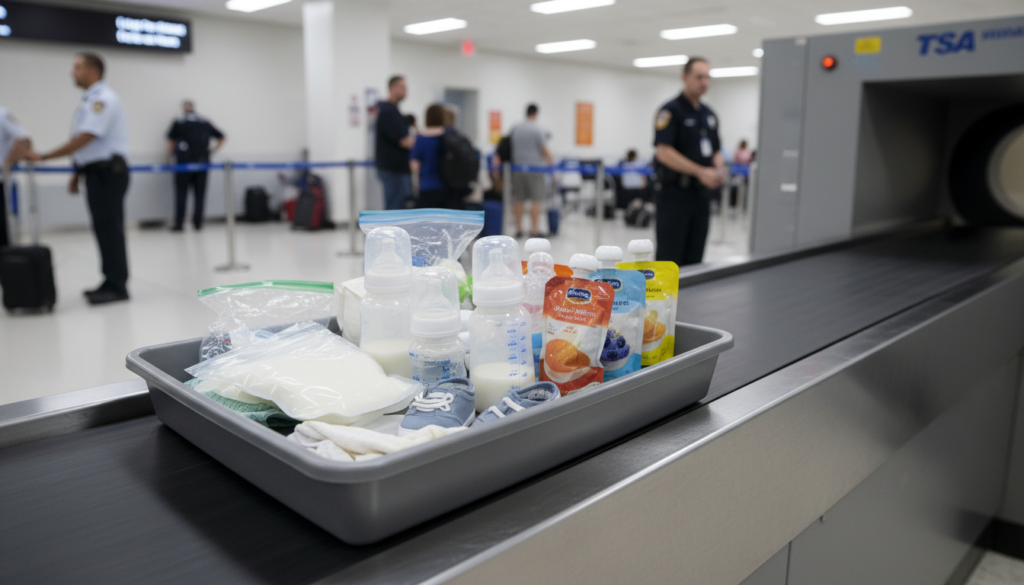
TSA allows baby liquids in larger amounts than normal carry-on limits.
Allowed items include:
- Breast milk
- Formula
- Baby food
- Juice or water for babies
Parents must declare these items at security. TSA officers may screen or test them separately. These baby items are exempt from the 3.4-ounce liquid rule.
Preparing baby liquids separately before reaching security helps speed up screening.
TSA Screening Rules for Children Under 12
Children under age 12 usually receive modified screening. TSA understands that young children need extra support.
This means:
- Children normally keep their shoes on.
- Parents carry infants through metal detectors.
- TSA officers try to keep families together during screening.
However, strollers must still be screened separately.
TSA Cares Program (Extra Help for Families)
TSA offers an assistance service called TSA Cares. This program helps families traveling with medical conditions, disabilities, or special travel concerns.
Parents can contact TSA before traveling to request support. TSA representatives may guide families through security screening. This service can reduce anxiety and make airport screening easier for parents traveling with young children.
Stroller Accessories and TSA Rules
Many parents attach accessories to strollers. TSA usually requires these items to be screened separately.
Common stroller accessories include:
- Clip-on fans
- Toy bars
- Storage organizers
- Rain covers
- Cup holders
Removing accessories before security helps parents avoid delays and keeps screening simple.
Gate Check vs TSA Security Screening
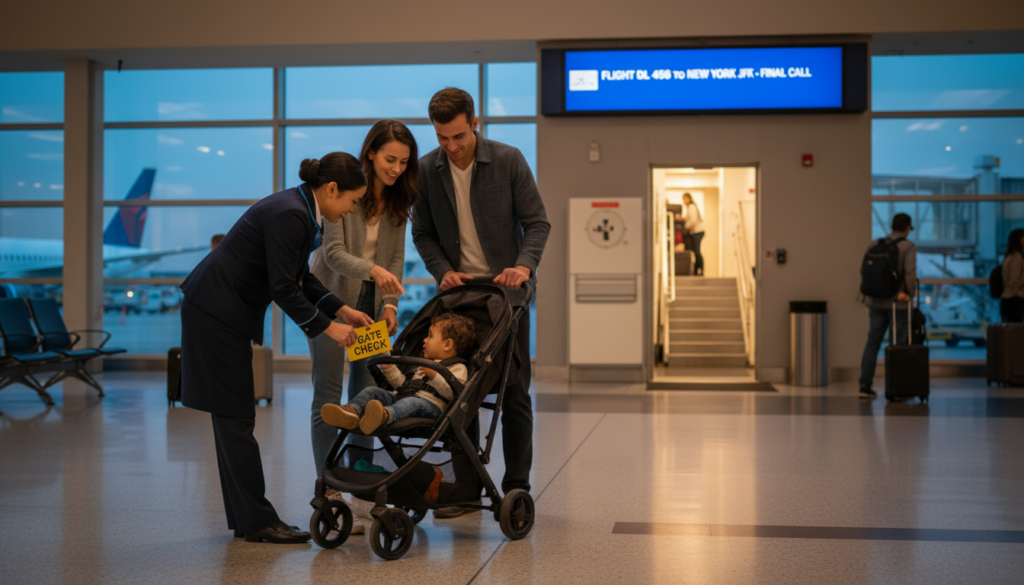
TSA screening and gate checking happen at different stages of travel.
TSA Screening
This happens before reaching the gate. Every stroller must pass through security screening.
Gate Check
Gate check happens during boarding. Airlines allow parents to use strollers inside airports. Staff store gate-checked strollers in the aircraft cargo area.
Gate-checked strollers are usually returned at the jet bridge after landing. Some airlines return them at baggage claim. Parents should confirm pickup location with airline staff.
Preparing Your Stroller for Airport Travel
Experienced parents recommend simple preparation steps.
- Practice folding your stroller quickly.
- Remove accessories before reaching security.
- Label your stroller with contact information.
- Use stroller travel bags for protection if gate-checking later.
Preparation helps parents avoid last-minute stress and protects travel equipment.
Solo Parent TSA Strategy
Traveling alone with children can feel overwhelming. Solo parents can make screening easier by following simple strategies.
- Use a baby carrier to keep hands free.
- Pack stroller storage lightly.
- Keep essential baby items easy to access.
- Ask TSA or airport staff for help when needed.
Many airports offer family security lanes that allow extra time for parents managing children and equipment.
TSA PreCheck and Families
TSA PreCheck helps reduce airport screening stress.
Benefits include:
- Shoes stay on
- Less clothing removal
- Shorter security lines
Children age 12 and under usually can use TSA PreCheck lanes with their parents. However, strollers still require screening.
FAA Safety Recommendation for Children Under Two
The Federal Aviation Administration recommends that children under age two travel in an approved child restraint seat instead of sitting on a parent’s lap. While this is not required, it improves child safety during turbulence and unexpected flight movement.
How Early Should Parents Arrive at TSA With a Stroller?
Families should arrive earlier than regular travelers.
Recommended arrival times:
- Domestic flights: At least 2 hours before departure
- International flights: At least 3 hours before departure
Extra time allows families to manage stroller screening and security procedures without rushing.
Family Boarding and Airport Navigation
Many airlines allow early boarding for families traveling with young children. Early boarding gives parents time to organize bags and help children settle comfortably.
Travel systems that combine car seats and strollers help families move easily through airports and reduce the need to carry heavy equipment.
Backup Plans During Travel Delays
Flight delays are common. Parents should prepare for extra waiting time.
Helpful backup items include:
- Extra snacks
- Spare diapers
- Lightweight blankets
- Small toys or books
Comfort items help children stay calm during delays and reduce travel stress for parents.
Examples of Airline Stroller Policies
Most airlines allow one stroller per child without additional fees. Policies may vary between airlines.
Common airline stroller rules include:
- Gate-checking large strollers
- Allowing compact travel strollers inside overhead bins
- Weight or size restrictions depending on aircraft type
Parents should always review airline stroller policies before travel.
Frequently Asked Questions
No. Children must be removed before screening.
Yes. Most strollers must be folded for screening.
Damage is rare. Travel bags can provide additional protection.
Yes. Strollers still require screening.
Do I Need to Remove Items From the Stroller?
Final Thoughts on TSA Stroller Rules
Flying with young children can feel overwhelming, especially for first-time parents. TSA stroller screening is one of the biggest travel concerns families face. From travel research and real parent experience, most problems happen because parents do not know what to expect. Once families understand the steps, security becomes faster and calmer.
I have seen the biggest difference when parents do three simple things. They practice folding their stroller. They keep stroller storage light. And they arrive early. When you do this, TSA screening feels like a normal step, not a scary moment. Trusted safety guidance also matters. For example, the FAA recommends using an approved child seat for children under two when possible. That type of planning helps families travel with more confidence.
Traveling with children takes extra effort, but it also creates meaningful family memories. With the right preparation, TSA stroller screening becomes just one small step toward a safe and enjoyable trip.
