


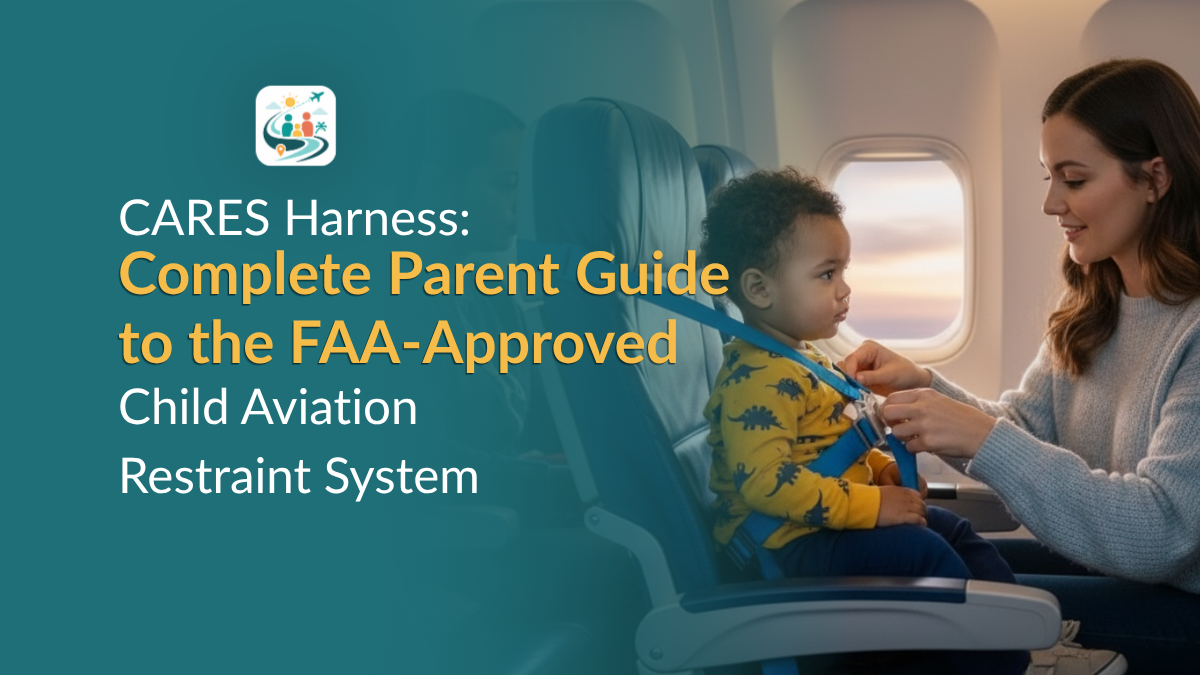
Flying with a toddler sounds fun in theory, but many parents quickly realize how stressful it can be once they board the plane. Young children often wiggle, lean forward, or try to slip out of airplane seatbelts. When turbulence happens, even mild bumps can make parents panic about their child’s safety. I remember one flight where my toddler kept sliding sideways under the seatbelt, and it made me question whether standard airplane restraints were truly designed for small children.
After researching child aviation safety and reviewing Federal Aviation Administration (FAA) travel guidance, I discovered the CARES harness — also known as the CARES airplane safety harness. This child aviation restraint system is designed specifically for airplane travel and is trusted by aviation safety experts and experienced traveling parents. In this guide, I will share clear safety facts, real travel insights, and practical advice to help parents understand whether the CARES harness is the right choice for their family.
What Is a CARES Harness?
The CARES harness stands for Child Aviation Restraint System. It is a safety harness designed only for airplanes. It works together with the airplane lap belt to add upper-body protection.
The Federal Aviation Administration (FAA) approves CARES for airplane travel. As a CARES airplane safety harness, it helps protect children during taxi, takeoff, landing, and turbulence. However, it cannot be used in cars. It is made only for airplane seats.
Parents often choose CARES when their child is too big for an infant seat but still needs extra safety support during flights.
Quick Answer: Who Should Use the CARES Harness?
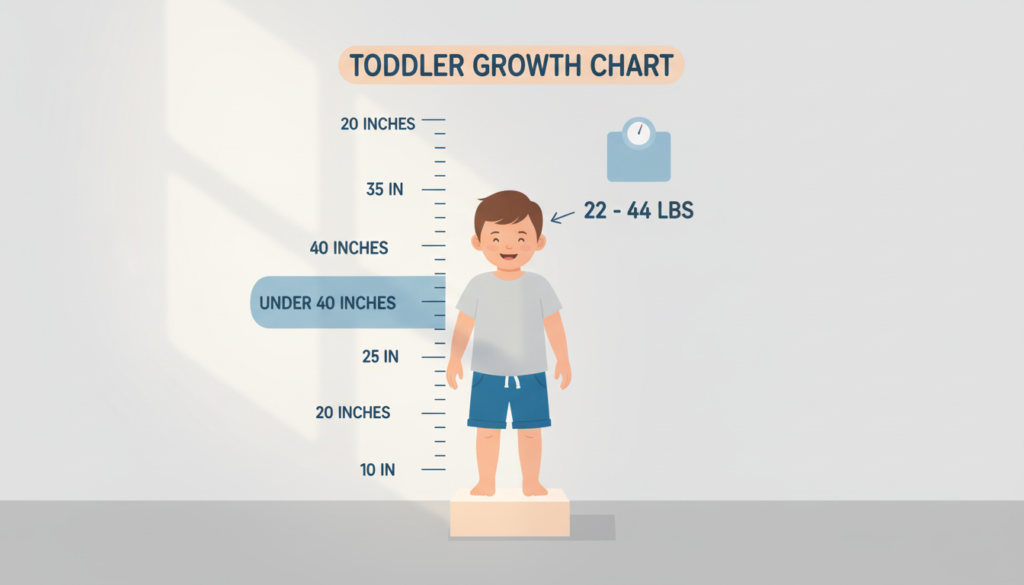
The CARES harness is designed for children who meet these safety limits:
- Weight: 22 to 44 pounds
- Height: Up to 40 inches
- Must sit upright without help
- Must have their own airplane seat
If your child does not meet both height and weight limits, the harness should not be used.
For example:
- A child who weighs 30 pounds but is 41 inches tall cannot use CARES.
- A child who weighs 45 pounds but is 38 inches tall also cannot use CARES.
Why Parents Search for the CARES Harness
Most parents who search for the CARES harness airplane option are trying to solve real travel safety worries. Common concerns include:
- Fear of turbulence injuries
- Worry their child may unbuckle a seatbelt
- Anxiety about airline safety rules
- Stress from carrying bulky car seats
- Concern about toddler tantrums or constant movement
The CARES harness helps reduce these worries while making airport travel easier for the whole family.
Why Parents Choose the CARES Harness
Families often choose CARES because it balances safety and convenience in a way that bulkier options simply can’t match at the airport.
Parents like CARES because it:
- Provides upper-body restraint during turbulence
- Is lightweight and easy to carry
- Fits into small travel bags
- Installs quickly
- Helps children stay seated properly
For many families, the biggest benefit is reducing airport stress while still following FAA safety rules.
When the CARES Harness Is the Best Travel Choice
The CARES harness is especially helpful when:
- Parents do not need a car seat after landing
- Families want to travel lighter
- Toddlers struggle to sit still with only a lap belt
- Parents want easier boarding and installation
Many families use CARES during vacation travel, holiday trips, or first-time toddler flights. It’s also a popular choice for families doing short trips where renting a car seat at the destination makes more sense than lugging one through three connecting airports.
When Parents Should Consider Using a Car Seat Instead
CARES is helpful, but it is not perfect for every travel situation.
Parents may prefer a car seat if:
- They need a car seat at their destination
- Their child sleeps better with full head support
- Their child tries to remove harness straps
- Their child is close to CARES size limits
Choosing between CARES and a car seat depends on your travel plans and your child’s comfort level. There is no single right answer — both options are FAA-approved and both are safer than a lap belt alone.
Airline Compatibility and Seating Rules Parents Must Know
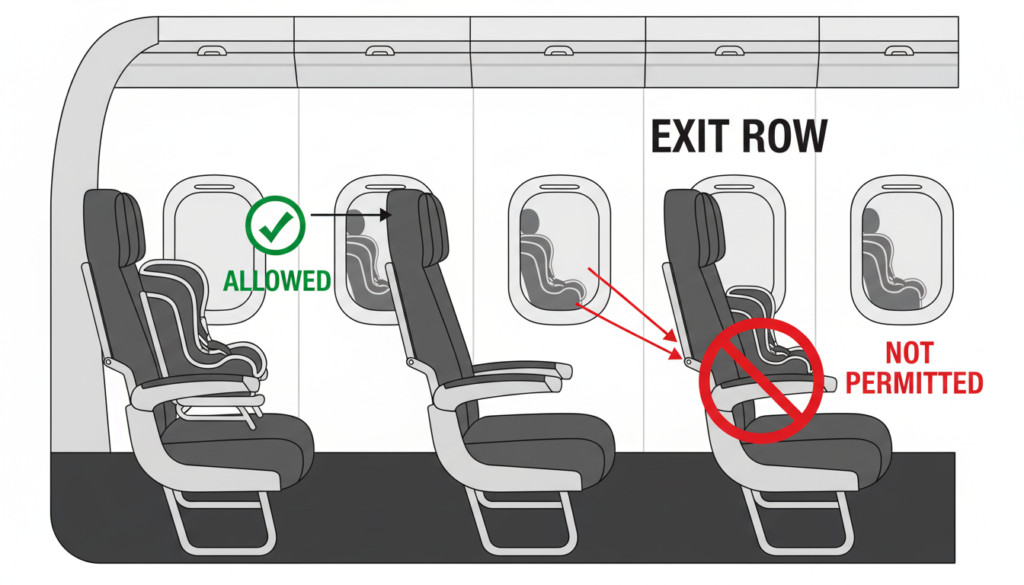
Many U.S. airlines accept the CARES harness airplane restraint system. However, airline rules can vary by carrier. This is why parents should check policies before flying rather than assuming acceptance at the gate.
Keep these rules in mind:
- CARES cannot be used in exit rows.
- Many airlines prefer child restraints in a window seat.
- CARES must not block passenger exit paths.
- CARES may not work with inflatable or airbag lap belts.
If airline staff are unfamiliar with CARES, showing the FAA approval label or printed installation instructions can help resolve the situation quickly.
Step-by-Step CARES Harness Installation Guide
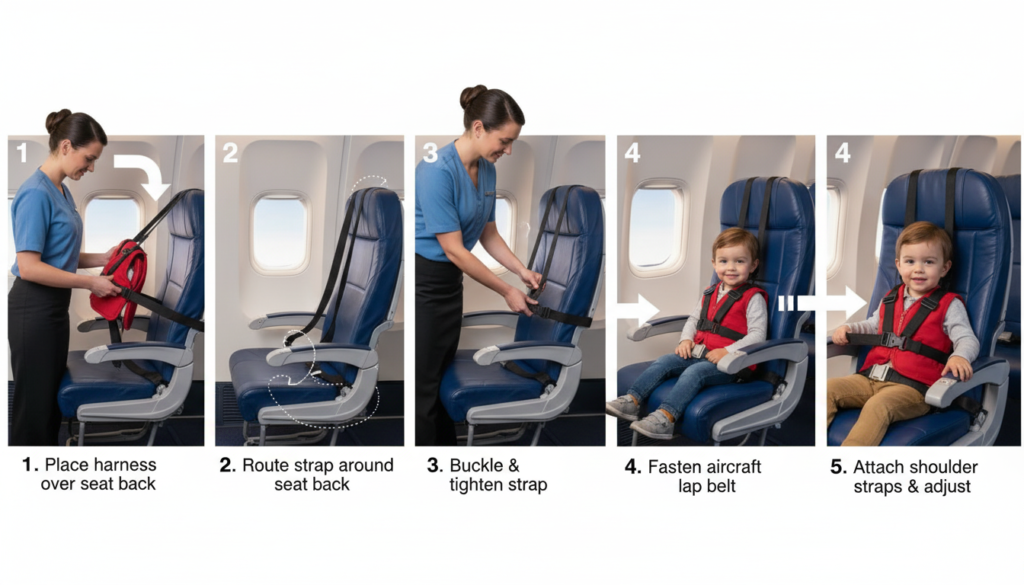
Many parents worry about installation before their first flight. CARES is designed to install fast — most parents have it set up in under two minutes once they’ve practiced at home.
How to Install CARES
- Lower the tray table behind your seat.
- Place the red strap over the airplane seat back.
- Position the strap above your child’s shoulders.
- Tighten the strap firmly against the seat.
- Thread the airplane lap belt through harness loops.
- Buckle and tighten the lap belt.
- Attach shoulder straps and chest clip.
- Adjust straps until snug.
Installation Tips That Help Reduce Travel Stress
Parents often find installation easier when they:
- Install CARES before the plane becomes crowded
- Ask passengers behind them politely to lower tray tables
- Keep straps flat and untwisted
- Check harness tightness before takeoff
Practicing the installation at home before your travel day makes a genuine difference. The first time I set ours up, it took about five minutes and a lot of second-guessing. By the third trip, it was done before the boarding door closed behind us.
How to Verify a Real FAA-Approved CARES Harness
The FAA warns parents about counterfeit CARES harnesses sold online. Fake harnesses may look identical to the real product but have not been tested or certified for aviation use — meaning they may not protect your child in the way you’re counting on.
Parents should check the label carefully before traveling. A genuine CARES airplane safety harness includes FAA approval language confirming it is certified safe for airplane use. That label is your proof at the gate if a staff member questions the device. Buying directly from the manufacturer or a trusted major retailer is the safest way to ensure you have the real product — not a cheap imitation that looks right but isn’t.
CARES Harness Pros and Cons
Understanding advantages and limitations helps parents make confident decisions.
Advantages
- Lightweight and easy to travel with
- Adds upper-body safety support
- Quick installation
- Approved for all flight phases
- More affordable than many travel car seats
Limitations
- Cannot be used in vehicles
- Provides less sleeping support than car seats
- Has strict size limits
- Some children resist wearing harness straps
CARES Harness vs Car Seat for Air Travel
Parents often compare the CARES harness and car seats when planning travel. Both are FAA-approved and both are significantly safer than a standard lap belt for young children. The right choice comes down to your specific trip, your child’s size, and how much gear you’re willing to manage through the airport.
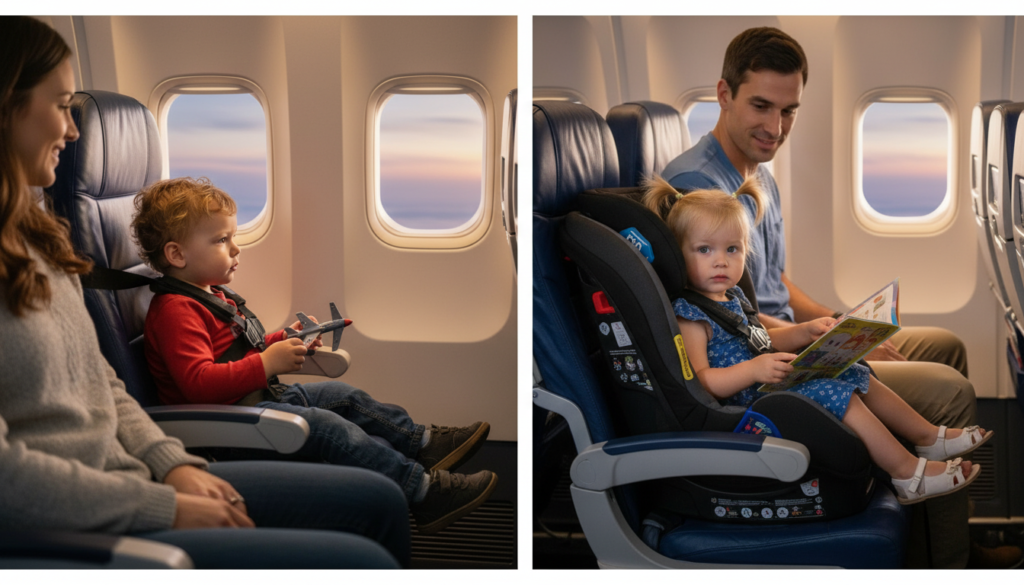
Both options improve child safety during flights. The best choice depends on your child’s size, comfort, and travel plans.
Quick Decision Checklist
Choose CARES If:
- You want lighter travel gear
- You do not need a car seat after landing
- Your child meets the size limits
- You want faster airport mobility
Choose a Car Seat If:
- You need car safety at your destination
- Your child sleeps best with head support
- Your child dislikes wearing harness straps
- You want a familiar setup your child already knows
Both options improve child safety during flights. The best choice depends on your child’s size, comfort, and your travel plans.
Special Needs CARES Harness Options
Some children require additional travel support beyond what a standard CARES harness provides. The CARES manufacturer offers a special needs version specifically designed for children who need extra upper-body stability — particularly children with low muscle tone, postural challenges, or other conditions that make standard aircraft seating difficult to manage safely.
If your child has medical or developmental needs, speak with your pediatrician or a pediatric occupational therapist before choosing any aviation restraint device. They can advise whether the standard CARES harness, the special needs version, or a different restraint system is the safest match for your child’s specific situation. It’s also worth calling your airline before travel day to explain your child’s needs — most carriers are more accommodating than parents expect when they’re contacted in advance rather than approached at the gate.
In rare situations, families may request FAA exemptions if their child exceeds CARES limits but requires medical travel support. Your airline’s accessibility team is the right starting point for that conversation.
Frequently Asked Questions
Yes. The CARES harness is approved for all phases of flight — taxi, takeoff, cruising, landing, and turbulence. This is one of the key advantages of using the CARES airplane safety harness over a standard lap belt, which provides no upper-body protection at all during sudden movement. You do not need to remove it at any point during the flight.
Some toddlers sleep in the CARES harness just fine — mine did on a two-hour afternoon flight to Florida, head lolling sideways the whole way. On a longer red-eye, though, the lack of full head support became obvious pretty quickly and I wished we’d brought the car seat. If your child is a reliable napper and you’re on a short flight, CARES usually works. For longer overnight flights, a car seat tends to give young children the head and neck support they need to actually sleep comfortably.
Most major U.S. airlines allow the CARES harness airplane restraint, and it’s FAA-approved which means airlines operating under FAA rules cannot outright refuse it if your child meets the size requirements. That said, individual gate agents don’t always recognize it on sight. Carrying the printed FAA approval documentation alongside the harness removes any friction at boarding and avoids delays when you’re already trying to wrangle a toddler through a crowded aisle.
Yes. Standard airplane lap belts are designed for adult bodies and provide zero upper-body restraint. The CARES harness adds a shoulder harness system that keeps your child’s upper body secured during turbulence, sudden stops, or unexpected movement — which is exactly when lap-only restraints fail young children. Aviation safety experts consistently recommend using an approved child restraint system over a lap belt alone for any child who meets the size requirements.
Conclusion
After traveling multiple times with toddlers, I have learned that safe air travel requires both preparation and the right equipment. When I first used the CARES harness, it gave me genuine peace of mind knowing my child was properly secured — not just loosely belted into a seat designed for an adult. The CARES airplane safety harness is a practical, well-designed solution for families whose children meet the size requirements. It’s lightweight enough to carry through any airport without adding stress to your journey, and effective enough that aviation safety experts recommend it by name.
That said, it isn’t the right choice for every child or every trip. Parents should always weigh their child’s comfort, sleep habits, size, and ground transportation needs before deciding between a CARES harness and a traditional car seat. Both options keep your child safer than a lap belt alone — and that’s what matters most. When families understand their options and prepare ahead of time, flying with toddlers becomes far safer and much less stressful than it looks from the outside.
