


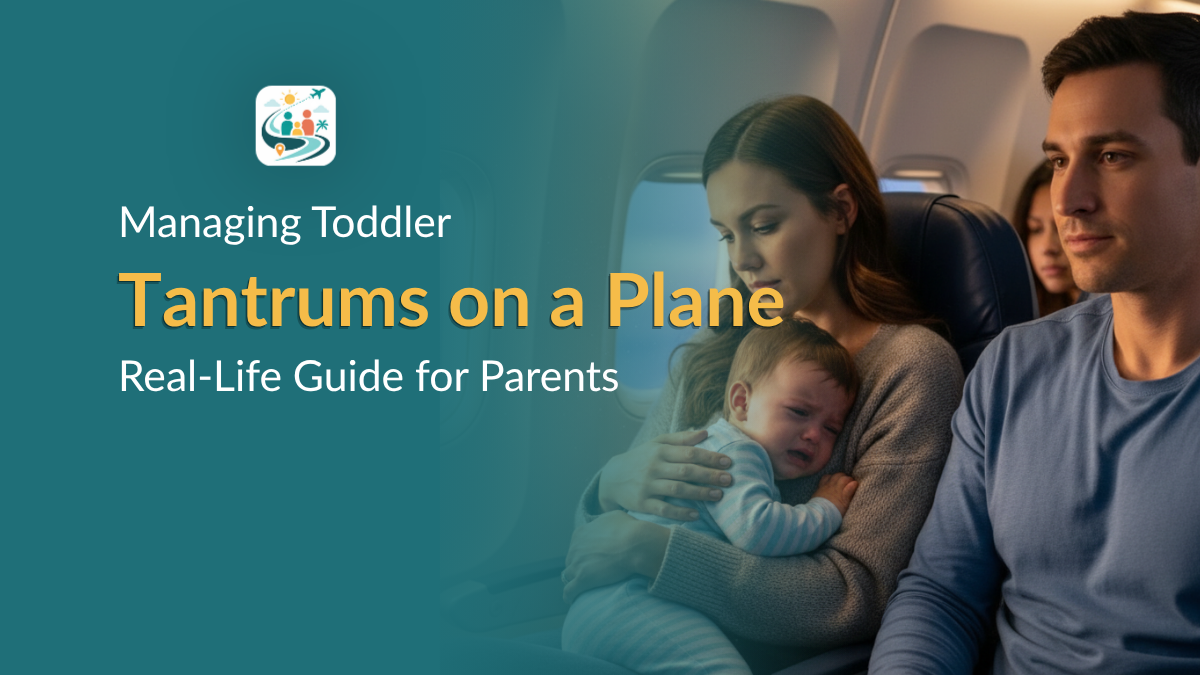
Anyone who has flown with a baby or toddler knows tantrums on a plane are one of the biggest fears, and one of the most common realities.
The fear covers more than crying: the stares, the small space, the seatbelt sign, and the feeling that everyone is watching you. Many parents search for help late at night or right before boarding, worried they will lose control of the situation.
I have been there. I have held a screaming toddler at 30,000 feet while trying to stay calm and follow airline rules. What I learned is simple: tantrums on planes are common, and most of them can be managed with the right mindset and a few practical tools. This guide focuses on real situations parents face and how to manage toddler tantrums on a plane without guilt or panic. For everything else about the trip, see our complete guide to flying with a baby or toddler.
Why toddler tantrums happen on a plane
Common reasons toddlers cry during flights infographic
Toddlers are still learning how to handle emotions. They cannot explain pain, fear, or frustration clearly.
Flying adds extra stress:
Ear pressure during takeoff and landing
Hunger or thirst
Missed naps and long waits
Loud sounds and bright lights
Being forced to sit still
Because of this, tantrums on planes are very common.
Tip: Start with pain, hunger, and ear pressure first. Those are the most common flight triggers.
Tantrums on planes are normal
A toddler tantrum on a plane is a normal reaction to a hard environment: tight seats, pressure changes, and long waits push toddlers past their limit fast. Most parents around you have been through it too, even when it doesn’t feel that way in the moment.
Stay calm first
Toddlers sense emotions quickly. If you panic, your toddler often panics too.
Take one slow breath.
Lower your voice.
Sit close to your child. Your calm response helps your toddler feel safe.
Prepare before the flight to reduce tantrums
Preparation lowers stress for both of you. Avoiding common mistakes that trigger toddler meltdowns is one of the best things you can do before you even reach the airport.
Keep sleep as normal as possible
A tired toddler is more prone to tantrums and has far less control over emotions mid-flight. Try not to skip naps if possible, and read our full guide on helping your toddler sleep on a plane before you travel.
Choosing the right departure window helps too — see the best time of day to fly with a toddler.
Explain the flight in simple words
Tell your toddler:
They will sit in a seat
They will eat snacks
They can watch shows
Knowing what to expect helps them feel secure.
Pack with tantrums in mind
Bring:
Familiar snacks
Water or milk
One new small toy
A comfort item
Wipes and spare clothes
Our full carry-on packing list for toddlers covers what else is worth the space.
Use distraction during the flight
Distraction is one of the best tools.
You can use:
Stickers and small toys
Picture books
Downloaded cartoons
Simple songs or games
Save your best distractions for hard moments. On longer routes you’ll need more of them — see long-haul flights with toddlers.
Ear pain is a major tantrum trigger
Toddler drinking during takeoff to reduce ear pressure
Many toddler meltdowns happen during takeoff or landing. Ear discomfort causes fussiness that toddlers can’t explain and parents often miss it. Our dedicated guide covers how to prevent and relieve it.
To reduce ear pressure:
Offer drinks at these times
Give snacks that require chewing
Use a pacifier if your child accepts one
Swallowing helps ease discomfort. The timing matters more than most parents expect — see feeding a baby during takeoff and landing.
Hunger and thirst matter more than you think
Hungry toddlers lose patience fast.
Feed your child before boarding.
Offer snacks often.
Give water regularly.
Avoid too much sugar before landing.
Dress for comfort on the plane
Uncomfortable clothes can trigger tantrums.
Choose:
Soft fabrics
Layers for temperature changes
Easy bathroom access
Comfort helps your toddler stay calm longer.
What to do when a tantrum starts on the plane
Parent calmly talking to toddler during airplane tantrum
Tantrums can still happen, even with preparation.
Step 1: check safety first
Look at the seatbelt sign.
Remove hard or sharp objects.
A toddler in their own restrained seat is both safer and easier to settle — see car seats on airplanes.
Step 2: acknowledge feelings
Use short phrases:
“I know this is hard.”
“You feel upset.”
Avoid long explanations.
Validate: “I know this is hard.”
Safety: “You are safe. I am right here.”
Boundary: “Seatbelt stays on. We can hold hands.”
Choice: “Snack or toy?”
Choice: “Book or screen?”
Time: “When the light turns off, we can stand up.”
Reconnect: “Let’s take one slow breath together.”
Repair: “That was big feelings. You did it.”
Tip: Say less. Repeat the same calm line. Your steady tone matters more than new words.
Step 3: offer two simple choices
Choices give toddlers a sense of control:
“Snack or toy?”
“Book or screen?”
Step 4: offer comfort
Hold their hand.
Apply gentle pressure.
Speak quietly and slowly.
Quick reminder: Safety comes first. If you are unsure, follow crew instructions and focus on calming in your seat.
If the seatbelt sign is on
You must stay seated.
Try:
Singing softly
Breathing together
Holding a comfort item
Watching a short video
Stay patient. This phase will pass.
If the seatbelt sign is off
Movement can help release frustration.
Walk slowly in the aisle if allowed.
Stretch legs near your seat.
Ask a flight attendant if space is available.
Flight attendants can help
Flight attendants see families every day.
You can politely ask for:
Extra napkins
Warm water
Help when it is safe
You are not bothering them.
Screens are okay during flights
Many parents worry about screen time.
On a plane, screens are a tool for coping with stressful moments.
Download content before the flight.
Use child-friendly headphones.
Dealing with judgment from other passengers
Fear of judgment can make tantrums harder to manage.
Most passengers:
Have kids
Know someone with kids
Understand more than you expect
Focus on your child. Caring for your toddler matters more than managing how it looks to others.
What not to do during a plane tantrum
Avoid these common mistakes:
Yelling or raising your voice
Threatening punishment
Giving too many choices
Over-explaining during big emotions
Simple, calm responses work best.
When nothing works
Sometimes tantrums continue no matter what.
This does not mean you failed.
Stay present.
Keep your child safe.
In my experience, most tantrums end within minutes.
Safety: Is the seatbelt sign on? Are we safe and seated?
Ear pressure: Are we taking off or landing? Try drink or chew.
Hunger/thirst: Offer water first, then a simple snack.
Tired: Comfort item + quiet voice + short screen time.
Control: Offer 2 choices only. Keep them simple.
Reset: Repeat one calm phrase and give it 60 seconds.
Remember: guide your toddler through it safely. That’s the only goal.
Final thoughts
After flying many times with a toddler, I’ve learned tantrums are a normal response to discomfort, confusion, and tiredness in a hard environment.
Managing toddler tantrums on a plane gets easier with experience. Each flight teaches you what works for your child. Trust yourself. Most people around you have been there too, even when it doesn’t feel that way. You are doing your best in a challenging situation, and that is exactly what your toddler needs.