


The night before my first flight with a baby, I barely slept. Not because I forgot to pack but because my mind kept racing. I imagined my baby crying for hours while passengers stared. I worried about ear pressure hurting them, security taking the milk, and being stuck in a seat with no escape. Most parents aren’t afraid of flying itself. They’re afraid of not knowing what to do when things don’t go as planned.
After several flights with both a baby and a toddler, I realized something important: airports and airplanes follow a predictable routine. Flight crews help families every day, and the situations parents fear rarely turn into real problems. Stress mostly comes from uncertainty, not difficulty. Once you understand what will happen step by step, flying stops feeling overwhelming and starts feeling manageable.
Flying with a baby or toddler is safe when you know airline rules, prepare for security screening, and manage ear pressure during takeoff and landing.
Quick Takeaway: Flying With a Baby or Toddler
- Feed or offer a pacifier during takeoff and landing to help with ear pressure.
- Pack extra clothes for your baby and for you. Spills and blowouts happen.
- Use a stroller or baby carrier to move fast and keep hands free.
- Arrive early because security and boarding take longer with kids.
- Plan in 20-minute blocks with snacks, toys, and short activities for toddlers.
Is It Safe to Fly With a Baby or Toddler?
Yes. In most cases, flying is safe.
Most US airlines allow healthy newborns after a few days old. Some airlines require a doctor’s note if the baby is under 7 days old.
Doctors often recommend waiting until 6–8 weeks so the immune system becomes stronger.
Toddlers can safely fly at any age. The real challenge is energy and behavior not safety.
When You Should NOT Fly
Do not fly if your child has:
- Fever over 100.4°F (infants)
- Ear infection
- Breathing illness
- RSV or flu symptoms
- Recent surgery
Cabin pressure can increase discomfort and pain.
Airline Rules Parents Must Know
Lap Infant Rule
Children under 2 years old can sit on your lap on domestic US flights. International flights usually charge a small fee.
Buying a Seat Is Safer
The FAA recommends using an approved car seat during turbulence. A separate seat also gives your baby more space on longer flights.
Should You Buy a Seat for Your Baby?
Seat Decision Guide
| Choose This | If… | Why It Helps |
|---|---|---|
| Lap infant | Short flight, baby sleeps in arms | Lower cost |
| Buy a seat + car seat | Long flight, baby needs space | More comfort and added safety |
Bassinet Seats Explained
Airplane bassinets attach to bulkhead seats.
Important points:
- Only available on larger aircraft
- Limited quantity
- Must request early
- Not usable during turbulence
Airport Timeline: What Happens Step by Step
Airport Timeline
| Step | What Happens | Parent Tip |
|---|---|---|
| Arrival | Check-in and stroller tag | Arrive early |
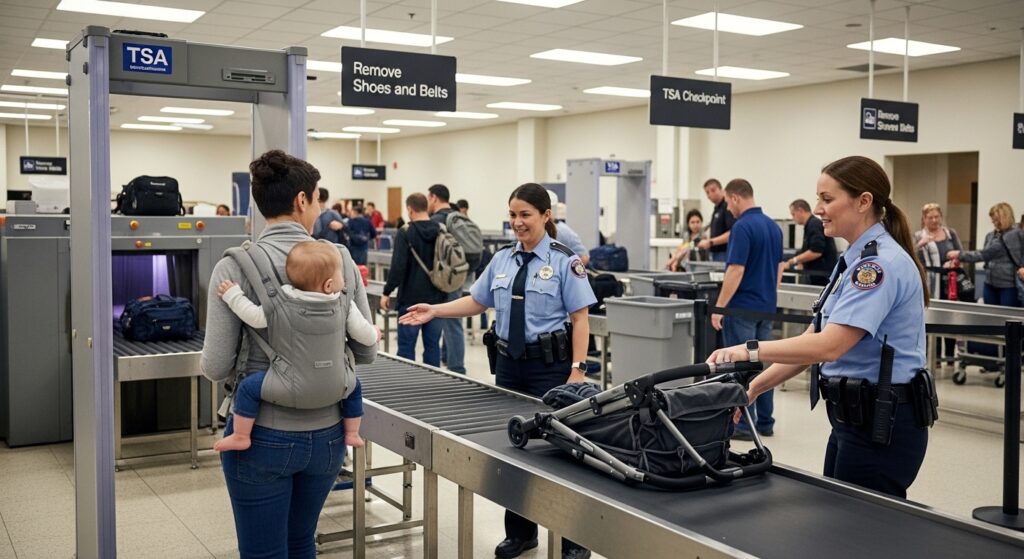
| Security | Remove baby from stroller | Keep milk accessible |
| Gate | Gate-check stroller | Change diaper before boarding |
| Takeoff | Feed or offer pacifier | Helps ear pressure |
Best Age to Fly: Quick Comparison
Age Difficulty Guide
| Age | Difficulty | Main Challenge |
|---|---|---|
| 0–3 months | Easy | Immunity |
| 4–9 months | Easiest | Nap timing |
| 9–18 months | Hardest | Movement |
Common Mistakes to Avoid
- Booking tight connections
- Forgetting spare clothes
- Boarding too early with toddlers
- Skipping feeding during takeoff
- Not charging devices
Final Thoughts
After many trips with young children, one lesson stands out the fear before the flight is usually worse than the flight itself. Babies may fuss briefly, toddlers may wiggle, and plans may shift, but families travel successfully every day. With preparation and realistic expectations, flying becomes another parenting experience instead of a stressful event. The first trip builds confidence, and after that, you stop asking whether you can handle it and start focusing on enjoying the journey together.
