


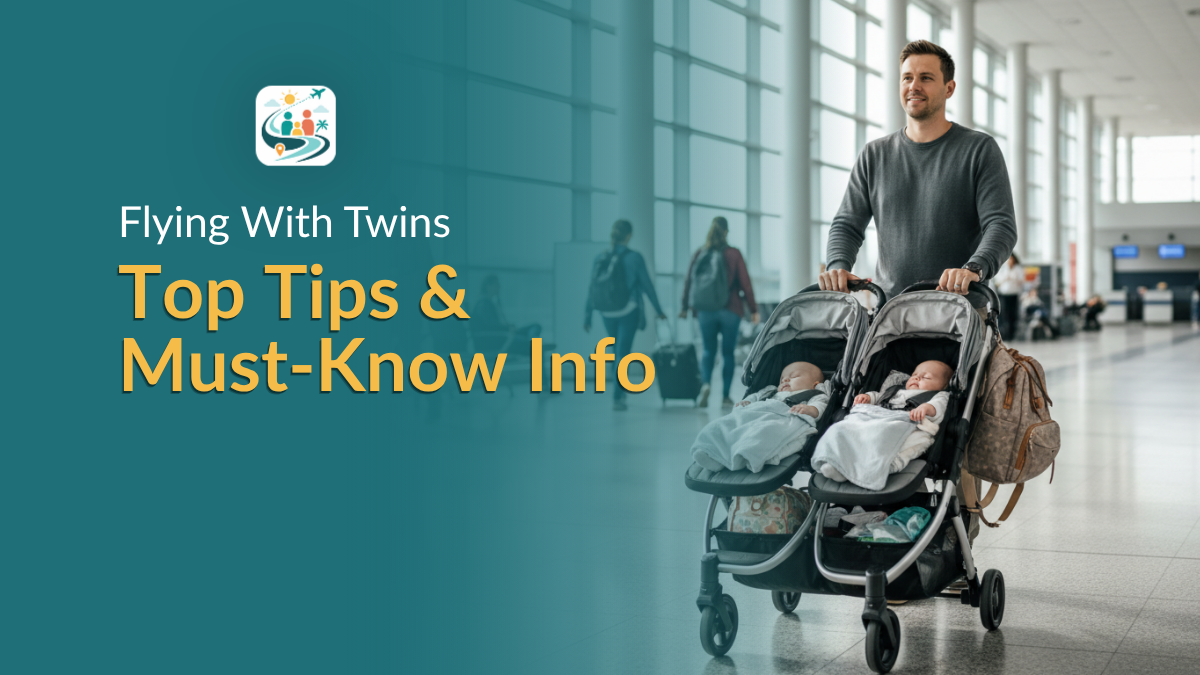
Flying with twins is not just travel planning. It is emotional pressure. Parents worry about airline rules, crying babies, judgment from other passengers, and the fear of doing something wrong at the gate. Many parents lose sleep before the trip, replaying questions in their head: Can I fly alone with twins? Will the airline let us board? What if both babies cry at once?
After researching real parent experiences and safety guidance, one pattern is clear. Most problems do not happen in the air. They happen before the flight, because parents are unsure about rules, seating, or what airlines actually allow. When expectations are clear, stress drops. This guide is written to remove confusion, explain the rules in plain language, and help you feel prepared before you even reach the airport.
Flying Twins Travel Tips
Flying with twins is different from flying with one baby. Airlines have strict rules, and they enforce them. Parents often feel anxious because policies can feel unclear, especially for lap infants and seating.
The biggest tip is simple. Plan early. Keep your setup simple. Ask for help when needed.
Plan Flights Ahead of Time
Book early when possible. Early booking gives you better seat choices and less stress. It also helps you avoid tight connections.
Choose flights that match your twins’ sleep schedule. Morning flights often work best. Avoid very late flights if you can. Overtired babies settle less.
Know the Rules Before Flying With Twins

Airlines allow only one lap infant per adult. This rule exists because each row has a limited number of oxygen masks.
If one adult flies with two infants:
- One infant must have a paid seat.
- That infant must use an FAA-approved car seat.
The Federal Aviation Administration recommends using an approved child restraint system because it is the safest option during turbulence.
Flying With Twins Alone
Flying alone with twins is one of the biggest fears for parents. Here is the clear rule you must plan for: one adult cannot fly with two lap infants. One infant usually needs a paid seat and a certified car seat.
If both twins are lap infants, airlines usually require another adult. Knowing this early prevents stress and surprises at the gate.
Bulkhead Seats With Twins
Bulkhead seats offer extra legroom. This can help with space. But there are limits. Some bulkhead rows do not allow car seats. Bassinets are limited and not guaranteed. Ask the airline before booking these seats.
Flight Times
Pick flight times that match naps or bedtime when possible. Avoid late-night flights if your twins get overstimulated easily. A calmer schedule helps everyone.
Packing For The Flight With Twins

Packing for twins can feel like packing for a small army. Many parents fear forgetting something important. The goal is to pack the essentials and stay hands-free.
Important Documents
Keep all documents in one place:
- Boarding passes
- Birth certificates (if required)
- Insurance cards
Carry On Luggage
Your carry-on should include:
- Diapers and wipes
- Formula or breast milk
- Bottles or cups
- Pacifiers
- Snacks for toddlers
The Transportation Security Administration allows baby liquids like formula and breast milk, but you should declare them at screening.
Entertainment
Bring small, quiet toys. Board books work well. Avoid toys that roll under seats.
Spare Clothing
Pack at least one spare outfit per twin. Pack one spare shirt for yourself too. Spills happen.
Baby Carrier
A baby carrier helps in the airport. It frees your hands and keeps babies calm.
Double Strollers
Most airlines let you gate-check a double stroller. Some have size and weight rules. A lightweight stroller is easier.
Car Seats
A certified car seat is the safest option for babies on a plane. Check for the aircraft approval label. Car seats are often placed in a window seat.
Snacks & Formula
Bring more than you think you need. Delays are common. Keeping babies fed prevents stress.
Navigate The Airport Like A Pro
Airports can overwhelm twins and parents. Crowds and noise raise stress fast. Arrive early so you have breathing room.
Arrive Early
Arrive at least two hours early for domestic flights. Extra time makes security and boarding easier.
Check-In
Online check-in saves time. If you need help, ask airline staff. Many agents are helpful with families.
Navigating Security With Twins
Security feels stressful for many parents. Expect strollers to be screened and baby liquids to be checked. Declare formula, breast milk, and baby food before screening.
In The Terminal
Use terminal time wisely. Change diapers before boarding. Feed babies when possible. Let toddlers move and burn energy.
On Board The Flight With Twins
Board early when family boarding is offered. It gives you time to settle. Keep essentials under the seat in front of you.
Try to stay calm. Babies feel stress. Simple routines help.
Installing A Car Seat
Install the car seat using the seat belt, following the car seat manual. Flight attendants can help if needed.
Lap Belts & Harnesses
Lap infants must be held during takeoff and landing. Follow the seatbelt sign.
Changing Diapers On The Plane
Plane bathrooms are small. Bring only what you need. Use the changing table if available.
Eating Meals On The Plane With Twins
Feed babies during takeoff and landing to help with ear pressure. The Centers for Disease Control and Prevention supports feeding on demand while traveling.
Bring familiar snacks for toddlers.
Don’t Forget To Keep Hydrated
Airplane cabins are dry. Offer fluids often. Dehydration can make babies fussier.
Sleeping Aids
Sleep is harder when traveling with twins. Light and noise can wake them. Familiar items help, like a small blanket, pacifier, and white noise device. Keep the routine simple and consistent.
Disembarking The Plane
Take your time. Let the aisle clear. Rushing makes it harder to manage twins and bags.
Jet Lag
Jet lag can affect twins differently. Keep routines as normal as possible. Daylight helps reset schedules.
Flying With Infant Twins vs Twin Toddlers
Infant twins need more feeding and diaper support. Twin toddlers need more snacks, movement, and activities.
Infant twins vs twin toddlers (what changes on flights)
| What you’ll manage | Infant twins | Twin toddlers |
|---|---|---|
| Main needs | Feeding, diapers, soothing | Snacks, activities, boundaries |
| Best strategy | Simple routine + comfort items | Toy rotation + movement before boarding |
| Hard moments | Two babies needing you at once | Boredom and big feelings |
| What helps most | Hands-free carrier and clear seating plan | Snack plan and calm, firm routines |
Yes. It is safe when you follow airline rules and use proper seating.
Yes, but it depends on lap infant rules and aircraft seating.
Not always. It depends on how many adults are flying and the twins’ ages.
Most airlines allow gate-checking double strollers. Check size rules.
Final Thoughts
Flying with twins is emotional. Fear, doubt, and stress are normal. But it is manageable. Parents who understand the rules, plan seating correctly, and prepare for security and sleep challenges usually have smoother flights and far less anxiety.
From policy research, safety guidance, and real-world parent feedback, one truth stands out. Confidence comes from clarity. When you know what is allowed, what is required, and what to expect at each step, flying with twins becomes a challenge you can handle, not a risk you fear. With preparation, patience, and realistic expectations, traveling with twins is not only possible. It gets easier with every flight.
