


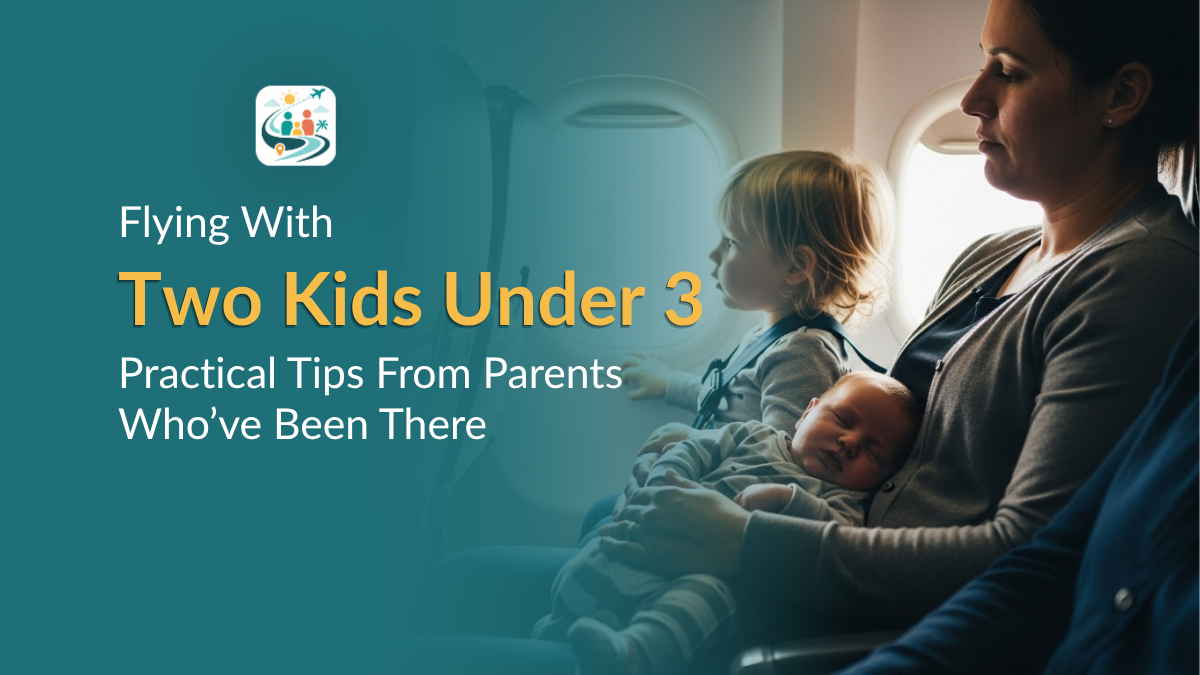
Flying with two kids under 3 can feel overwhelming before the trip even starts. You worry about crying, tantrums, and carrying too much gear. You picture long security lines, judgmental looks, and trying to calm one child while the other desperately needs you at the same time. Many parents lose sleep over it days before the flight — some even question whether the trip is worth the stress at all.
I remember feeling exactly that way before my first flight with two little ones. I barely slept the night before, replaying every worst-case scenario in my head. The truth is, some moments were genuinely hard. But many parts were easier than I expected, and with the right planning and mindset, the trip was not just manageable — it was worth it. This guide is built on real experience and practical lessons, not perfection.
Quick Takeaways for Flying With Two Kids Under 3
- Plan flights around naps or early mornings when possible
- Keep your hands free with a baby carrier or backpack
- Pack fewer items, but choose them wisely
- Give yourself extra time at the airport
- Expect challenges, not perfection
Schedule Your Flight With Your Kids in Mind
Flight timing makes a bigger difference than most parents expect. Early morning flights tend to work best — kids are well rested, airports are quieter, and the whole experience feels calmer before the day heats up. Late-night flights can also work well if your children are good sleepers.
Whatever time you choose, avoid tight layovers. Diaper changes, snacks, and slow-moving toddlers eat up more time than you think, and rushing through a connection with two small kids is its own kind of stressful.
Stay Near the Airport the Night Before
If your flight leaves early, staying near the airport the night before is one of the best things you can do for your sanity. Everyone gets more sleep, you skip the morning rush, and calmer parents genuinely help kids stay calm too.
Pack everything the night before and lay out clothes and documents so your morning brain doesn’t have to work too hard.
Have a Plan for Your Gear
Two kids under 3 means gear adds up fast, so deciding what you carry versus what you check makes a real difference. Some parents swear by strollers, others prefer babywearing — there’s no single right answer. Choose whatever setup works for your family.
What does matter is keeping your hands as free as possible. Backpacks beat shoulder bags every time, and a good baby carrier in a crowded airport is worth its weight in gold.
Plan Your Carry-On Luggage Carefully

Your carry-on bag is your lifeline during the flight, so pack it with intention. Diapers, wipes, and at least one spare outfit per child are non-negotiables — and pack an extra shirt for yourself too, because spills will happen. Small portioned snacks work better than big bags of food, and simple is always better than sugary when you’re trying to keep things calm. When it comes to toys, one or two comfort items are genuinely enough.
Carry-On Packing Checklist for the Plane
| Item | Why It Matters |
|---|---|
| Diapers & wipes | Handle delays and in-flight changes |
| Extra clothes (kids & parent) | Prepare for spills and accidents |
| Snacks & spill-proof cups | Prevent hunger-related meltdowns |
| Comfort items | Help kids feel safe and calm |
| Baby carrier | Keep hands free in busy areas |
| Light blanket or scarf | Provide warmth, shade, or comfort |
Be Prepared for Security Checks

Security feels stressful with two small kids, but a little preparation goes a long way. Dress the kids in simple clothing without metal, and wear shoes everyone can slip off quickly. Baby food, formula, and breast milk are all allowed through security — just declare them to staff before screening and keep all baby items together in one pouch so you’re not digging around under pressure. The most important thing? Stay calm. Kids at this age pick up on your energy faster than you’d expect.
Fly at Night When Possible
Night flights can be a surprisingly good option for families with young kids. Planes are quieter, lights stay dim, and many children naturally sleep longer in the evening. If you go this route, dress the kids in their pajamas before you leave and keep the bedtime routine as familiar as possible — it genuinely increases the chances of them settling on the plane.
Keep Them Comfortable During the Flight

Comfort is your best tool for preventing meltdowns mid-flight. Dress the kids in layers since plane temperatures can swing dramatically, and offer drinks during takeoff and landing to help with ear pressure. When it’s safe to do so, let toddlers stand up or walk a little — even a short stretch in the aisle makes a difference for restless little legs.
Plan Bathroom and Diaper Breaks
A bit of diaper planning before you board saves a lot of stress once you’re in the air. Change both kids right before boarding if you can, and use the family restrooms at the airport while you have the space. On the plane, bring just a small diaper kit to the bathroom rather than hauling your entire bag. And if you’re flying solo and genuinely need a hand, don’t hesitate to ask a flight attendant — most are far more supportive than parents expect.
Keep Your Hands Free
Hands-free travel isn’t just convenient with two young kids — it’s almost essential. A baby carrier for your younger child keeps them settled and secure while freeing you up to manage your toddler and your bags. Choose bags that zip closed and sit close to your body, and resist the urge to overpack. Less gear really does mean less stress.
Dress Kids in Similar Outfits
It sounds like a small thing, but dressing your kids in similar or matching outfits is genuinely useful in busy airports. They’re easier to spot in a crowd, and airport staff can immediately see they belong together. Comfort still comes first — but if you can find something easy and matching, it’s worth it.
Wear Your Baby When You Can
Babywearing is one of the most practical tools you have when flying with two young children. Babies feel secure and calm against your body, and you can move through crowded terminals and boarding queues so much more easily. Most airlines allow babywearing during boarding, though you’ll need to follow crew instructions for takeoff and landing.
Don’t Forget a Scarf or Light Blanket
A lightweight scarf or blanket is one of those items that earns its place in the bag ten times over. It keeps kids warm, blocks out light for sleeping, doubles as a pillow, and can even provide a bit of privacy during feeding. Small items with multiple uses are always worth packing.
Make the Most of Your Transit Time

A layover isn’t wasted time — it’s actually a gift with young kids. Use it to let them move around and burn off energy in a safe area, change diapers before the next flight, and offer snacks and water. Kids who’ve had a chance to stretch and reset tend to settle much more easily once they’re back on the plane.
Seat Planning for Two Kids Under 3
Thinking through your seating ahead of time removes a lot of in-flight stress. Toddlers generally need their own seat, while babies under 2 can technically fly as lap infants — though many parents choose to buy a seat for the extra space and comfort, especially on longer flights.
If you’re traveling with another adult, decide your seating roles before you get to the airport. Sitting across the aisle with one adult per child can actually work really well, giving each of you a clear focus. If you’re flying solo, build in extra time for everything and don’t be afraid to ask for help.
Seat Planning Options for Two Kids Under 3
| Travel Situation | What Most Parents Choose |
|---|---|
| Baby under 2 + toddler | Seat for toddler, lap or seat for baby |
| Two adults traveling | One adult focuses on one child |
| Solo parent with two kids | Extra seat if possible for comfort |
| Short domestic flight | Comfort-focused seating over savings |
Flying Alone With Two Kids Under 3
Flying solo with two young kids is genuinely hard — but it’s absolutely doable, and plenty of parents have done it. Arrive early, move at a slow and steady pace, and accept help when it’s offered without guilt. Lower your expectations for the day and remember that the goal is safety and getting there, not a smooth, Instagram-worthy travel experience.
Frequently Asked Questions
Yes, and many parents do it regularly. It takes more planning and patience than flying with another adult, but it’s very manageable when you prepare well and give yourself plenty of time.
Toddlers generally need their own seat. Babies under 2 can fly as lap infants, but purchasing a separate seat gives you more space and is often worth it on longer flights.
Most airlines allow you to gate-check a stroller, which means you use it right up until you board and collect it as you exit the plane. Rules can vary between airlines, so it’s worth confirming before you fly.
It happens, and it’s okay. Focus on comfort and safety rather than trying to achieve silence. The vast majority of fellow passengers are far more understanding than you’d expect — most have been there themselves.
What to Expect Emotionally
- Some moments will feel stressful, and that is normal
- Crying does not mean you failed
- Most passengers are understanding
- Focus on safety and comfort, not perfection
- Each trip builds confidence for the next one
Final Thoughts From Real Experience
After flying multiple times with two kids under 3, the most important thing I’ve learned is this: the flight doesn’t need to be perfect to be successful. There will be noise, there will be messes, and there will be moments where you’re running on empty. That’s not failure — that’s just traveling with young kids.
Preparation and flexibility will take you so much further than trying to control every outcome. You can handle this trip. Each flight you take builds confidence and experience, and the next one genuinely does get easier. Trust yourself, focus on progress over perfection, and know that flying with two young kids is something you are absolutely capable of doing.
