


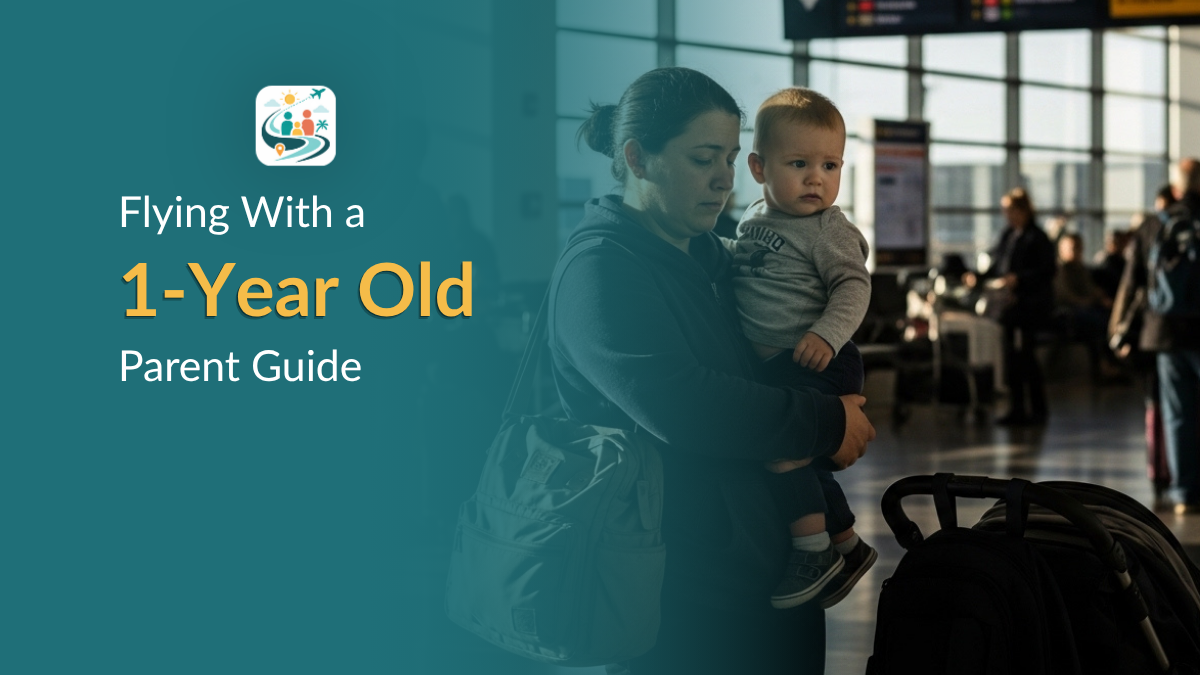
Flying with a 1 year old can feel stressful, especially for first-time parents. At this age, toddlers are active, curious, and easily upset when routines change. Many parents worry about crying on the plane, missed naps, ear pain, and how other passengers might react. There is also confusion about rules, packing, and whether you are making the right choices. All of this pressure can make flying feel overwhelming before the trip even starts.
From personal experience, the first flight with a 1 year old is often the most intimidating. Every small issue can feel like a big problem when you do not know what to expect. With time, it becomes clear that most challenges are normal and temporary. When parents focus on comfort, preparation, and flexibility instead of perfection, flying with a toddler becomes much more manageable.
General Tips
Do your research in advance
Every airline has different rules for lap infants, car seats, and baby gear. Check your airline policy before booking. Knowing the rules early prevents stress at the airport.
Pack with intention
Do not overpack, but do not underpack. Bring only items you will use on the plane. Keep essentials in a small bag you can reach easily.
Bring plenty of distractions
A 1 year old gets bored fast. Bring toys, books, and snacks. New or rarely used toys work best.
Get them a seat (if possible)
Buying a seat gives your child space. It also allows you to use a car seat. This makes the flight safer and more comfortable.
Many parents feel overwhelmed by this decision. There is no single right choice. The best option depends on your budget, your child’s activity level, and the flight length.
Board early
Early boarding gives time to install car seats and organize bags. If your child dislikes sitting still, boarding later may work better.
Before You Fly
Should I book a seat for my 1 year old?
Children under two can fly as lap infants. However, having a separate seat is safer and easier. A seat allows your child to sit in a car seat and sleep better.
While lap infants are allowed, safety experts recommend using a separate seat when possible. The safest place for a child under two is in an approved car seat secured in its own aircraft seat. This helps protect your child during turbulence and sudden movements.
What should I do about a car seat when flying?
You can bring an FAA-approved car seat on the plane. It should fit the airline seat. Using a car seat helps with safety and keeps your child secure.
What documents does a 1 year old need to fly?
For domestic flights, most airlines do not require ID for children. Some may ask for proof of age. For international flights, a passport is required.
What are the airline’s policies about checking baby gear?
Most airlines allow free checking of strollers and car seats. These can usually be checked at the gate or ticket counter.
Can I bring milk through airport security?
Yes. Baby milk, formula, and toddler drinks are allowed in reasonable amounts. Tell the officer at screening.
What Should I Pack for a 1 Year Old?

Pack diapers, wipes, and extra clothes. Bring familiar snacks and a spill-proof cup. Add quiet toys, books, and one comfort item for sleep. Keep everything in one easy-to-reach bag.
At the Airport With a 1 Year Old

Traveling with a toddler is physically demanding. Carrying gear and managing lines can be tiring. Simple systems, like using a carrier or packing light, help reduce exhaustion.
How to handle all the baby gear at the airport
Use a stroller or carrier. Keep documents and boarding passes accessible.
Find a family restroom
Family restrooms and nursing rooms make diaper changes easier.
Burn off some energy
Let your child walk and move before boarding.
Strategy for boarding the airplane with a toddler
Some parents board early to settle in. Others board later to reduce sitting time.
How to Entertain a 1 Year Old on a Plane

Bring something for takeoff and landing
Offer snacks, drinks, or a pacifier. Swallowing helps with ear pressure. Ear discomfort is more common during landing. Doctors do not recommend decongestants or antihistamines unless advised.
Sleep

Try to match nap time. Bring familiar sleep items.
Bathroom visits
Change diapers before boarding when possible.
Use what’s available
Safe everyday items can hold attention.
Snacks are your best friend
Offer snacks slowly during the flight.
Airplane toys
Choose quiet, compact toys.
Try using electronics
Short videos help during tough moments.
Sing
Soft singing can calm your child.
When things don’t go as planned

If your child becomes upset, stay calm. Change positions, offer a snack, or walk briefly if allowed. Bring extra clothes and one emergency distraction.
Tips for You (the Parent)
Dress comfortably
Wear layers and easy-to-move clothing.
Bring multiple types of headphones
Backups help.
Try the SkyClip
Hands-free screens reduce arm strain.
Document the trip
Photos help you remember what worked.
Dealing With Jet Lag
Jet lag affects toddlers too. Use daylight, simple routines, and patience.
Frequently Asked Questions
Yes. Flying is generally safe. Most concerns relate to comfort, not safety.
It is optional but recommended when possible.
Yes, but it can be tiring for long flights.
Yes. Inform officers during screening.
Conclusion
Flying with a 1 year old is not about having a perfect trip. It is about understanding your child, planning ahead, and staying flexible when things change. Based on both research and real travel experience, preparation reduces stress, but calm responses matter most. Crying, delays, and missed naps are normal and do not mean you are doing anything wrong. With each trip, confidence grows, routines improve, and flying with a toddler becomes challenging but completely manageable.
