


Traveling with a baby or toddler sounds exciting, but many parents quickly feel overwhelmed when planning their trip. One of the biggest concerns families face is deciding what to do with their child’s car seat while flying. Car seats are expensive safety equipment, and parents often worry about airline staff handling them roughly or losing them during travel. Many families also feel confused about airline rules, safety recommendations, and whether they should bring the car seat onto the plane or gate check it. These worries can create stress long before the trip even begins.
From real parent travel experiences and child passenger safety guidance, this confusion is extremely common, especially for first-time flying families. Many parents fear making the wrong choice or risking their child’s safety. The good news is that gate checking car seats is widely used by families and can be safe when done correctly. Once parents understand airline policies, safety tips, and proper preparation steps, traveling becomes much easier and less stressful. This guide explains everything clearly so you can travel with confidence and make the safest decision for your child.
Key Takeaways: Gate Checking Car Seats
- Most U.S. airlines allow free gate checking for car seats.
- Using a car seat onboard is the safest option when possible.
- Use a travel bag or protective cover to reduce damage risk.
- Gate-checked items are usually returned at the jet bridge, but sometimes go to baggage claim.
- Inspect your car seat immediately after landing.
- If damage happens, file a claim before you leave the airport.
What Does Gate Checking Car Seats Mean?
Gate checking a car seat means giving your child’s car seat to airline staff right before you board the airplane. The airline stores it in the cargo hold during the flight. You usually receive it back when you land.
Gate checking is different from checking a car seat at the ticket counter. When you gate check, you keep the car seat with you through security and the airport. Many parents prefer this because it gives them more control and peace of mind during travel.
Most airlines allow families to gate check one car seat and one stroller for free. In many cases, these items do not count toward your baggage limit.
Should You Gate Check a Car Seat or Use It on the Plane?

Child passenger safety experts often recommend using a car seat on the plane when possible. Car seats help protect children during turbulence and sudden stops. Many children also feel calmer and sleep better in their familiar car seat.
Use Your Car Seat Onboard If:
- You purchased a separate seat for your child
- Your car seat has an FAA-approved aircraft label
- The car seat fits airplane seating dimensions
- Your child feels secure or sleeps better in their seat
Gate Check Your Car Seat If:
- Your child is flying as a lap infant
- You do not have an extra seat
- Your car seat is heavy or difficult to carry
- You want easier movement through crowded airports
Gate checking is usually safe when done properly. However, using the car seat onboard remains the safest option when available.
Gate Check vs Onboard vs Counter Check
| Option | Safety Level | Convenience | Damage Risk | Best For |
|---|---|---|---|---|
| Use Onboard | Highest | Medium | Very Low | Parents with a purchased child seat |
| Gate Check | Medium | High | Low | Lap infants or no extra seat |
| Counter Check | Medium | Medium | Medium | Large seats packed in strong boxes/bags |
Parent Decision Guide: Choosing the Best Travel Option
Parents often feel overwhelmed when deciding how to travel with a car seat. This quick guide helps reduce stress.
Did you buy a seat for your child?
➡ YES → Bring the car seat onboard
➡ NO → Continue
Is there an empty seat available during boarding?
➡ YES → Ask the gate agent if you can use your car seat onboard
➡ NO → Continue
Is your car seat packed in strong protective packaging?
➡ YES → You may check it at the ticket counter
➡ NO → Gate check the car seat
Is Gate Checking Car Seats Allowed on Airlines?
Yes. Most U.S. airlines allow gate checking car seats for free. Policies can vary by airline and route, so it’s smart to check your airline’s site before travel.
U.S. Airline Quick Reference
| Airline | Free Gate Check | Family Boarding | Onboard Use Allowed (if you have a seat) |
|---|---|---|---|
| Delta | Yes | Often | Yes |
| American | Yes | Often | Yes |
| United | Yes | Often | Yes |
| Southwest | Yes | Yes | Yes |
| JetBlue | Yes | Often | Yes |
Tip: Return location can vary by airport and aircraft. Ask the crew where gate-checked items will be returned.
Step-by-Step Guide to Gate Checking Car Seats
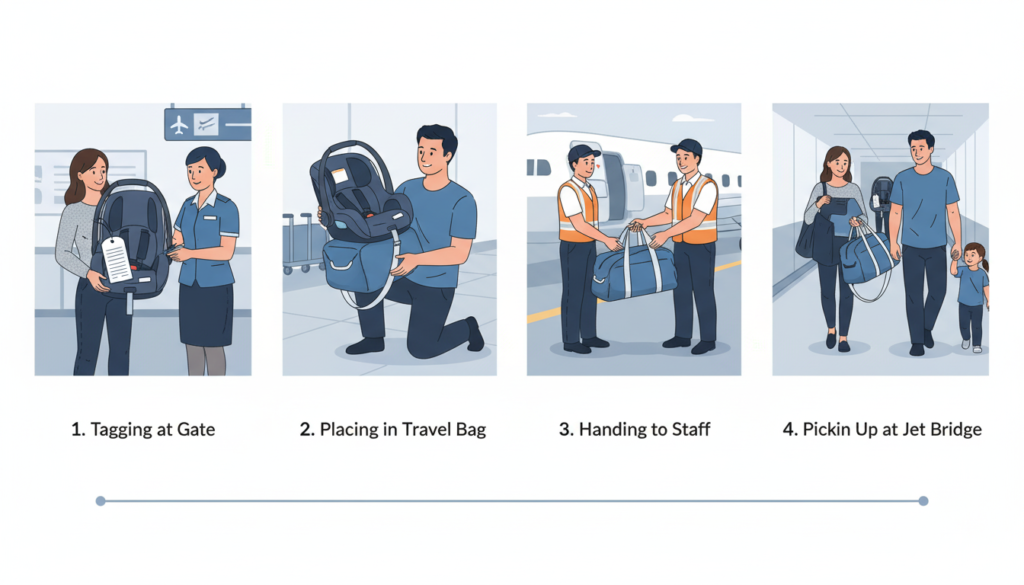
Following a simple process helps parents stay calm and organized during airport travel.
Step 1: Bring the Car Seat Through Security
Carry your car seat through airport security like normal travel items.
Step 2: Visit the Gate Counter Early
Tell the gate agent you plan to gate check your car seat. Early communication reduces last-minute stress.
Step 3: Label Your Car Seat Clearly
Attach the airline tag and add your name and phone number.
Step 4: Protect the Car Seat
Place the seat inside a travel bag or padded cover.
Step 5: Drop the Car Seat Before Boarding
Airline staff usually collect it at the aircraft door or jet bridge.
Step 6: Collect the Car Seat After Landing
Many families receive it at the jet bridge. Some airports return it at baggage claim depending on handling.
Gate Checking Timeline (Simple Travel Map)
Before Airport
• Confirm airline policy
• Pack a car seat travel bag or protective cover
At Security
• Carry the car seat to screening
• Remove loose accessories if needed
At the Gate
• Request a gate check tag early
• Label the seat with your contact info
• Ask where it will be returned (jet bridge or baggage claim)
Boarding
• Drop the car seat at the aircraft door or jet bridge
After Landing
• Pick up the car seat at the return point
• Inspect immediately for damage
Where Will You Pick Up Your Car Seat After Landing?
Knowing where to collect your car seat helps parents avoid confusion and delays.
- Jet bridge pickup: Common on many flights.
- Baggage claim pickup: Sometimes happens, especially with smaller aircraft or airport procedures.
- Regional jet valet handling: Some small aircraft return items plane-side right after landing.
Always confirm the pickup location with flight staff.
Pros and Cons of Gate Checking Car Seats
Pros
- Usually free on most airlines
- Easier airport mobility with children
- Reduces baggage counter waiting time
- Helps parents manage travel gear more easily
Cons
- Small risk of damage or loss
- No protection during flight turbulence
- Pickup location may vary
- Requires preparation and protective packing
How to Protect Your Car Seat When Gate Checking
Car seats are important child safety equipment. Protecting them reduces risk and gives peace of mind.
- Use a padded travel bag to reduce scratches and dirt.
- Add extra padding around headrests and side wings.
- Use the original box if you plan to check at the ticket counter.
What Happens During Connecting Flights?
Connecting flights can increase handling steps.
- Car seats are often transferred automatically.
- Some connections require you to gate check again.
- Tight connections can increase delays.
If you are unsure, ask airline staff how your car seat will be handled during your layover.
FAA Safety Rules Parents Must Understand
The FAA recommends using an approved child restraint when possible.
- FAA-approved car seats have a label stating: “This restraint is certified for use in motor vehicles and aircraft.”
- Most booster seats are not approved for airplane use.
- CARES harness is FAA approved for certain children who meet size requirements and can sit upright.
What Happens If Your Car Seat Gets Damaged or Lost?

Damage is uncommon, but it can happen.
- Inspect the seat immediately after landing
- Take photos of the damage and the tag
- Report it at the airline baggage desk
- Request written documentation
- Ask about replacement or reimbursement
Do not leave the airport before filing a report.
Car Seat Safety Inspection Checklist (After Your Flight)
- Check for cracks, bends, or stress marks on the frame.
- Inspect the harness straps for tears or fraying.
- Test buckles and chest clip to confirm they latch correctly.
- Look for missing, crushed, or broken foam and padding.
- Test adjusters and tightening systems for smooth function.
Safety note: If you see structural damage or anything looks unsafe, replace the seat before your next drive.
Airline Tips Parents Should Know
Stress-Free Travel Tips for Parents
- Arrive early so you do not feel rushed.
- Label your car seat bag with your name and phone number.
- Use a backpack-style travel bag if you need hands free.
- Ask the gate agent early about empty seats for onboard use.
- Keep small parts and manuals in your carry-on.
Alternatives to Gate Checking Car Seats
- Use the car seat onboard: Best safety option when you have a purchased seat.
- Check at the ticket counter: Best when the seat is boxed or heavily protected.
- Rent at your destination: Convenient, but inspect carefully for safety and cleanliness.
FAQ Quick Answers
| Question | Quick Answer |
|---|---|
| Is gate checking free? | Usually yes on U.S. airlines. |
| Is it safe? | Yes, when you protect the seat and inspect it after landing. |
| Where do you pick up the car seat? | Jet bridge or baggage claim depending on airport/aircraft. |
| Do airlines provide travel bags? | Usually no. Bring your own. |
Parent Travel Checklist for Gate Checking Car Seats
Before Airport
- Confirm airline rules
- Inspect seat condition
- Pack a protective travel bag
- Attach identification labels
At Security
- Carry seat through screening
- Remove detachable accessories
At Gate
- Request gate check tag early
- Ask about empty seat availability
- Prepare seat for drop-off
After Landing
- Collect seat immediately
- Inspect for damage
- File claims if needed
Risk Level Guide (Simple View)
| Travel Method | Risk Level |
|---|---|
| Onboard Use | Lowest |
| Gate Check | Low |
| Counter Check | Moderate |
Final Thoughts on Gate Checking Car Seats
Flying with children can feel overwhelming because parents must balance safety, comfort, and travel logistics at the same time. Many families worry about airline handling, turbulence safety, and protecting their child’s car seat during flights. These concerns are completely normal and shared by both first-time and experienced traveling parents. Based on real family travel experiences, airline guidelines, and child passenger safety recommendations, using a car seat onboard remains the safest option whenever possible. When onboard use is not available, gate checking car seats is a safe and practical solution if parents prepare properly, protect the seat, and inspect it after travel. With the right knowledge and planning, parents can reduce stress, protect their child’s safety equipment, and travel with confidence, making gate checking a reliable and convenient part of family air travel.
