


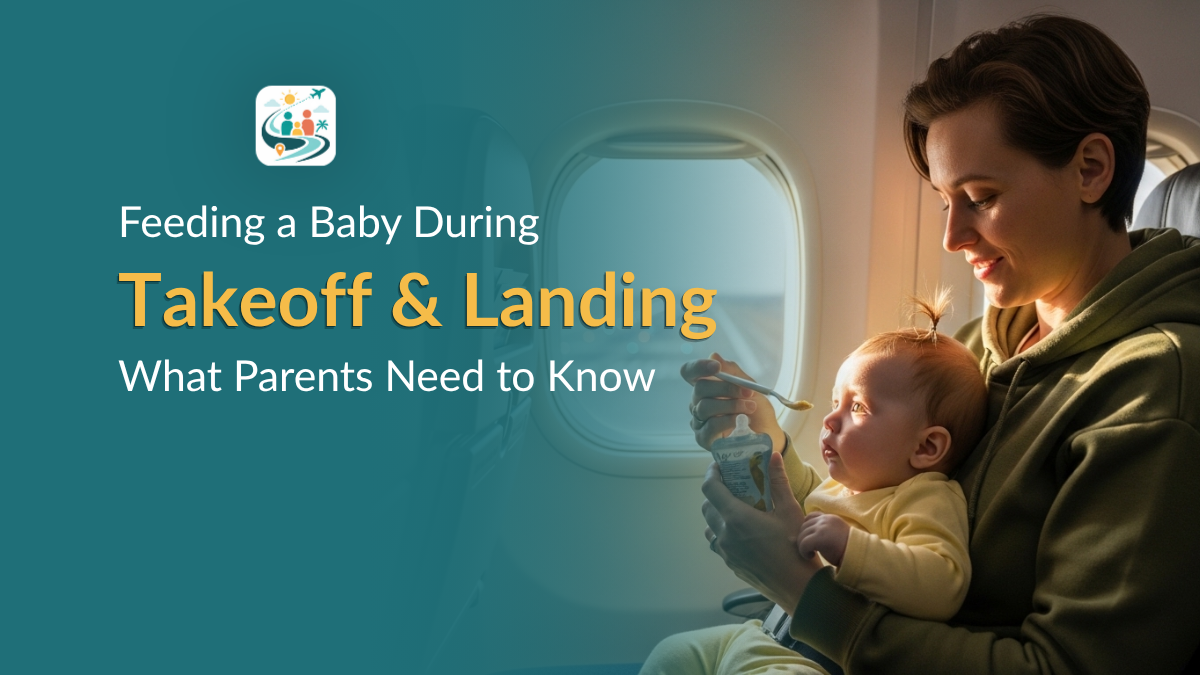
The first time I flew with a baby, takeoff felt overwhelming.
I worried about ear pain.
I worried about crying.
I worried about people staring.
I kept asking myself the same questions many parents ask.
When should I feed? What if my baby isn’t hungry? What if nothing works?
Conflicting advice online only made it worse.
After multiple flights with babies, one thing became clear.
You do not need perfect timing.
You need calm guidance and flexible options.
This article explains what truly helps during takeoff and landing, so you can feel prepared instead of anxious.
Why Babies Feel Ear Pressure on a Plane

Air pressure changes quickly when a plane climbs or descends.
Adults can clear this pressure by yawning or swallowing.
Babies cannot do this on their own.
This pressure can cause:
- Ear discomfort
- Fussiness
- Crying
Swallowing helps open the ear tubes.
That is why feeding or sucking works.
This approach is supported by the American Academy of Pediatrics.
Why Feeding Helps During Takeoff and Landing
Feeding encourages sucking and swallowing.
Swallowing helps balance pressure in the ears.
This does not need to be a full feed.
Comfort sucking is enough.
You can use:
- Breastfeeding
- Bottle feeding
- A pacifier
All three work.
Why Landing Matters More Than Takeoff
Many parents focus on takeoff.
That is understandable.
However, landing usually causes more ear discomfort.
Pressure changes are stronger and last longer during descent.
If you can only focus on one moment, choose landing.
That is where feeding helps the most.
When Should You Feed Your Baby on a Plane?
During Takeoff
Start feeding as the plane begins to lift off.
Do not start while boarding.
Do not feed too early.
During Landing
Begin feeding when the pilot announces descent.
Slow feeding works best.
If feeding ends early, that is okay.
Backup options still help.
Breastfeeding During Takeoff and Landing

Breastfeeding works very well on planes.
Helpful tips:
- Choose a window seat for privacy
- Use a pillow or rolled blanket for support
- Keep movements slow
If your baby unlatches, do not worry.
Try again gently.
Bottle Feeding During Takeoff and Landing
Bottle feeding is just as effective.
Safety tips:
- Hold your baby upright
- Keep the bottle slightly angled
- Never prop the bottle
Pause feeding if turbulence starts.
Bottle, Breast, or Pacifier — All Are Equal
Many parents worry they are choosing the wrong option.
There is no wrong choice here.
Breastfeeding, bottle feeding, and pacifiers all help equally.
What matters is sucking and swallowing.
Use what your baby accepts in that moment.
Feeding Is for Comfort, Not Nutrition
This point matters.
Feeding during takeoff and landing is not about calories.
It is about comfort.
Your baby:
- Does not need a full feed
- Does not need to finish a bottle
Do not force feeding.
What If Your Baby Refuses or Finishes Too Early?
This happens often.
It does not mean you are doing something wrong.
Try:
- A pacifier
- A clean finger for sucking
- Small sips of milk
Even brief sucking can help.
Should You Wake a Sleeping Baby?
Usually, no.
Many sleeping babies handle pressure just fine.
If your baby wakes and cries, then offer feeding or a pacifier.
Babies With Colds or Ear Infections
If your baby has congestion or a recent ear infection, feeding may still help with pressure.
However, feeding does not prevent ear infections.
If your baby recently had ear surgery or severe pain, speak to a pediatrician before flying.
The Centers for Disease Control and Prevention advises against routine use of decongestants for flight ear pain in babies.
Final Thoughts From Experience and Expertise
After years of flying with babies and reviewing pediatric guidance, one truth stands out.
There is no perfect flight.
Some feeds work.
Some do not.
That does not mean you failed.
From both experience and medical guidance, feeding during takeoff and landing is about comfort, not control.
When parents stay calm and flexible, babies respond better.
If you remember one thing, remember this:
You are prepared.
You are capable.
And you are doing your best.
