


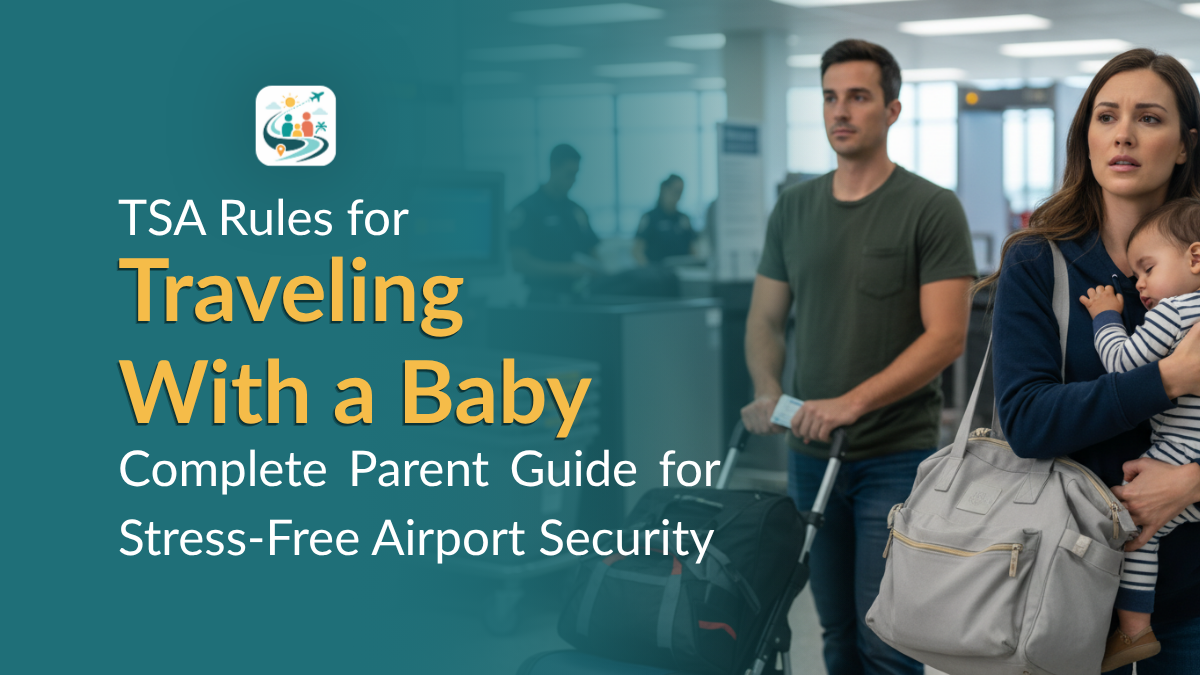
Traveling with a baby sounds exciting, but airport security can quickly become the most stressful part of the journey. Many parents worry about making mistakes at TSA, especially when carrying breast milk, formula, baby food, or medical supplies. I remember my first flight with a newborn, standing in the security line while trying to hold my baby, manage diaper bags, and wonder if TSA would take away the milk I spent hours pumping. That moment of uncertainty is something almost every traveling parent experiences.
Over the years, after traveling multiple times with infants and toddlers, I learned that most of this stress comes from not knowing what to expect. TSA actually provides special allowances for families, but the rules can feel confusing without clear guidance. In this guide, I am combining verified TSA rules with real parent travel experience to help you understand exactly what you can bring, what happens at security, and how to pass TSA smoothly and confidently with your baby.
Understanding the Basics: TSA Rules for Traveling With a Baby
The Transportation Security Administration (TSA) manages airport security in the United States. TSA focuses on safety while allowing parents to carry necessary baby supplies.
Parents are allowed to bring essential baby feeding items through security, including:
- Breast milk
- Baby formula
- Toddler drinks
- Baby food and puree pouches
- Medically necessary liquids
- Cooling packs and gel ice packs
These baby items do not follow the normal 3.4-ounce liquid rule. TSA allows them in reasonable amounts needed for travel. You should declare these items at the checkpoint. TSA may inspect them using swab testing or a visual check.
Why Parents Feel Nervous About TSA Security
Many parents search TSA baby travel rules because they feel unsure about airport procedures. Parents often worry about:
- TSA confiscating breast milk or formula
- Slowing down security lines with baby gear
- Managing a crying baby during screening
- Packing items incorrectly
- Confusing TSA rules with airline policies
These concerns are common and normal. Knowing the rules and the steps ahead of time makes everything easier.
Mindset: Preparing Yourself for TSA
Preparation helps families move through security faster. Arrive early so you have time for screening.
Stay calm during the process. TSA officers screen families every day. Most of the time, they are helpful and quick.
Before you reach security:
- Keep baby feeding supplies easy to access
- Organize baby liquids into one bag
- Remove loose items from stroller baskets
- Keep boarding passes and identification ready
Keeping Kids Calm and Entertained in Security Lines
Security lines can be long. Babies and toddlers may get tired or upset. Small distractions can help a lot.
Bring:
- A favorite toy or comfort item
- Snacks or a bottle
- A small book
- Quiet music or a tablet
When your baby is calmer, you can focus and move faster.
Efficient Packing for TSA Security Screening
Packing the right way reduces stress and delays.
Pack With TSA in Mind
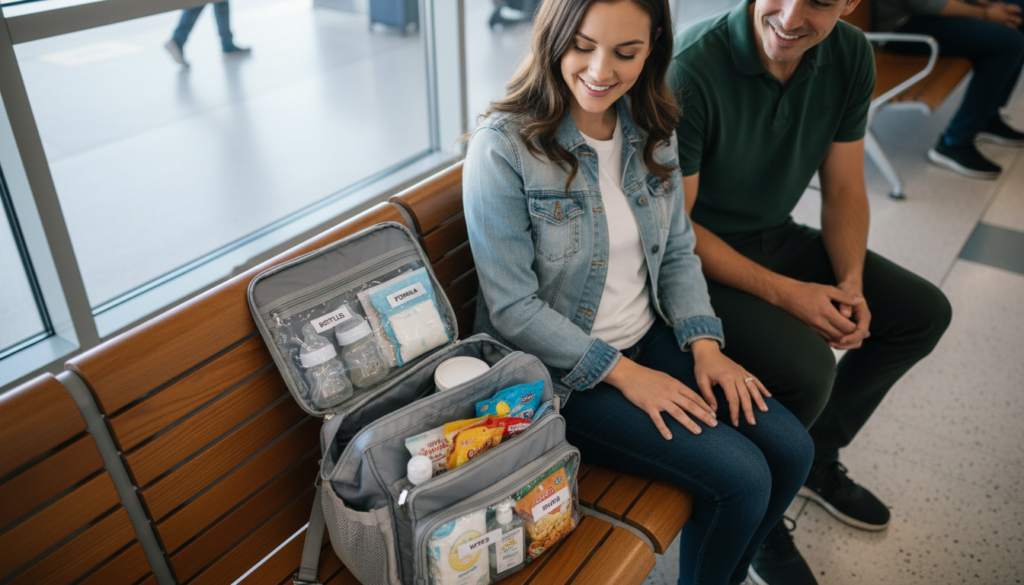
Group baby feeding supplies together. Use one pouch or clear bag if possible.
Keep together:
- Bottles and formula
- Breast milk containers
- Baby food pouches
- Cooling packs
Keep baby liquids separate from adult toiletries.
Use Your Stroller Like a Rolling Organizer
Strollers can carry a lot, but TSA must screen them. Keep stroller baskets neat. Avoid loose items. Use small storage bags.
Dress for Security
Simple clothing helps.
- Wear slip-on shoes
- Avoid heavy jewelry
- Dress baby in easy layers
Step-By-Step TSA Security Checkpoint Walkthrough
Knowing the steps reduces fear. Here is what usually happens:
- Remove baby from the stroller or carrier
- Put bags and baby gear on the conveyor belt
- Tell the TSA officer you have baby liquids
- Walk through the scanner while holding your baby
- TSA may inspect baby liquids separately
- Pick up your items and repack
If TSA needs to check liquids, they may swab containers or do a visual inspection. If you do not want liquids X-rayed, you can ask for alternate screening.
Strollers
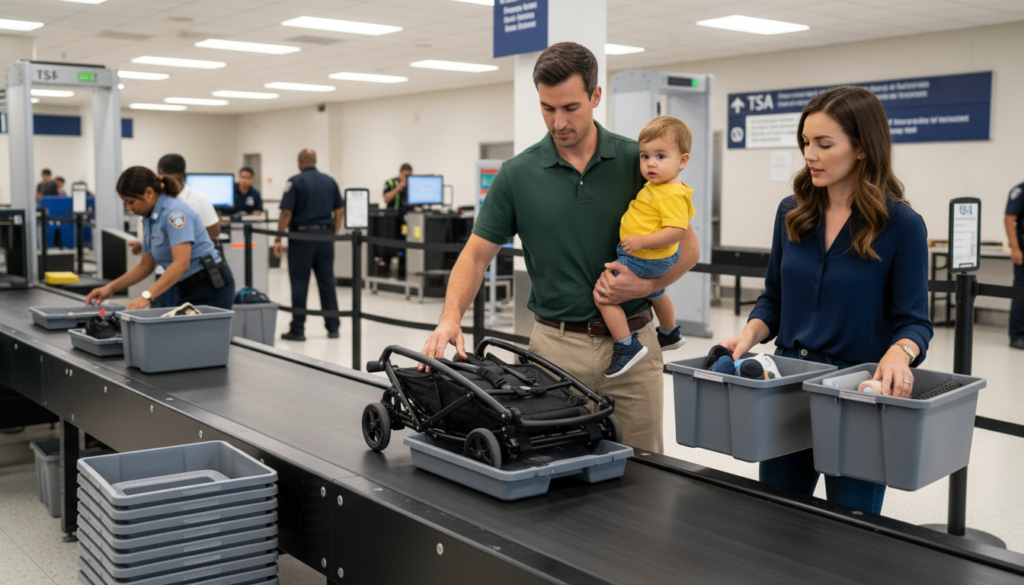
Strollers are allowed through TSA, but they must be screened. Small strollers may go through the X-ray. Larger strollers may be checked by hand.
Tips:
- Remove baby first
- Fold stroller if asked
- Remove loose items from the basket
Babywearing
Baby carriers and slings are usually allowed. Many parents can walk through screening while wearing the baby. Sometimes TSA may still ask you to remove the carrier for inspection.
Babywearing is helpful because it keeps your hands free.
Car Seats
Car seats are allowed and must be screened. TSA may X-ray them or do a manual inspection.
You can bring a car seat on board if your child has their own seat. You can also check it or gate check it.
Handling Breast Milk, Bottles, and Other Liquids
TSA allows breast milk, formula, toddler drinks, and baby food in reasonable quantities. These are considered medically necessary items for a baby.
What to do:
- Declare baby liquids to the officer
- Keep them easy to reach
- Expect extra screening sometimes
Ice packs and gel packs used to keep baby liquids cold are usually allowed. Frozen packs pass faster. Melted or slushy packs may get extra inspection.
You can also travel with expressed breast milk even if your baby is not traveling with you.
TSA Powder Screening Rules for Baby Supplies
Powdered baby formula and baby powder are allowed through TSA. Larger amounts may receive extra screening.
Tips:
- Pack powder separately
- Keep it easy to access
- Expect possible testing or inspection
Managing Checked Baggage
Families often travel with extra gear. Plan your bags so the most important baby items stay with you.
Best practices:
- Keep essentials in your carry-on
- Check bulky baby items if needed
- Label strollers and car seats
- Use protective covers for gear
Your carry-on should include diapers, wipes, feeding items, spare clothes, and comfort items.
Utilizing Family Security Lanes
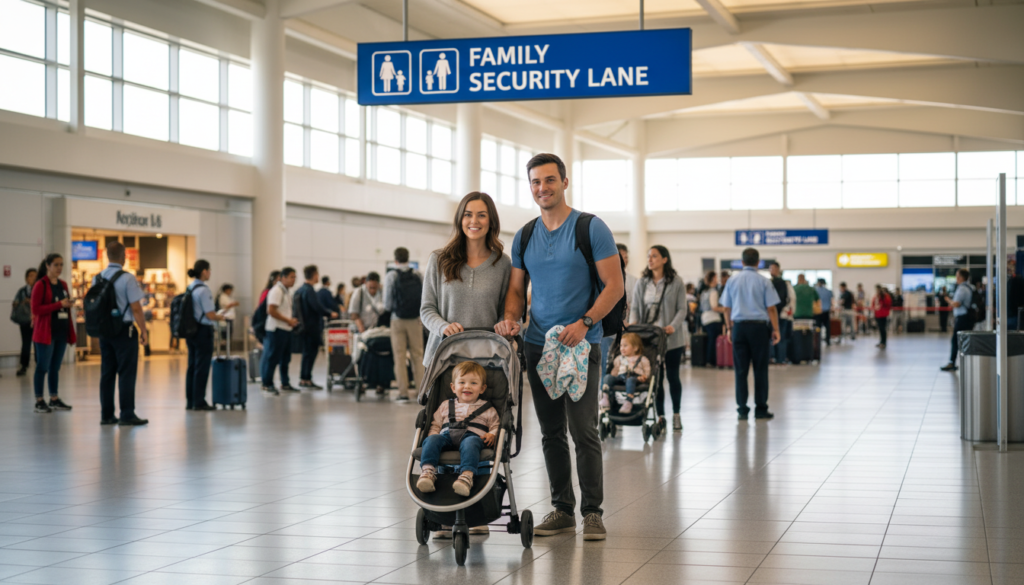
Some airports have family lanes. These lanes usually give families more space and more time.
Family lanes can help because:
- You feel less rushed
- Staff are used to strollers and baby gear
- Screening feels calmer
Ask airport staff if family lanes are available.
Understanding Identification Requirements for Children
TSA does not require identification for children under 18 on domestic flights. Adults must carry valid identification.
It is still smart to carry:
- Boarding passes
- Travel documents
- Medical paperwork if needed
Airlines may have separate requirements.
TSA PreCheck for Families
TSA PreCheck can make security easier.
Benefits often include:
- Keep shoes on
- Keep light jackets on
- Leave electronics in bags
Children 12 and under can join a parent in the TSA PreCheck lane. Children ages 13 to 17 may be able to join when traveling on the same reservation.
CLEAR Security Program
CLEAR is a private identity service at some airports. It can reduce the time spent at the ID check step. CLEAR works best when combined with TSA PreCheck.
TSA Rules vs Airline Rules
Many parents mix these rules up. They are different.
TSA controls what happens at the security checkpoint. Airlines control baggage rules, gate checking, and onboard policies.
What Happens During Additional TSA Screening
Sometimes TSA performs additional screening on baby items. This can include:
- Swab testing
- Visual inspection of liquids
- Opening containers if needed
Extra screening is normal. It does not mean you did something wrong.
Frequently Asked Questions
No. TSA does not treat baby wipes as standard liquids.
Yes. Solid snacks are allowed through TSA.
Yes. TSA may open containers if extra inspection is needed.
Ice packs are usually allowed if they are used to keep baby liquids cold. Melted packs may get extra screening.
Yes. TSA allows expressed breast milk even if the baby is not traveling.
Conclusion
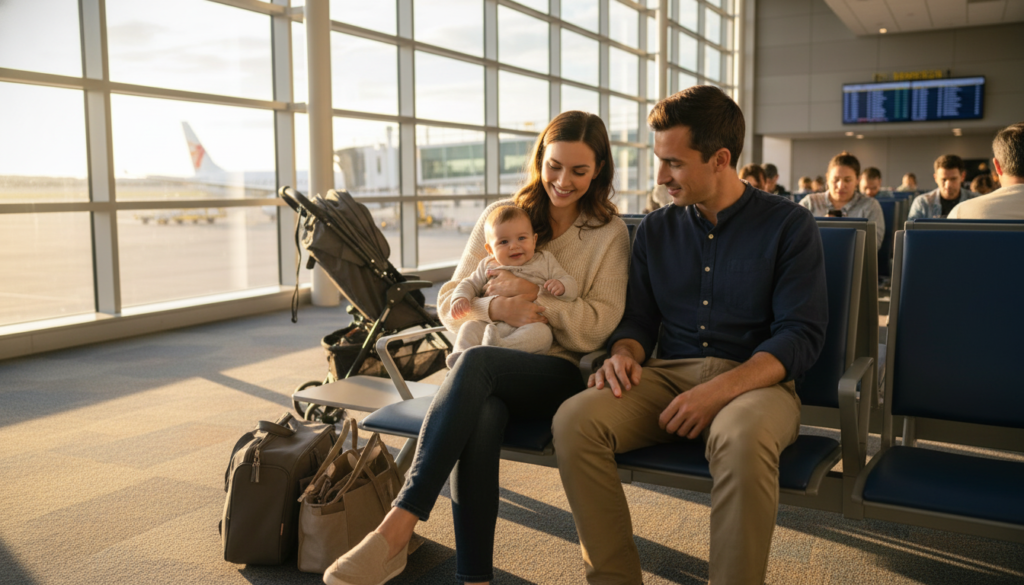
Traveling through TSA with a baby can feel overwhelming at first, especially when you are trying to protect your child’s feeding routine and comfort while managing airport procedures. From personal travel experience and careful research into TSA guidelines, I have learned that preparation is the biggest factor that reduces stress for parents. When you know what to declare, how to pack baby liquids, and what screening steps look like, the process becomes far less scary.
Parents who travel more than once often notice it gets easier each time. TSA officers work with families every day, and most screenings are quick when items are organized. With the rules in mind and a simple checklist, you can walk into security feeling calm and ready. Then you can focus on what matters most: keeping your baby comfortable and enjoying your trip.
