


Planning a beach trip with a baby can feel exciting, but it often comes with a lot of worries. Many parents stress about sunburn, overheating, diaper messes, feeding challenges, and keeping their baby comfortable in a new outdoor environment. It is very common to feel nervous about forgetting important items or not knowing how your baby will react to the beach. I remember preparing for my first beach day with a baby and constantly double-checking bags because I was afraid I would miss something important.
Over time, after several beach trips with babies and toddlers, I learned that preparation makes everything easier. Babies have sensitive skin, limited temperature control, and very specific comfort needs. Packing the right beach essentials for babies helps prevent common problems and gives parents peace of mind. This guide is built using real parenting experience combined with trusted safety practices so families can feel confident, prepared, and ready to enjoy a relaxing beach day.
Quick Takeaways: Beach Essentials for Babies
- Sun + shade come first. Hats, UPF clothing, sunscreen (6+ months), and a solid shade setup.
- Cooling matters. Babies overheat fast, so bring a fan and spray bottle.
- Swim diapers are required. They help with solids but do not hold pee.
- Water safety is non-negotiable. Stay within arm’s reach near water.
- Sand + diapers can cause rashes. Bring wipes, cream, and a sand-removal trick.
- Pack smart, not heavy. Use a wagon, dry bags, and simple organization.
Beach Essentials for Babies Quick Checklist
Must-Have vs Helpful vs Optional Chart
Why Packing the Right Beach Essentials for Babies Matters
Babies have delicate skin and cannot control their body temperature like adults. The beach has strong sun, hot sand, wind, and salt water. These can lead to sunburn, overheating, dehydration, or skin irritation.
Many first-time parents feel unsure about what their baby truly needs. Some parents overpack. Others forget key safety items. A simple checklist helps you stay prepared and calm.
Sun Protection Essentials for Babies
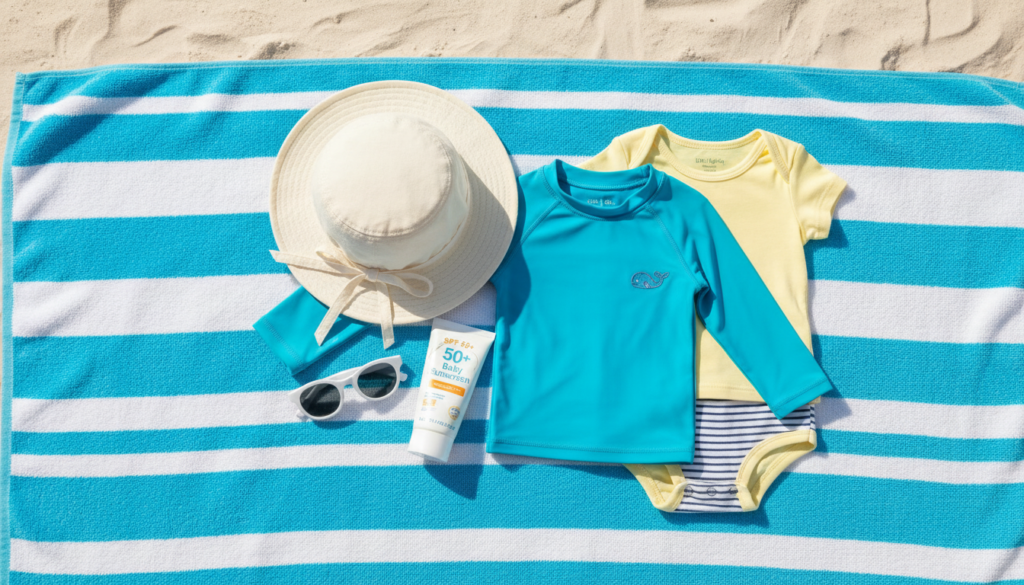
Sun protection is the top priority at the beach.
Bring:
- Wide-brim sun hat
- UPF rash guard or swimwear
- UV-protective baby sunglasses
- Lightweight cover-up clothing
- Broad-spectrum sunscreen (SPF 30+) for babies 6 months and older
If your baby is under 6 months, use shade and protective clothing as your main defense. If sunscreen is needed, use a small amount on exposed areas.
Reapply sunscreen every 2 hours and after swimming.
Shade and Cooling Essentials
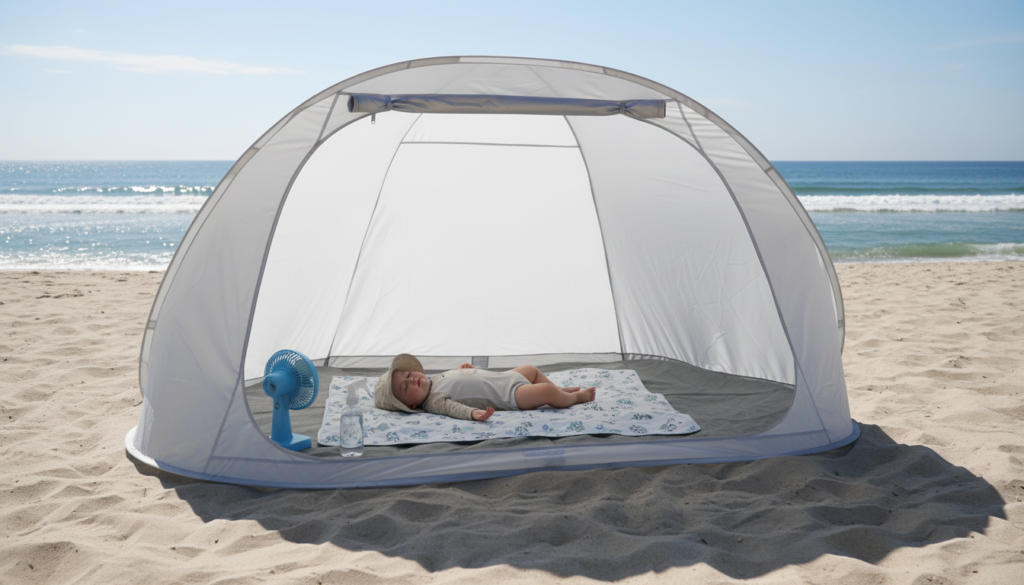
Babies overheat faster than adults. Shade and airflow help a lot.
Bring:
- Beach tent or pop-up shade
- Umbrella (backup shade)
- Portable fan
- Spray bottle with cool water
- Light blanket or beach mat
Tip: Set up shade first. Then unpack the rest. This lowers stress right away.
Swim and Water Safety Essentials
Water safety matters even in shallow areas.
Bring:
- Swim diapers (extras)
- Baby swim shoes
- Hooded towel or poncho towel
- Coast Guard-approved life jacket
Important: Swim diapers help contain solid waste but do not hold urine. Also, inflatable floaties should not be used as a safety device.
Always stay within arm’s reach near water.
Feeding and Snack Essentials
Heat can increase thirst and hunger.
Bring:
- Cooler bag with ice packs
- Bottles or cup
- Formula or breast milk supplies
- Baby snacks (age-appropriate)
- Bibs and burp cloths
- Bottle brush and small soap
Note: Babies under 6 months usually hydrate through breast milk or formula. Ask your pediatrician if you are unsure about water.
Diapering and Hygiene Essentials
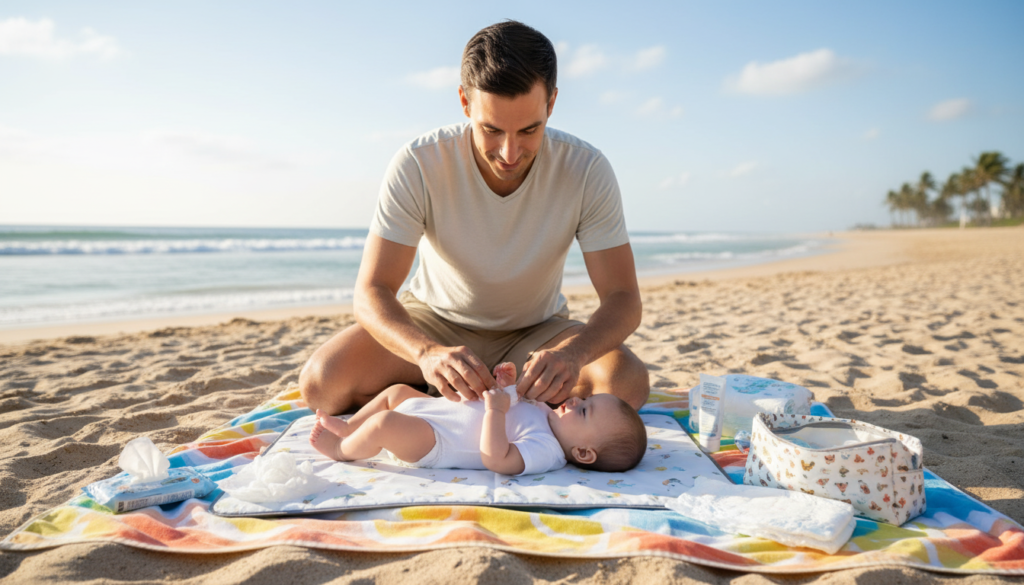
Sand + diapers can cause rashes fast.
Bring:
- Diapers and swim diapers
- Wipes
- Changing pad
- Diaper cream or protective ointment
- Hand sanitizer
- Wet bags / plastic bags
- Baby powder (sand removal)
Tip: Keep a “diaper mini-kit” in a small pouch. It saves time.
Comfort and Sleep Essentials
Beach days can disrupt baby routines. Comfort items help.
Bring:
- Extra clothes and cover-up
- Pacifier
- Lightweight blanket or sleep sack
- Baby seat or lounger (if you use one safely)
- Optional: white noise device
Try to keep naps in the shade. Keep baby cool and dry.
Play and Entertainment Essentials
Simple toys work best at the beach.
Bring:
- Small sand toy set
- 1–2 water-safe toys
- Optional: bubbles
Less is more. Babies get overstimulated easily.
Transport and Storage Essentials
Organization reduces stress.
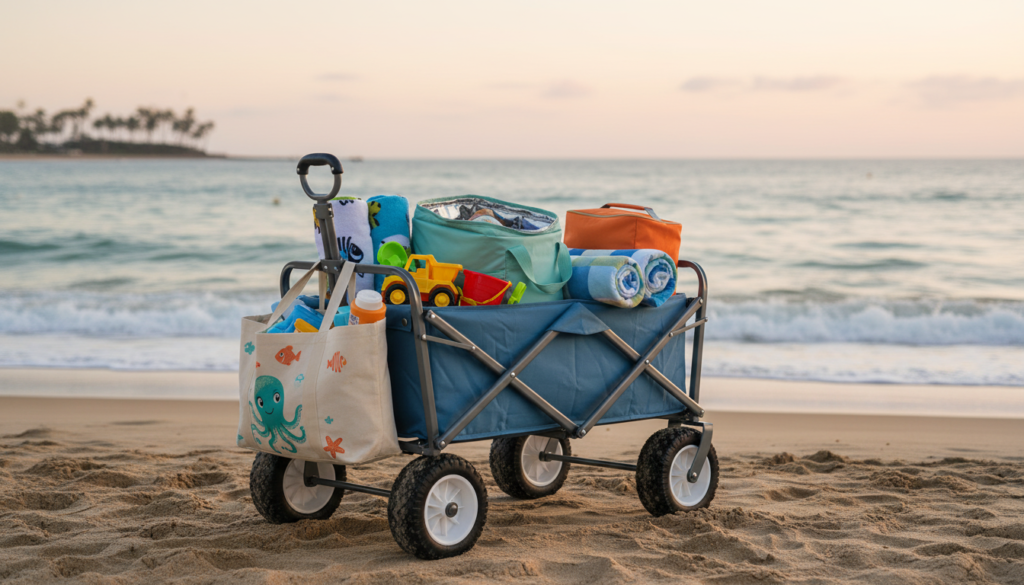
Bring:
- Beach wagon or stroller
- Big tote bag
- Dry bag or wet bag
- Extra zip bags for small items
Beach Essentials by Age Table
Pack by Situation Table
Baby Beach Hacks Every Parent Should Know
These simple tricks make beach trips easier:
- Use baby powder to remove sand fast.
- Use a fitted sheet to make a sand-free play zone.
- Freeze water bottles to double as ice packs.
- Bring extra dry bags for wet clothes.
- Use a spray bottle to cool baby skin and rinse sandy hands.
Baby Beach Safety Checklist
- Shade is set up first before baby is on the sand.
- Sun protection is on: hat + UPF clothing; sunscreen for 6+ months.
- Sunscreen plan: reapply every 2 hours and after water play.
- Cooling plan: fan available, offer frequent feeds, watch for overheating.
- Water safety: stay within arm’s reach near water; do not rely on floaties.
- Diaper rash prevention: wipe sand often and use barrier cream.
- Bug protection: use netting for small babies; use age-appropriate repellent when needed.
- Clean hands: sanitize before feeding.
Beach Packing Timeline (Makes Mornings Easier)
Night Before
- Pack diapers, wipes, cream, and a changing pad
- Prep cooler and ice packs
- Set out sun hat, UPF outfit, and towel
- Charge fan and pack spray bottle
- Place dry bags/wet bags by the door
Morning Of
- Dress baby in UPF clothing and hat
- Pack fresh snacks and feeding supplies
- Apply sunscreen if baby is 6+ months
- Do one last check: shade, diapers, water safety gear
Signs of Overheating Quick Chart
Common Parent Mistakes
What NOT to Bring to the Beach With a Baby
Avoid packing unnecessary items that add weight and clutter:
- Too many toys
- Heavy blankets
- Glass containers
- Excess clothing
- Inflatable floaties used as safety devices
Frequently Asked Questions
Most babies older than 6 months can use sunscreen. Younger babies should rely on shade and protective clothing.
Yes. Swim diapers help contain solid waste but do not hold urine.
Small amounts are usually not a big issue. Offer fluids and monitor your baby. If your baby chokes or seems ill, contact a medical professional.
Morning and late afternoon are usually best because the sun is less intense.
For many babies, 1–2 hours is a good start. End the trip early if your baby seems too hot, fussy, or tired.
Final Thoughts
After many beach outings with young children, one important lesson stands out — successful beach trips are not about bringing everything, but about bringing the right essentials. When parents focus on sun protection, hydration, safe water supervision, and comfort planning, beach days become smoother and far more enjoyable. From experience, small preparations like packing extra swim diapers, creating shaded rest areas, and organizing gear properly can prevent most common beach challenges. With thoughtful planning and the right beach essentials, parents can turn a stressful outing into a safe, relaxing, and memorable family experience while keeping their baby comfortable and protected.
